
About
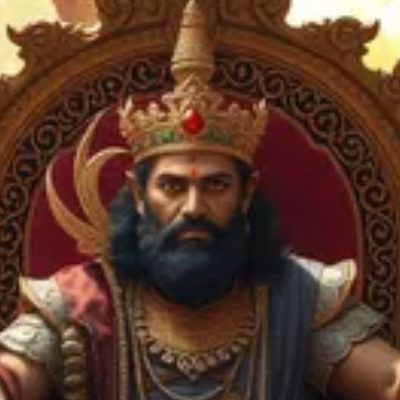
King of Madra — Bahlika Patriarch, Father of Madri and Shalya
Madraraja · King of Madra · Bahlika king · father of Shalya and Madri
The King of Madra is a figure in the Hindu epic tradition, identified in the Mahabharata as the ruler of the Madra kingdom — a powerful northern realm situated in the northwestern region of the ancient Indian subcontinent, broadly corresponding to the area of present-day Punjab — and as the father of two significant figures: Shalya, who became king of Madra after him and served as the commander-in-chief of the Kaurava forces on the eighteenth day of the Kurukshetra war, and Madri, who became the second wife of the Kuru king Pandu and the mother of the twins Nakula and Sahadeva, two of the five Pandava brothers. The king is identified by dynastic and regional title rather than by a personal name in the primary sources. He belongs to the Bahlika clan — a lineage associated with the northwestern kingdoms and with the broader Chandravamsha lunar dynasty in the Puranic genealogical tradition. His own parentage, reign, and personal narrative are not recorded independently in the primary sources, and his significance in the tradition is defined entirely through his two children and their roles in the Mahabharata's central narrative.
✦ The Name and Title
The title Madraraja combines Madra — the name of the kingdom and its people — with raja, the Sanskrit word for king. Madra as a toponym is connected in the textual tradition to the Madra janapada, one of the sixteen great kingdoms or mahajanapadas of ancient India, whose territory encompassed the region between the Beas and Chenab rivers. The name of his daughter Madri is a direct feminine derivative of Madra, functioning as a patronymic or regional epithet meaning "she who belongs to Madra" or "princess of Madra." Similarly, the name Shalya, while a personal name in its own right, is consistently identified in the Mahabharata with the Madra throne, indicating the deep identification of this royal family with their kingdom's identity. The Bahlika designation identifies the clan to which the Madra royal house belongs — the Bahlikas being a lineage associated with the far northwestern territories and regarded in the Mahabharata as a distinct cultural and political grouping within the broader Kshatriya world.
✦ Lineage
- Clan: Bahlika — the northwestern royal lineage associated with the Madra kingdom and its allied territories; placed within the broader Chandravamsha genealogical framework in the Puranic tradition.
- Son: Shalya — king of Madra and his father's successor on the Madra throne; a celebrated warrior of great strength and skill, described in the Mahabharata as equal in prowess to Indra, the king of the gods, and to Krishna, the eighth avatar of Vishnu; he served as the charioteer of Karna — the son of Surya the sun deity, raised by the charioteer Adhiratha and his wife Radha — on the seventeenth day of the Kurukshetra war, and as commander-in-chief of the Kaurava army on the eighteenth and final day, when he was slain by Yudhishthira, the eldest Pandava.
- Daughter: Madri — second wife of Pandu, the Kuru king and nominal father of the five Pandava brothers; she was given in marriage to Pandu as part of a diplomatic arrangement in which Shalya, her brother, received gifts in exchange for her hand; through her union with the twin Ashvins — the divine physicians and horsemen of the Vedic tradition — she bore the twins Nakula and Sahadeva, the fourth and fifth of the five Pandava brothers; she died on Pandu's funeral pyre, ascending with him in the act known as sahagamana.
✦ The Madri-Pandu Marriage and the King's Role
The primary narrative episode in which the King of Madra's family is directly implicated is the arrangement of Madri's marriage to Pandu. The Mahabharata's Adiparva records that Pandu, after his marriage to Kunti — the daughter of the Yadava king Shurasena, who had been given in adoption to her maternal uncle Kuntibhoja — desired a second wife. He approached the Madra kingdom, and Shalya — who had by this point succeeded his father as king of Madra — agreed to give his sister Madri to Pandu on the condition of receiving a substantial gift of gold, elephants, horses, and chariots in return. The Mahabharata presents this arrangement as a customary practice of the Bahlika people, whereby a bride-price or gift was expected by the bride's family. Bhishma — the great-uncle of the Kuru house, son of the river goddess Ganga and the Kuru patriarch Shantanu — provided the gifts on Pandu's behalf, and the marriage was duly concluded.
The King of Madra himself does not appear as an active participant in this episode — by the time of the marriage negotiation his son Shalya is already the reigning king. The father's significance in the narrative is thus entirely retrospective: he is the source of the lineage, the kingdom, and the identity of both his children, but his own reign and actions are passed over without elaboration in the primary sources.
✦ Textual Variants and Inconsistencies
The absence of a personal name for this figure across the principal primary sources is itself a textual datum rather than a lacuna to be filled. The Mahabharata consistently identifies the Madra royal house through its dynastic and regional title rather than through the personal names of individual rulers prior to Shalya's generation. Some later secondary and regional traditions have assigned personal names to this figure — most commonly Ashvapati, a name that also belongs to the king of Kekaya who was the father of Kaikeyi in the Ramayana tradition — but this assignment is not supported by the principal primary sources and risks conflation with that separate figure. No such personal name is adopted in this profile.
The Bahlika identification of the Madra royal house also requires a note of care. The Mahabharata uses Bahlika both as a clan name for the Madra royal lineage and as a personal name for a separate figure — Bahlika, the eldest son of King Pratipa of the Kuru house and elder brother of Shantanu — who appears as a warrior on the Kaurava side in the Kurukshetra war. The Bahlika clan name applied to the Madra kings and the personal name Bahlika of the Kuru elder are distinct usages and should not be conflated.
✦ Connection to the Wider Genealogy
Through his daughter Madri the King of Madra is a maternal grandfather of Nakula and Sahadeva — the fourth and fifth Pandava brothers — connecting the Madra royal lineage to the Kuru dynastic complex at its most consequential generational juncture. Through his son Shalya the Madra throne continues into the Kurukshetra war generation, where Shalya's participation on the Kaurava side places the Madra kingdom in direct opposition to his own nephews Nakula and Sahadeva on the Pandava side — one of the Mahabharata's most pointed illustrations of the fratricidal character of the war. The Bahlika clan identity places the Madra royal house within the northwestern Kshatriya world that the Mahabharata consistently treats as culturally and politically distinct from the Kuru-Panchala heartland while remaining genealogically connected to the broader Chandravamsha framework.
✦ References
- Mahabharata, Adiparva: Principal source for the marriage of Madri to Pandu, the role of Shalya in negotiating the bride-price, and the identification of the Madra royal house as the family from which both Shalya and Madri descend; does not record a personal name for the father.
- Mahabharata, Shalya Parva: Records Shalya's role as commander-in-chief of the Kaurava forces on the eighteenth day of the Kurukshetra war and his death at Yudhishthira's hands; provides the fullest narrative treatment of the Madra royal house in the epic.
- Mahabharata, Karna Parva: Records Shalya's service as Karna's charioteer on the seventeenth day and contributes to the characterisation of the Madra royal lineage and its Bahlika cultural identity.
- Bhagavata Purana, genealogical sections: Places the Madra royal lineage within the broader Chandravamsha genealogical framework; contributes supporting context for the Bahlika clan identification.
- Vettam Mani, Puranic Encyclopaedia (1975): Secondary reference consolidating the Mahabharata data on Shalya, Madri, and the Madra royal house; confirms the absence of a personal name for the father in the primary tradition.