
About
Chirakari — Son of Gautama, the Deliberately Slow, and Figure of Ethical Philosophy
Chirakari · Gautamiputra · Ahalyatanaya · Vilambi · Chirakarin · Dhairya-murtiman
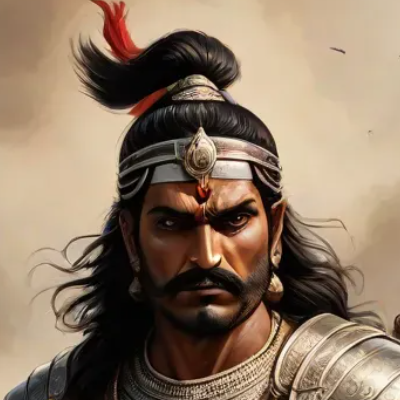
Chirakari is a son of the sage Gautama Maharishi — attributed as his son by Ahalya in the Mahabharata's Shanti Parva — and one of the tradition's most philosophically distinctive minor figures. His name means "the slow actor" or "he who takes long to act," and his entire significance in the tradition rests upon a single extended philosophical narrative in the Shanti Parva in which his characteristic quality of extreme deliberateness before action — an incapacity or refusal to act quickly on any instruction, no matter how authoritative the source — inadvertently saved his mother Ahalya's life when Gautama, in a moment of uncontrolled anger, commanded him to kill her. Chirakari's slowness to execute the command gave his father time to repent the instruction and return before the act could be done, thereby preventing a terrible injustice. The tradition uses Chirakari's story as the occasion for an extended philosophical meditation on the ethics of obedience, the value of deliberation before action, and the relationship between parental authority and the son's duty to act rightly when a parental command is itself unrighteous. Chirakari appears exclusively in the Mahabharata's Shanti Parva and is not attested in the Puranas or in the Ramayana tradition.
✦ The Name
The name Chirakari is a compound of chira — long, extended in time, taking long — and kari — the doer, the actor, from kara meaning doing or acting. The compound thus means "the long-acting one," "the one who takes a long time to do things," or simply "the slow actor." It is a name that designates its bearer by his defining characteristic — not a quality of honour or aspiration but a behavioural disposition that shaped every aspect of his life. The tradition presents this disposition — extreme deliberateness, the inability to act without prolonged prior consideration — as simultaneously a limitation in ordinary life and a providential quality that in the specific circumstance of his mother's crisis became the saving virtue. The patronymic Gautamiputra means "son of Gautama." Dhairya-murtiman means "the embodiment of patience and steadiness."
✦ Lineage
- Father: Gautama Maharishi — one of the seven Saptarishis, the husband of Ahalya, and the figure whose moment of rage produced the command that defines Chirakari's story. His profile is given separately in this series.
- Mother: Ahalya — attributed as Chirakari's mother in the Mahabharata's Shanti Parva account; the first woman created by Brahma, cursed by Gautama following the episode of Indra's deception, and liberated by Rama's touch. Her profile is given separately in this series. The attribution of Chirakari specifically to Ahalya as his mother is not uniformly consistent across all primary texts — the Shanti Parva account implies it through the narrative but not all passages are equally specific on this point.
- Brothers: Shatananda — the purohita of Janaka's court, profiled separately; and Sharadvana — the father of Kripacharya and Kripi, profiled separately.
- The primary texts do not record Chirakari's wife, children, or further genealogical connections. His significance is entirely contained within the philosophical narrative of the Shanti Parva and he generates no further genealogical line in the primary sources.
✦ The Principal Episode — Gautama's Command and Chirakari's Slowness
The Mahabharata's Shanti Parva narrates the Chirakari episode in the context of the broader post-war discourses on dharma and statecraft that Bhishma delivers to Yudhishthira from his bed of arrows. The episode is introduced as an illustration of the philosophical question of when obedience to a father's command is the highest virtue and when disobedience is actually the more righteous act.
The Shanti Parva narrates that Gautama — in a moment of extreme anger whose specific cause in the episode is the accumulated consequences of the episode of Ahalya's defilement and his fury at the shame and disruption that had entered his household — commanded Chirakari directly and with the full authority of a father commanding a son: kill your mother. The Mahabharata presents this as a command issued in the heat of uncontrolled rage — Gautama had not thought through the consequences or examined whether the command was just; he simply issued it in the extremity of his anger and then left.
Chirakari was left alone with this command and with his mother. His characteristic disposition — the extreme deliberateness that made him incapable of acting quickly — now asserted itself in full force. He could not bring himself to execute the command immediately. Instead he began to deliberate — turning the question over in his mind from every possible angle, examining it through every ethical and dharmic framework available to him. The Shanti Parva gives this deliberation extended treatment — it is one of the most sustained passages of ethical reasoning in the entire Mahabharata, placed in the mind of a young man trying to determine what is right when the most authoritative voice in his life has commanded something that his own moral sense resists.
Chirakari reasoned through the following considerations, among others. A father's command is the highest authority in a son's life — the tradition consistently teaches that disobedience to one's father is among the gravest of dharmic failures, that the father stands in the place of the supreme for a son, and that unconditional obedience to parental command is the mark of the highest filial virtue. Against this: a mother is the most sacred of all relationships — the mother who bore the son and nourished him in her body is described in the tradition as more honourable than ten fathers, and the act of killing one's mother is among the most terrible of all possible acts — the mahapatakas, the great sins. How can one be commanded to commit one of the greatest possible sins by the authority figure whose command one is most obligated to obey? Which obligation supersedes the other? Is a command to sin still a command that must be obeyed? Does filial duty extend to the commission of the worst possible act when that act is commanded by the father?
The deliberation went on at great length and without resolution — Chirakari could not bring himself to act because he could not resolve the ethical contradiction. And his inability to act quickly — the quality that had been a limitation throughout his life — became in this moment the providential grace that saved his mother. The time he spent in deliberation was sufficient for Gautama to have returned to his ashrama. Gautama, coming back and finding his wife alive, experienced an immediate surge of relief and recognised with terrible clarity that the command he had issued in rage had been an unjust one — that his anger had led him to order a son to commit matricide, an act that would have been among the most terrible in the tradition's ethical framework. He recognised that Chirakari's failure to execute the command was not disobedience but — whether by disposition or by divine grace operating through that disposition — a form of protection that had prevented a catastrophic wrong.
The Shanti Parva records Gautama's praise of Chirakari — his explicit acknowledgement that the slowness he had criticised throughout his son's life had in this instance been the highest virtue, and that the deliberateness which had always seemed a failing was in truth the quality that had prevented an irreversible injustice. The episode concludes with Gautama honouring his son for the very quality that had always been seen as his limitation.
✦ The Philosophical Content of Chirakari's Deliberation
The Shanti Parva uses Chirakari's internal deliberation as the vehicle for one of the Mahabharata's most sustained and explicit treatments of a specific type of ethical dilemma: the conflict between two absolute obligations when fulfilling one requires violating the other. This type of dilemma — which the philosophical tradition calls a dharma-sankata, a crisis of dharma — is one of the Mahabharata's central recurring concerns, and the Shanti Parva presents many such dilemmas in the context of Bhishma's discourses to Yudhishthira. Chirakari's case is distinctive because the analysis is given from inside the consciousness of the person facing the dilemma rather than in the retrospective voice of a sage or teacher explaining what should have been done.
The Mahabharata's treatment does not resolve the dilemma with a clean logical answer — it does not tell the reader that filial obedience always supersedes the prohibition against matricide or that the prohibition always supersedes filial obedience. Instead the resolution comes through time itself — through the delay created by Chirakari's deliberation giving the situation time to change, so that the command became obsolete before it was executed. This form of resolution — through patience and deliberation creating the space for the situation to resolve itself — is presented as the specific virtue of Chirakari's characteristic slowness and as a model of how deliberation can be in itself a form of ethical action even when the deliberator cannot arrive at a logically certain conclusion.
✦ Textual Variants and Inconsistencies
The attribution of Chirakari as Ahalya's son: The Shanti Parva's account implies but does not always state explicitly that Chirakari was Ahalya's son — the narrative's logic requires that the mother he was commanded to kill was Ahalya, since Gautama is consistently his father and Ahalya is Gautama's principal wife, but some passages of the text are less specific about this than others. The general tradition treats the identification as established.
The specific trigger for Gautama's rage: Different manuscript traditions of the Shanti Parva give slightly different accounts of the specific circumstances that provoked Gautama's rage against Ahalya on this occasion — whether it was a renewed awareness of the original episode of defilement, or a fresh quarrel, or some other circumstance. The core facts of the command and its consequences are consistent across the major traditions.
Attestation only in the Shanti Parva: Chirakari is attested as an independent figure with a named biography only in the Mahabharata's Shanti Parva. He does not appear in the Ramayana, in the principal Puranas, or in the Vedic anukramani traditions. This limited attestation — a single extended episode in one parva — is characteristic of certain Mahabharata figures who were introduced specifically to carry a philosophical point rather than to serve a dynastic or genealogical function, and his profile has been generated proportionate to this specific evidential basis.
✦ Theological and Philosophical Significance
Chirakari's theological significance is entirely philosophical and ethical — he exists in the tradition as the vehicle for a specific inquiry into the ethics of obedience, deliberation, and the relationship between a quality that appears as a defect and the providential grace that can operate through that defect. The tradition's characteristic method of embedding its most profound philosophical teachings in biographical narratives — using a specific life as the occasion for a general truth — is deployed here with particular economy: the entire philosophical inquiry is presented through a single episode in which the character's defining quality, always seen as a limitation, proves in the moment of greatest crisis to be the saving virtue.
The Chirakari episode also functions as a portrait of Gautama's own fallibility — the great sage whose moment of rage produced an unjust and terrible command, whose subsequent relief and repentance acknowledge his own failure, and whose praise of his son's slowness is simultaneously an act of recognising that a quality he had always viewed as a defect was in truth protective. This portrait of Gautama as fallible — consistent with the Chirakari episode of the Shanti Parva — is continuous with the portrait of Gautama in the Ahalya episode as a figure who could act in anger and who could subsequently recognise the wrongness of his anger's expression.
✦ Connection to the Wider Genealogy
Through his father Gautama and grandfather Angiras, Chirakari connects to the Angirasa lineage and through it to the primordial creative line of Brahma. Through his mother Ahalya and her liberation by Rama, he is connected to the Ramayana's central devotional narrative. Through his brothers Shatananda and Sharadvana, he is part of a Gautama family whose members occupy significant positions across both the Ramayana and the Mahabharata traditions — Shatananda in Janaka's court and the Ramayana's Bala Kanda, Sharadvana as the father of the Chiranjivi Kripacharya and of Drona's wife Kripi, and Chirakari himself in the Mahabharata's post-war philosophical discourses. Beyond his parentage and siblings, however, the primary sources do not trace his descendants, and his significance remains entirely within the single episode that defines his biography.
✦ References
Primary Sources
- Mahabharata, Shanti Parva, sections 265–266: The sole primary source for Chirakari's biography — Gautama's command issued in rage that Chirakari kill his mother, Chirakari's prolonged deliberation through which he examined every angle of the ethical dilemma without arriving at a resolution, the saving delay created by his characteristic slowness, Gautama's return and relief at finding Ahalya alive, his recognition that the command had been unjust, and his explicit praise of Chirakari's deliberateness as a protecting virtue. The foundational and only canonical text for the entire Chirakari narrative.
Modern Reference Works
- Vettam Mani, Puranic Encyclopaedia (1975): Entry on Chirakari; identifies him as Gautama's son and summarises the Shanti Parva episode of the command and the deliberation.
- Bimal Krishna Matilal (editor), Moral Dilemmas in the Mahabharata (1989): Contains scholarly analysis of the dharma-sankata — the crisis of competing dharmic obligations — as a recurring structural feature of Mahabharata ethics; the Chirakari episode is directly relevant to the category of dilemmas this volume analyses, and the volume provides the most useful scholarly framework for understanding the philosophical significance of Chirakari's deliberation.
- J. A. B. van Buitenen (translator), The Mahabharata, Volume 3 (1978): Contains the critical translation of the Shanti Parva with scholarly notes; the most authoritative English-language treatment of the primary source for Chirakari's episode.