
About
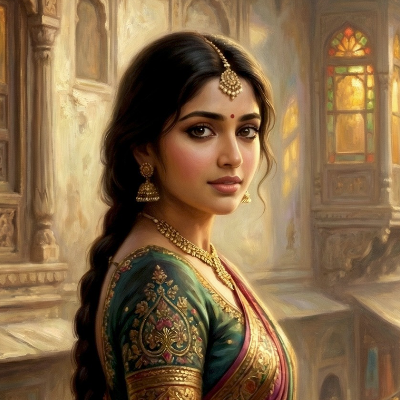
Sudeshna — Queen of Anga, Wife of Bali, and Mother of the Five Eastern Kingdom Founders
Sudeshna · Angarajapatni · Balipriyanama · Dirghatamas-niyoga-patri · Anga-Vanga-Kalinga-mata
Sudeshna is the queen of the Anga kingdom and the wife of Bali — the king who rescued the blind sage Dirghatamas from the Ganga and arranged the niyoga by which Dirghatamas fathered sons upon Sudeshna. She is the biological mother of the five sons — Anga, Vanga, Kalinga, Pundra, and Suhma — who became the eponymous founders of five eastern kingdoms of the Indian subcontinent, and whose names correspond to major regional territories that appear throughout the Mahabharata's political world. Sudeshna's biography as recorded in the primary sources is concentrated in the niyoga episode — her initial refusal to receive the blind sage Dirghatamas in person, her substitution of a maidservant on the first occasion, and her eventual direct reception of the sage on Bali's insistence, which produced the five royal sons. She is not the subject of any extended independent narrative beyond this episode and this profile is proportionate to the available evidence. Sudeshna appears in the Mahabharata's Adi Parva and in Puranic genealogical texts. This Sudeshna should be distinguished from the Sudeshna who is the wife of King Virata of the Matsya kingdom in the Mahabharata's Virata Parva — a different woman of the same name who features in the episode of the Pandavas' incognito exile.
✦ The Name
The name Sudeshna is a compound of su — good, excellent, auspicious — and deshna — gift, giving, or offering — yielding the sense of "the excellent giver," "she of the auspicious gift," or "the good gift-giver." The name carries connotations of generosity and the quality of giving well, which in the context of her story has an ironic dimension — the woman named the good giver initially withheld the gift that was requested of her, sending a substitute instead. The name functions as a royal epithet of honour without the primary texts elaborating its etymological resonance in connection with the episode. The designation Angarajapatni means "wife of the king of Anga." Anga-Vanga-Kalinga-mata means "mother of Anga, Vanga, and Kalinga" — a designation that extends naturally to Pundra and Suhma as well.
✦ Lineage
- Parentage: The primary texts do not record Sudeshna's parentage. The Mahabharata's Adi Parva introduces her as the queen of Anga and the wife of Bali without specifying her family of origin. This profile accordingly makes no claim about her birth family beyond what the sources state.
- Husband: Bali — the king of Anga who rescued the blind sage Dirghatamas from the Ganga and arranged the niyoga arrangement. His profile is given separately in this series.
- Sons — born through niyoga with Dirghatamas:
- Anga — the eldest of the five and the eponymous founder of the Anga kingdom. Anga gave his name to the territory that had been Bali's kingdom, and the subsequent kings of Anga descended from his line. In the Mahabharata, Karna — the great warrior and the Pandavas' eldest half-brother by Kunti — was appointed king of Anga by Duryodhana, giving this territory a central place in the epic's political world.
- Vanga — the eponymous founder of the Vanga territory, identified with Bengal.
- Kalinga — the eponymous founder of the Kalinga territory, identified with Odisha. The Kalinga kingdom has a prominent place in ancient Indian history beyond the Mahabharata, being the territory whose conquest by Ashoka was the occasion of that emperor's famous transformation to the path of non-violence.
- Pundra — the eponymous founder of the Pundra territory, identified with northern Bengal and the region around the Padma river.
- Suhma — the eponymous founder of the Suhma territory, identified with the western part of the Bengal delta.
✦ The Niyoga Arrangement — Sudeshna's Refusal and Substitution
The Mahabharata's Adi Parva narrates the episode of the niyoga arrangement with considerable specificity about Sudeshna's role and her initial response. After Bali rescued Dirghatamas from the Ganga and received him in the royal household, Bali explained to his wife that he wished to commission a niyoga with the sage in order to produce the male heirs that the kingdom required. The niyoga convention — the levirate or proxy fatherhood — was a recognised institution in the tradition's social and legal framework, and Bali's request was legitimate within that framework. Sudeshna was directed to receive Dirghatamas as the niyoga partner.
Sudeshna, however, was unwilling to receive Dirghatamas in person. The Mahabharata's account indicates that her reluctance arose from Dirghatamas's physical appearance — he was old, blind, and of formidable ascetic aspect, very different from the refined royal world of the queen's household. She did not refuse the arrangement outright but found a way to comply with its form while avoiding its substance: she sent a maidservant — a woman of her household — dressed and prepared in such a way as to substitute for herself. Dirghatamas, being blind, could not perceive the substitution. From this first union — between Dirghatamas and the maidservant who had been sent in Sudeshna's place — a son was born: Kakshivat, who became the Rigvedic hymn-composer of the Angirasa tradition.
When Bali discovered what Sudeshna had done — that the son born was the child of a maidservant rather than of the queen herself — he pressed Sudeshna to receive Dirghatamas directly as the arrangement had originally required. The Mahabharata's account is that Sudeshna then complied and received Dirghatamas herself. From this direct union the five sons were born: Anga, Vanga, Kalinga, Pundra, and Suhma.
✦ Sudeshna's Substitution in the Tradition's Context
Sudeshna's substitution of a maidservant for herself in the niyoga arrangement is a narrative pattern that appears more than once in the Mahabharata's genealogical stories — the most prominent parallel being Ambika's substitution of a maidservant for herself during Vyasa's second visit in the Kuru household's niyoga arrangement that produced Dhritarashtra, Pandu, and Vidura. In both cases a royal woman authorised to receive a formidable sage figure found a way to avoid direct contact by sending a substitute, and in both cases the maidservant's child was in some respects the most purely constituted of the children born — Vidura, born of the maidservant who received Vyasa without fear, was the wisest of the three brothers; and Kakshivat, born of the maidservant in the Anga household, became the distinguished Rigvedic hymn-composer.
The tradition's repeated use of this narrative structure — the queen who substitutes a maidservant and the quality of the child born — suggests that it carries a specific theological meaning about the relationship between fear, composure, and the quality of the offspring generated. Where the queen receives the formidable sage-figure with fear or aversion, the child bears the mark of that fear; where a more composed reception occurs, the child is born without that mark. The maidservant who is sent as a substitute typically receives the sage with composure — not because she has greater virtue than the queen but because she has less to fear from the social consequences of the encounter — and the quality of that composure transmits to the child. Sudeshna's substitution, in this structural reading, produced a hymn-composer who went on to compose some of the most personal and devotionally warm hymns in the Rigvedic collection, while Sudeshna's own fearful or reluctant reception produced the five royal sons who were builders of kingdoms rather than poets of the divine.
✦ Disambiguation from the Sudeshna of the Virata Parva
The Mahabharata contains a second significant figure named Sudeshna — the wife of King Virata of the Matsya kingdom, in whose court the five Pandavas spent their year of incognito exile during the period stipulated by the terms of the dice game. This Sudeshna of Virata's household is an entirely different woman from the Sudeshna who was Bali's wife in the Anga kingdom and who is the subject of this profile. The Sudeshna of the Virata Parva employed Draupadi — the wife of the Pandavas, living incognito as a servant — in her personal household, and the episode of Kichaka's desire for Draupadi and his subsequent killing by Bhima takes place within the context of Sudeshna of Virata's household. The two Sudeshas share only their name and should not be conflated. This profile is exclusively concerned with the Sudeshna who was queen of Anga and wife of Bali.
✦ Textual Variants and Inconsistencies
The Mahabharata's Adi Parva is the primary source for the Sudeshna narrative and the primary texts are consistent on the essential facts — the maidservant substitution on the first occasion, the direct reception on the second, and the five sons born from the direct union. The Puranic texts that confirm the five eastern kingdoms' founding through this lineage do not always give the same degree of detail about the maidservant substitution episode, some simply recording that Dirghatamas fathered sons upon Sudeshna without specifying the two-stage nature of the arrangement. The genealogical outcome — the five founders of the eastern kingdoms — is consistent across all major primary sources. The question of whether Kakshivat was fully integrated into the Anga royal succession alongside the five sons born of Sudeshna directly is not definitively resolved in the primary texts, as noted in the Bali profile and the Kakshivat profile.
✦ Theological and Narrative Significance
Sudeshna's theological significance is concentrated in two related aspects of her story. First, her substitution of a maidservant — an act of avoidance motivated by reluctance or fear — inadvertently produced one of the tradition's most celebrated Rigvedic hymn-composers, while her own direct participation produced five royal founders. This outcome suggests that the tradition's genealogical logic assigns different kinds of greatness to children born of different qualities of their mother's reception: the maidservant's composure produced a sage, and the queen's direct but reluctant participation produced kings. Second, Sudeshna is the figure through whom the blind sage Dirghatamas's most lasting dynastic legacy was accomplished — without her body and her eventual compliance with the niyoga arrangement, the five eastern kingdoms would not have received their founding patriarchs through this particular lineage. She is thus, alongside Bali, the instrument of one of the tradition's most consequential acts of dynastic generation — five kingdoms founded in a single generation from a single woman's body.
✦ Connection to the Wider Genealogy
Through her husband Bali and the Anga royal dynasty, Sudeshna is embedded in the political geography of the eastern subcontinent. Through her biological sons Anga, Vanga, Kalinga, Pundra, and Suhma she is the mother of five dynastic lines whose territories correspond to major regions of eastern India. The Anga territory — whose founding ancestor she bore — became in the Mahabharata's narrative world the kingdom of Karna, connecting Sudeshna's lineage indirectly to one of the epic's most significant figures. The Kalinga territory — another of her sons' foundations — is the kingdom whose conquest centuries later transformed Ashoka, giving Sudeshna's genealogical legacy a resonance beyond the strictly Puranic and epic tradition into the historical record of the subcontinent. Through the Angirasa sage Dirghatamas — who was both her niyoga partner and the father of her children — Sudeshna is connected by this extraordinary arrangement to the ancient Angirasa lineage of Angiras, Utathya, and the broad tradition of Angirasa sacred learning that descends from the primordial creative genealogy of Brahma.
✦ References
Primary Sources
- Mahabharata, Adi Parva, sections 98–104: The primary and most detailed source for Sudeshna's biography — Bali's direction that she receive Dirghatamas, her substitution of the maidservant on the first occasion, the birth of Kakshivat from that union, Bali's discovery and insistence that she receive Dirghatamas directly, and the birth of the five sons Anga, Vanga, Kalinga, Pundra, and Suhma from the direct union. The foundational text for the episode.
- Vishnu Purana, Book 4, chapters 18–19: The genealogical account of the five eastern kingdoms and their founding through the sons born of Sudeshna and Dirghatamas in the niyoga arrangement.
- Bhagavata Purana, Book 9, chapter 23: The Bhagavata Purana's genealogical account of the five eastern kingdoms and the lineage through Bali's household confirming Sudeshna's role as the mother of the five founders.
Modern Reference Works
- Vettam Mani, Puranic Encyclopaedia (1975): Entry on Sudeshna (wife of Bali of Anga); distinguishes this figure from the Sudeshna of the Virata Parva and summarises her role in the Dirghatamas niyoga narrative and the founding of the five eastern kingdoms.
- J. A. B. van Buitenen (translator), The Mahabharata, Volume 1 (1973): Critical translation of the Adi Parva with scholarly notes on the Dirghatamas narrative including Sudeshna's role and the maidservant substitution episode.
- F. E. Pargiter, Ancient Indian Historical Tradition (1922): Critical analysis of the eastern kingdoms' founding genealogies; discusses the Anga, Vanga, Kalinga, Pundra, and Suhma tradition and Sudeshna's role as the mother of the five founding kings.
- Wendy Doniger O'Flaherty, Women, Androgynes, and Other Mythical Beasts (1980): Contains analysis relevant to the structural parallel between Sudeshna's maidservant substitution and Ambika's substitution in the Kuru household niyoga, examining the pattern of royal women avoiding direct participation in niyoga arrangements and the genealogical consequences of that avoidance.