
About
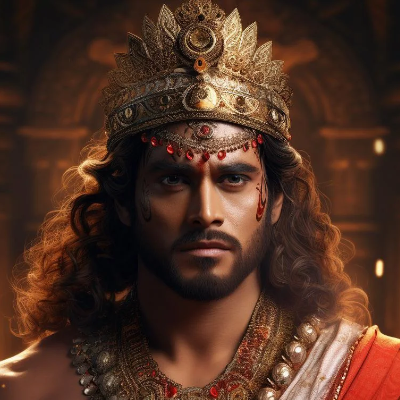
Anga — Eponymous Founder of the Eastern Kingdom of Anga, Son of Bali
Anga · Angavairocana · Son of Bali · Eldest of the Baleya Kshatras · Eponym of the Anga Janapada
Anga is a king of the Anu branch of the Lunar dynasty, recorded in the Mahabharata (Adi Parva, section 104), the Bhagavata Purana (Canto Nine, chapter 23), the Vishnu Purana (Book Four, chapter 18), the Harivamsha (Adi Parva, chapter 31), and the Brahma Purana (chapter 11) as the eldest son born through the rite of niyoga to King Bali — a Chandravanshi king descended through the line of Anu, the fourth son of the ancient Lunar dynasty king Yayati — and his wife Queen Sudeshna, through the biological agency of the blind Vedic sage Dirghatamas. Anga is the eponymous founder of the ancient eastern kingdom of Anga, one of the sixteen Mahajanapadas of the Indian subcontinent, whose capital was the city of Champa located on the right bank of the Ganga near the confluence of the river Champa. He is the eldest of five brothers in the Mahabharata's account — Anga, Vanga, Kalinga, Suhma, and Pundra — each of whom founded and gave his name to a corresponding eastern kingdom; the Bhagavata Purana extends the list to six, adding Odra. The primary sources record very little about Anga as an individual beyond his parentage and his founding of the kingdom. His son and immediate successor in the Anga royal line is named differently across the sources: Khanapana (or Khalapana) in the Bhagavata Purana, Para (abbreviated Pra) in the Vishnu Purana, Anapa in the Vayu Purana, and Dadhivahana in the Harivamsha.
✦ The Name
The Sanskrit word anga means limb, body part, or member of a whole. The Ramayana (Bala Kanda, 1.23.14) offers a separate mythological etymology, connecting the name of the kingdom Anga to the location where the god Kamadeva was consumed by the fire from Shiva's third eye and where his body parts fell to earth. Whether this topographical legend preceded or followed the tradition of the eponymous prince is not determinable from the primary sources. The epithet Angavairocana connects Anga's name to his legal father King Bali, who is occasionally identified in secondary sources by the lineage-name Vairocana — though the Puranic tradition is careful to distinguish this Bali, the eastern king of the Anu-Sutapas line, from Mahabali the son of Virochana of the Daitya lineage and the subject of the Vamana avatar narrative.
✦ Lineage
- Biological Father: Dirghatamas — the blind Vedic sage, author of hymns 140–164 in the first Mandala of the Rigveda, son of the rishi Utathya and his wife Mamata, and grandson of the primordial sage Angiras. He was the biological progenitor of Anga and his brothers through the rite of niyoga.
- Legal Father: Bali — a Chandravanshi king, son of Sutapas, descended through the line of Anu, the fourth son of Yayati; king of the eastern Anava territory; the figure who rescued Dirghatamas from the Ganga and engaged him in niyoga to raise sons. The Harivamsha records that Brahma granted Bali numerous boons: the status of a great yogi, life extending to a full kalpa, invincibility in battle, the ability to perceive the three worlds, and matchless strength.
- Mother: Sudeshna — queen consort of King Bali. The Mahabharata (Adi Parva, section 104) records that Sudeshna initially sent her maidservant to Dirghatamas in her place; only after the deception was discovered did Dirghatamas himself determine Sudeshna's progeny. The Harivamsha states that Dirghatamas touched Sudeshna and declared she would bear five sons of solar glory; from this blessing Anga and his brothers were born.
- Brothers: Vanga, Kalinga, Suhma, and Pundra — named with him in the Mahabharata as co-founders of the eastern kingdoms bearing their names. The Bhagavata Purana (9.23.5) adds Odra as a sixth brother. All six (or five) established principalities in the eastern provinces of India.
- Son and Successor: Named Khanapana (or Khalapana) in the Bhagavata Purana (9.23.6); Para (abbreviated Pra in the Wisdomlib translation) in the Vishnu Purana (IV.18.13); Anapa in the Vayu Purana; and Dadhivahana in the Harivamsha (1.31.43). All four sources agree this was the first king of the Anga line after Anga himself; the variance is entirely in the name. From this son descended Diviratha, then Dharmaratha, then Citraratha (also called Romapada), who was a friend of Dasharatha of Ayodhya.
✦ Birth through Niyoga
The Mahabharata's Adi Parva (section 104) records that King Bali, having no sons despite his great power and virtue, rescued the sage Dirghatamas from the waters of the Ganga — where Dirghatamas had been set adrift by his own family after his conduct had become burdensome — and requested the sage to raise offspring from Queen Sudeshna through niyoga. Sudeshna, aware that Dirghatamas was old and blind, initially sent her maidservant, a woman of low birth, in her own place. Dirghatamas fathered eleven sons upon that woman, the eldest of whom was Kakshivat, a celebrated Vedic poet. When Bali discovered the deception and confronted Dirghatamas, the sage demanded that Sudeshna herself come to him. The Harivamsha records that upon her arrival, Dirghatamas touched her and pronounced that she would bear five sons of solar glory. From this act, Anga and his brothers were born — legally the sons of Bali and ritually the offspring of Dirghatamas, with Sudeshna as their mother.
✦ The Kingdom of Anga
The kingdom of Anga, which took Anga's name, is mentioned as early as the Atharvaveda (V.22.14) among a list of eastern peoples. Based on the Mahabharata's geographical evidence, the kingdom corresponded broadly to the region of Bhagalpur and Munger in what is now Bihar, with its eastern extent reaching parts of Bengal; it was bounded on the north by the river Koshi and separated from Magadha on the west by the river Champa. Its capital was Champa, a city recognised across the Puranic and epic tradition as the capital of Anga. The Vishnu Purana's Wilson translation notes that traces of the city of Champa still remained in the vicinity of Bhagalpur at the time of writing, and firmly identifies it as the historical site. The kingdom was eventually absorbed into the growing Magadha empire, with Bimbisara of Magadha defeating Brahmadatta, the last independent king of Anga, around the middle of the sixth century BCE. Later in the Mahabharata tradition, Duryodhana installed the hero Karna as king of Anga — an episode entirely separate from the kingdom's founding.
✦ Textual Variants
The Mahabharata's Adi Parva (I.104) and the Bhagavata Purana agree on Anga's parentage through Bali and Sudeshna via Dirghatamas, but the two texts name a different number of brothers: five in the Mahabharata, six in the Bhagavata Purana (the sixth being Odra). The name of Anga's immediate son and successor varies significantly across all four principal sources — Khanapana or Khalapana (Bhagavata Purana), Para or Pra (Vishnu Purana), Anapa (Vayu Purana), and Dadhivahana (Harivamsha) — a variance documented in the Wilson translation footnote 13. The Padma Purana offers a variant on the broader Anga lineage, stating that Anga descended from the sage Atri rather than from the Chandravanshi line through Bali. The Matsya Purana describes the father of the eponymous Anga as the chief among demons, a characterisation not found in the Mahabharata account. These variant accounts reflect different Puranic traditions handling the origin legend of the kingdom separately. It must also be noted that a distinct figure named Anga appears in the Bhagavata Purana's Canto Four (chapters 13–14) in a completely separate genealogical context — as a king descended from the Chakshusha Manu line, the father of Vena, whose wickedness caused Anga to abandon his kingdom. This figure has no connection to the Anga profiled here, who is a son of Bali and Sudeshna of the Anu dynasty; the two bear the same name but belong to entirely different textual and genealogical traditions.
✦ References
Primary Sources
- Mahabharata, Adi Parva, Section 104 (I.104.53–54) — The principal primary source for Anga's birth through Bali and Sudeshna via Dirghatamas; names five sons born from this union; does not record any individual narrative episodes for Anga beyond his parentage and the founding of the kingdom.
- Bhagavata Purana, Canto Nine, Chapter 23, verses 5–6 — Names six sons of Bali through Dirghatamas including Odra as the sixth; records that all six established eastern principalities known by their names; names the first successor of Anga as Khanapana (Khalapana in the Vedabase translation).
- Vishnu Purana, Book Four, Chapter 18, verses 11–15 — Lists five sons of Bali through Dirghatamas; names Anga's son as Pra (abbreviated in the Wisdomlib translation); Wilson's footnote 13 documents all four variant names for Anga's son across the primary sources.
- Harivamsha, Adi Parva, Chapter 31, verses 33–43 — Records five sons of Bali including Anga as the eldest; names Anga's son as Dadhivahana, describing him as a great emperor; continues the Anga royal lineage through Diviratha, Dharmaratha, and Citraratha.
- Brahma Purana, Chapter 11 — Records five sons of Bali headed by Anga and confirms the eastern kingdoms named after them.
- Atharvaveda, V.22.14 — The earliest textual mention of the Angas as a people, listed alongside the Magadhas, Gandharis, and Mujavatas.
- Ramayana, Bala Kanda, 1.23.14 — Offers the alternative mythological etymology of the name Anga as the place where Kamadeva's body fell after being burned by Shiva's fire.
- Bhagavata Purana, Canto Four, Chapters 13–14 — The source for a distinct figure named Anga belonging to the Chakshusha Manu lineage, who was the father of Vena and the grandfather of Prithu; this Anga is entirely separate from the figure profiled here.
Secondary and Reference Works
- Wikipedia, "Anga kingdom" — Summarises the Mahabharata and Puranic accounts and collates the geographical evidence for the kingdom's location; confirms Champa as the capital and Bhagalpur as the modern approximate site.
- Wisdomlib.org, Vishnu Purana (Wilson translation), Book Four, Chapter 18 — Provides the English translation and Wilson's footnote 13 documenting the four variant names for Anga's son (Khanapana, Para/Pra, Anapa, Dadhivahana) across the Bhagavata Purana, Vishnu Purana, Vayu Purana, and Harivamsha.
- Wisdomlib.org, Harivamsha Purana (Dutt translation), Chapter 31 — Provides the English translation of Harivamsha 1.31.43 naming Dadhivahana as Anga's son and the subsequent Anga royal lineage.
- Jatland.com, "Angadesha" — Summarises the primary source accounts of Anga's birth through Bali and Dirghatamas; confirms the Ramayana's etymological tradition and the geographical boundaries of the kingdom.
- Manuscrypts.com, "Anga (1)" — Provides a narrative synthesis of the Bhagavata Purana Canto Nine account of Anga's birth and kingdom, and correctly attributes the Ashvamedha and Vena narrative to Bhagavata Purana Canto Four — confirming it belongs to the separate Chakshusha-lineage Anga, not this figure.