
About
Kalinga — Eponymous Founder of the Kingdom of Kalinga
Kalinga
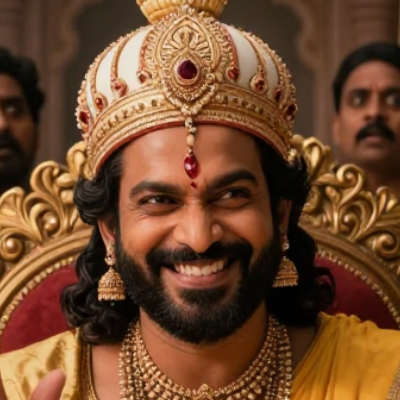
Kalinga is the figure named in the Mahabharata and Puranas as the eponymous founder of the ancient coastal kingdom of Kalinga — a historically prominent realm occupying much of the coastal region of present-day Odisha and parts of northern Andhra Pradesh. He is the third son among the five born through Queen Sudeshna, wife of King Bali, a Chandravanshi king, through the niyoga blessing of the blind Vedic sage Dirghatamas, son of the rishi Utathya and grandson of the primordial sage Angiras. Kalinga's kingdom became one of the most strategically significant in the ancient Indian subcontinent and is famous as the site of the war fought by the Mauryan emperor Ashoka in the third century BCE — a battle whose aftermath, by Ashoka's own account on rock edicts, prompted his conversion to a policy of non-violence. The primary texts record nothing about Kalinga as an individual beyond his parentage and the founding of the kingdom.
✦ The Name
No internal Sanskrit etymology for the name Kalinga is provided in the primary texts in the context of the prince. The name became so thoroughly identified with the territory that it persisted across many centuries and dynasties. The Mahabharata refers to two capitals of the Kalinga kingdom — Dantapura and Rajapura — though these are mentioned in the context of the kingdom's history, not of its founder.
✦ Lineage
- Biological father: Dirghatamas — the blind Vedic sage, author of Rigvedic hymns 1.140–164, son of Utathya, grandson of Angiras.
- Legal father: Bali — Chandravanshi king descended from Anu, son of Yayati.
- Mother: Sudeshna — queen of Bali; bore five sons (or six in the Bhagavata Purana) through the blessing of Dirghatamas.
- Brothers: Anga, Vanga, Pundra, and Suhma — named alongside Kalinga in the Mahabharata; Odra is added as a sixth in the Bhagavata Purana.
✦ The Kingdom of Kalinga
The kingdom of Kalinga, as placed by the Mahabharata's geographical evidence, occupied the coastal belt running from the river Subarnarekha in the north to the Godavari in the south, and from the Bay of Bengal in the east to the Amarkantak range in the west — a territory broadly corresponding to modern Odisha. The Mahabharata records that king Shrutayudha, also called Shrutayus, led the Kalinga forces as a general in the Kaurava army at Kurukshetra, where he was slain by Bhima. Several later Mahabharata passages mention Kalinga kings as participants in the political events of the epic. The kingdom maintained its identity through successive dynasties long after the epic period, most notably under Kharavela of the Mahameghavahana dynasty.
✦ Textual Variants
The Mahabharata (I.104) names five sons of Sudeshna, including Kalinga. The Bhagavata Purana names six, adding Odra. Both texts agree on Kalinga's parentage and on the founding of the kingdom. The Harivamsha (1.39) is consistent with the Mahabharata in listing five sons.
✦ References
Primary Sources
- Mahabharata, Adi Parva, Section CIV (I.104.53–54): The foundational account of Kalinga's birth; names five brothers.
- Mahabharata, various Parvas: Mentions Kalinga kings in subsequent narrative contexts, including the Kurukshetra war.
- Bhagavata Purana, Skandha 9: Names six sons of Bali through Sudeshna, including Kalinga.
- Harivamsha, 1.39: Confirms the five-son list.
Secondary Sources
- Wikipedia, article on Kalinga (Mahabharata): Provides the geographical placement and later history of the kingdom.
- Historyofodisha.in, article on Kalinga Mahajanapada: Summarises the Adi Parva account and places Kalinga's founding within the Mahabharata's eastern kingdoms narrative.