
About
Pundra — Eponymous Founder of the Kingdom of Pundra
Pundra · Paundra · Paundraka
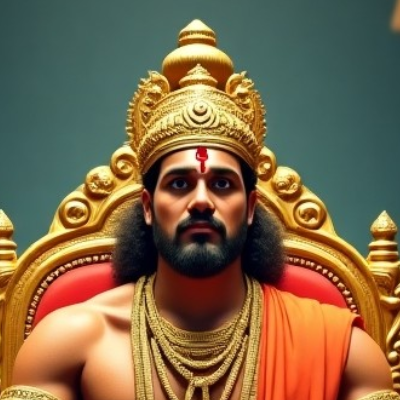
Pundra is the figure named in the Mahabharata and Puranas as the eponymous founder of the ancient kingdom of Pundra — also known as Pundravardhana — a realm situated in the northern regions of present-day West Bengal and Bangladesh. He is the fourth son among the five born through Queen Sudeshna, wife of King Bali, through the niyoga blessing of the blind Vedic sage Dirghatamas, son of the rishi Utathya and grandson of the primordial sage Angiras. Beyond his parentage and the founding of the kingdom, the primary sources record nothing about Pundra as an individual.
✦ The Name
The name Pundra is the basis for the territorial designations Pundravardhana and Paundra used in later texts. The people of the kingdom were called Pundras or Paundras. A king named Paundraka Vasudeva — a later ruler who appears in the Mahabharata as a rival of Krishna — bore a name derived from this territorial designation, but he is a distinct figure from the eponymous founder Pundra and belongs to a much later generation of the kingdom's history. No internal Sanskrit etymology for the name itself is offered by the primary texts.
✦ Lineage
- Biological father: Dirghatamas — the blind Vedic sage, son of Utathya, grandson of Angiras.
- Legal father: Bali — Chandravanshi king, son of Sutapas, descended from Anu, son of Yayati.
- Mother: Sudeshna — queen of Bali.
- Brothers: Anga, Vanga, Kalinga, and Suhma — named alongside Pundra in the Mahabharata; Odra is added as a sixth in the Bhagavata Purana.
✦ The Kingdom of Pundra
The Pundra kingdom occupied the northern portions of the Bengal region, with its capital at Pundranagara — identified with Mahasthangarh in the Bogra district of modern Bangladesh. The kingdom is bounded to the west by the Mahananda river, which separated it from Anga, and to the south by the Padma. The Atharvaveda (V.22.14) mentions the Pundras alongside the Angas, Gandharis, and Mujavatas as an eastern people. The Mahabharata records the Pundras as sending tribute to Yudhishthira's Rajasuya sacrifice, and a later Pundra king, Paundraka Vasudeva, is described as a rival of Krishna and an ally of Jarasandha. Karna is also recorded in the Mahabharata as having subjugated the Pundras during his conquests.
✦ Textual Variants
The Mahabharata (I.104) names five sons of Sudeshna through Dirghatamas, including Pundra. The Bhagavata Purana names six, adding Odra. The Harivamsha (1.39) names five, consistent with the Mahabharata.
✦ References
Primary Sources
- Mahabharata, Adi Parva, Section CIV (I.104.53–54): Names Pundra as one of five sons of Sudeshna through Dirghatamas.
- Bhagavata Purana, Skandha 9: Names six sons, including Pundra.
- Harivamsha, 1.39: Names the five sons, consistent with the Mahabharata.
- Atharvaveda, V.22.14: Earliest mention of the Pundras as an eastern people.
Secondary Sources
- Wikipedia, article on Pundravardhana: Provides the Mahabharata reference (I.104.53–54) and the geographical location of the kingdom.
- Wisdomlib.org, entry on Sudeshna: Confirms the Mahabharata, Bhagavata Purana, and Harivamsha references.