
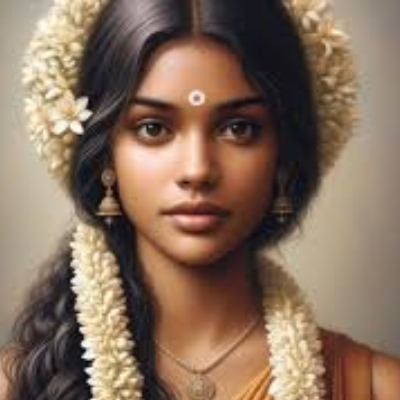
About
Iravati — Daughter of the Sage Dharma Sharma and Wife of Chitragupta
Iravati · Shobhavati · Daughter of Dharma Sharma · Consort of Chitragupta
Iravati is one of the two principal wives of Chitragupta, the divine scribe and accountant of karma who records the deeds of all beings and assists Yama — the god of death and cosmic justice — in adjudicating the fate of souls after death. In the primary account preserved in the Yama Samhita, an extract attributed to the ninth chapter of the Ahilya Kamdhenu (a compendium on Hindu sacred law), Iravati is the daughter of the sage Dharma Sharma, also honoured by the title Brahmashri. A second and distinct tradition, represented in the broader Puranic corpus, identifies Chitragupta's second wife as Nandini, daughter of the progenitor Manu. Iravati is also known by the name Shobhavati in certain genealogical records. She figures centrally in community-specific Vamshaavalis and in the Chitragupta Purana traditions maintained by the Kayastha communities, for whom Chitragupta is the founding ancestor.
✦ The Name
The name Iravati derives from the Sanskrit root ira, associated with water, nourishment, refreshment, and speech. The name therefore carries connotations of one who is nourishing or life-giving, and is shared with the celestial river Iravati (the Ravi river of the Punjab) and with the divine elephant Airavata's female counterpart. The alternate name Shobhavati derives from shobha, meaning radiance, beauty, or splendour, and vati, meaning one who possesses that quality — thus, the radiant one or she who is endowed with lustre.
✦ Lineage
- Father: Dharma Sharma (also rendered Dharma Shrama), a Brahmashri sage. According to the Yama Samhita, Dharma Sharma received Iravati as a daughter through the grace and blessings of Lord Brahma, the creator deity. He subsequently gave her in marriage to Chitragupta upon completion of a sacrificial rite (yajna).
- Mother: The Yama Samhita account does not name Iravati's mother. Certain community genealogical records associate her maternal lineage with the Nagavansha (the dynastic line of serpent kings), though these accounts are found in tradition-specific Vamshaavalis rather than in the major Mahapuranas.
- Husband: Chitragupta, the divine record-keeper and accountant of karma, who was brought into being by the creator Brahma from his own body (kaya) and was thereafter stationed in the court of Yama to assist in the accounting of the deeds of all mortal souls.
- Sons: The Padma Purana (Uttar Khanda) records that Chitragupta fathered twelve sons across his two marriages. The specific allocation of sons between Iravati and the other wife varies between the major Puranic text and the community-specific genealogical records. According to Vamshaavali traditions, the twelve sons of Chitragupta became the progenitors of the twelve sub-lineages of the Kayastha community. Several of these sons are said to have married daughters of Vasuki, king of the Nagas (serpent beings), which the Nagavansha connection in Iravati's maternal lineage is sometimes cited to explain.
✦ The Marriage of Iravati and Chitragupta
The Yama Samhita account describes the circumstances of the marriage as follows. After Brahma created Chitragupta from his own body and assigned him the cosmic function of maintaining the ledger of human deeds, Chitragupta came to serve in the divine court of Yama (also known as Dharmaraja, lord of righteousness and death). The sage Dharma Sharma, having received Iravati as a daughter through Brahma's grace, performed a sacrificial rite and thereafter gave Iravati in marriage to Chitragupta. The marriage is thus presented as both a reward for Chitragupta's devoted service in cosmic administration and as an act of sacred gift (kanyadan) by a sage whose daughter had been divinely bestowed upon him for this very purpose.
✦ Textual Variants and Inconsistencies
The textual tradition surrounding Iravati is not uniform, and two distinct versions of her parentage circulate across different classes of sources.
In the first version, preserved in the Yama Samhita (attributed to the ninth chapter of the Ahilya Kamdhenu) and in Chitragupta Purana and Vamshaavali traditions, Iravati's father is the sage Dharma Sharma, a learned Brahmin who received her through divine grace and gave her to Chitragupta after performing a yajna. This is the version considered authoritative within Kayastha genealogical traditions and has been cited in Indian legal proceedings — including judgments of the Patna High Court — as documentary evidence of the community's lineage.
In a second version, found in summaries and later Puranic compilations, Iravati is identified as the daughter of Yama himself (Dharmaraja), with the marriage framed as Yama rewarding Chitragupta for his indispensable service. This version does not appear to rest on a clearly identifiable primary Mahapuranic passage and may represent a conflation arising from the repeated association of Chitragupta with Yama's court, in which Yama came to be read as Iravati's father rather than merely her father's overlord.
A third layer of variation concerns the name: the Vamshaavali traditions use both Iravati and Shobhavati, sometimes treating these as the same person and sometimes presenting them as two distinct wives, which introduces further ambiguity when cross-referencing against Puranic accounts of Chitragupta's two wives.
✦ Significance in the Wider Genealogy
Iravati's primary genealogical importance lies in her role as the mother of a portion of Chitragupta's twelve sons, who in Kayastha tradition are the founding ancestors of the twelve sub-lineages of that community. The Padma Purana (Uttar Khanda) affirms that Chitragupta had twelve sons by two wives, though the text does not always name the wives individually with full clarity. The Vamshaavali tradition supplements the Puranic account by naming both wives — Iravati (or Shobhavati) and Nandini (daughter of Manu, the progenitor of humanity) — and by distributing the twelve sons between them. In this framework, Iravati is the maternal ancestor of several of the twelve Kayastha clans, making her a figure of direct genealogical importance to a very large community across northern and eastern India.
The association of her sons with Vasuki — the king of serpents and a prominent figure in both the Mahabharata and the Puranas — through marriage into the Naga royal line places the Chitragupta genealogy at a junction between the divine scribal lineage and the Nagavansha, one of the prominent quasi-divine dynastic lines of Puranic tradition.
✦ References
- Primary Sources
- Yama Samhita (attributed to the ninth chapter of the Ahilya Kamdhenu): The principal textual authority for identifying Dharma Sharma as the father of Iravati and for the narrative of her marriage to Chitragupta following a yajna performed by the sage.
- Padma Purana, Uttar Khanda: Records that Chitragupta fathered twelve sons across two marriages; provides the broader Puranic context for Chitragupta's lineage and cosmic role, though the wives are not always named with full individual detail.
- Chitragupta Purana: A community-specific text that elaborates the lineage of Chitragupta, the identities of his wives, and the genealogical lines descending from his twelve sons; treats Iravati (Shobhavati) as a distinct figure alongside Nandini.
- Vamshaavali traditions of the Kayastha community: Genealogical records maintained within Kayastha lineage communities that specify the distribution of Chitragupta's twelve sons between the two wives and their subsequent marriages into the Nagavansha through the daughters of Vasuki.
- Secondary and Reference Sources
- Patna High Court judicial records (cited in community legal proceedings): Referenced as evidence of the Yama Samhita's use as a documentary authority in the authentication of Kayastha genealogical claims, establishing the legal-historical weight accorded to the Dharma Sharma lineage account.