
About
Yagna Sharma — Eldest Son of Shiva Sharma, Scholar and Exemplar of Pitru Bhakti
Yagna Sharma · Eldest of the Five Sons of Shiva Sharma · Yajna Sharma
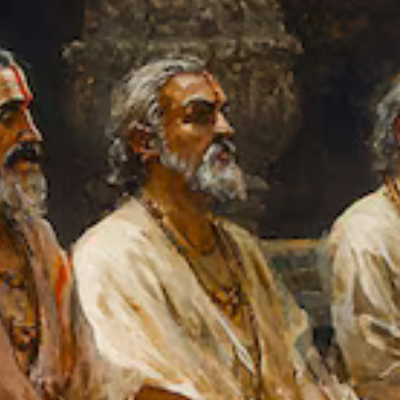
Yagna Sharma is the eldest of the five sons of Shiva Sharma, a Brahmin scholar of Dwaraka described in the Padma Purana as a master of the Vedas and Shastras. Yagna Sharma and his four brothers — Veda Sharma, Dharma Sharma, Vishnu Sharma, and Soma Sharma — were all renowned for their scriptural learning and their devotion to their father. In the Padma Purana narrative of the Pitru Bhakti trial, Yagna Sharma is singled out as the recipient of the most demanding and morally extreme of the commands issued by Shiva Sharma as a test of filial faith, making him the central figure in the most dramatic moment of the episode. The specific chapter and verse reference within the Padma Purana has not been confirmed against a critically established edition; the account is known through traditional summaries.
✦ The Name
Yagna Sharma — also rendered Yajna Sharma — takes its first element from the Sanskrit yajna, meaning a sacred ritual offering or sacrificial rite, the central act of Vedic religious practice through which oblations are made to the gods through the medium of fire. The name thus identifies this son with the most fundamental of Brahminical ritual obligations. Sharma, shared by all five brothers, is the Brahminical honorific indicating sacred learning and varna status.
✦ Lineage
- Father: Shiva Sharma, a Veda-Shastra Vidwan (scholar of Vedas and sacred sciences) residing in the holy city of Dwaraka; renowned for his yogic powers and his testing of his sons through the Pitru Bhakti trial.
- Brothers: Veda Sharma (second son), Dharma Sharma (third son, father of Iravati who became a wife of the divine scribe Chitragupta), Vishnu Sharma (fourth son), and Soma Sharma (fifth son).
✦ The Pitru Bhakti Trial
In the episode narrated in the Padma Purana, Shiva Sharma employed maya — the power of divine illusion — to simulate the death of his wife, the mother of his five sons. He then directed each son to perform a specific act as proof of absolute trust in the father's command. The charge given to Yagna Sharma, as the eldest, was the most severe: he was commanded to dismember what appeared to be the body of his deceased mother. That Yagna Sharma carried out this instruction — overcoming the powerful countervailing demands of grief, filial duty to the mother, and conventional dharmic propriety — is presented by the tradition as the supreme demonstration of Pitru Bhakti, devotion to the father.
The tradition interprets this act not as one of violence or impiety but as the ultimate act of faith: the son's willingness to subordinate his own moral judgment entirely to the father's authority, trusting that the father's command could not ultimately lead to adharma. The revelation that the death was illusory — wrought through Shiva Sharma's yogic powers — confirmed the sons' virtue and rewarded their obedience.
✦ References
- Primary Sources
- Padma Purana (specific chapter and verse unconfirmed against a critical edition): The source for the Pitru Bhakti episode and Yagna Sharma's role as the eldest son who received the most demanding of the commands in the trial of filial devotion.
- Secondary and Reference Sources
- Kamakoti.org, summary of Padma Purana material (web resource): Secondary transmission of the Padma Purana narrative used pending verification against a primary edition.