
About
Himvan — Fifth Son of Chitragupta and Iravati, Progenitor of the Ambashtha Kayastha Clan
Himvan · Himvan Chitragupta · Ambashtha Adi-Purush
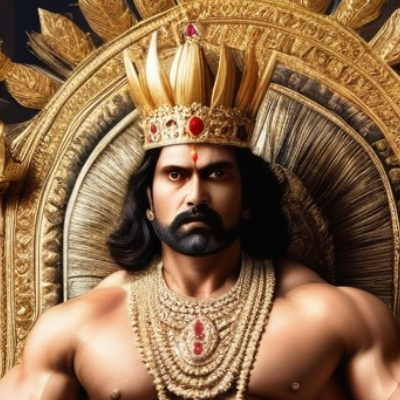
Himvan is the fifth son of Chitragupta born of his second wife Iravati. He is the founding ancestor of the Ambashtha subdivision of the Chitraguptavanshi Kayastha community. The clan name Ambashtha connects his descendants to the ancient Ambashtha kingdom — a territory recorded in the Mahabharata and classical geographic texts as lying between the Chenab and Ravi rivers in the northwestern region of the Indian subcontinent, corresponding broadly to parts of the historic Punjab. The principal sources recording his identity are the Padma Purana (Uttar Khanda), the Garuda Purana, and the Chitragupta Vamshaavali.
✦ The Name
The name Himvan derives from the Sanskrit hima, meaning snow or cold, combined with the suffix van or vat indicating possession — meaning one who possesses or is associated with snow, or one of snowy or cool character. It is a name evoking the Himalayan mountains — Himavan or Himavat being one of the standard names for the mountain range itself — and carries connotations of grandeur, stability, and the elevated quality of the high peaks. The community name Ambashtha is derived from the ancient Ambashtha people and kingdom, recorded in the Mahabharata and other classical sources as an identifiable tribal and political grouping inhabiting the region between the Chenab and Ravi rivers.
✦ Lineage
- Father: Chitragupta — the divine scribe in the court of Yama, keeper of the karmic records of all living beings, and presiding deity of the Kayastha community.
- Mother: Iravati — second wife of Chitragupta; mother of Charu, Sucharu, Chitra, Matiman, Himvan, Chitracharu, Chitracharan, and Atindriya.
- Full brothers: Charu — progenitor of the Mathur clan; Sucharu — progenitor of the Gaur clan; Chitra — progenitor of the Bhatnagar clan; Matiman — progenitor of the Saxena clan; Chitracharu — progenitor of the Nigam clan; Chitracharan — progenitor of the Karna clan; Atindriya — progenitor of the Kulshrestha clan.
- Paternal half-brothers: The four sons of Nandini — Bhanu, Vibhanu, Vishvabhanu, and Viryabhanu — progenitors respectively of the Srivastava, Suryadhwaja, Valmiki, and Asthana clans.
- Wife: A Nagakanya — a daughter of Vasuki, the king of serpents, as recorded in the Padma Purana.
- Descendants: The Ambashtha community of Chitraguptavanshi Kayasthas, historically associated with the region between the Chenab and Ravi rivers.
✦ Sacred Thread Investiture
The Padma Purana records that all twelve sons of Chitragupta, including Himvan, were invested with the sacred thread — the yajnopavita — establishing their twice-born status and their right to study the Vedas and perform Vedic rites.
✦ Geographic and Community Association
The Ambashtha clan founded by Himvan takes its name from the ancient Ambashtha kingdom recorded in the Mahabharata as occupying the territory between the Chenab and Ravi rivers — a region of the historic northwestern Punjab that appears in the epic's accounts of the kingdoms and peoples of the subcontinent. The Mahabharata records the Ambastha as one of the recognisable political groupings of the northwestern frontier, giving the Ambashtha Kayastha community a genealogical anchor in one of the oldest named territories of the epic tradition.
✦ References
- Primary Sources:
- Padma Purana, Uttar Khanda: Records the birth of Chitragupta's twelve sons, their investiture with the sacred thread, and their marriages to the daughters of Vasuki.
- Garuda Purana: Records Chitragupta's genealogy and the founding of the twelve Kayastha subdivisions.
- Mahabharata: Records the Ambashtha kingdom between the Chenab and Ravi rivers as an identifiable political grouping of the northwestern frontier, providing the geographic context for the Ambashtha clan name.
- Chitragupta Vamshaavali: Identifies Himvan as the fifth son of Iravati and progenitor of the Ambashtha clan.
- Secondary Sources:
- Vettam Mani, Puranic Encyclopaedia (1975): Entry on Chitragupta and his sons noting the principal Puranic references.
- Wisdom Library, Chitragupta: Aggregates Puranic and community textual references to Chitragupta and the twelve sons.