
About
Kunjara — Vanara Chief, Father of Anjana
Kunjara · Kunjar · Kunjara Vanara
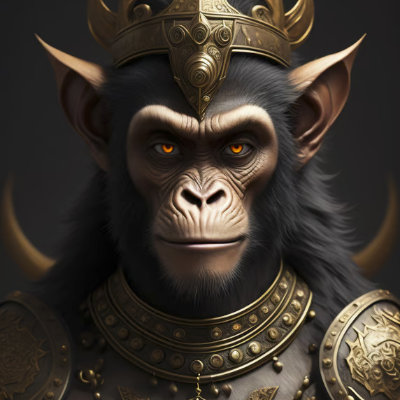
Kunjara is a Vanara chief mentioned in the Valmiki Ramayana as the father of Anjana, the Vanara woman who became the mother of Hanuman. He appears in the genealogical passages of the epic that establish Hanuman's descent and thus occupies a foundational position in the lineage of one of the most celebrated figures in the Ramayana tradition. His appearance in the text is brief and strictly genealogical; no extended narrative is devoted to him. The primary source for his identification is the Valmiki Ramayana, with corroborating references found in certain Puranic and subsidiary texts that elaborate the birth narrative of Hanuman.
✦ The Name
The name Kunjara derives from the Sanskrit root denoting an elephant — kunjara being a well-attested classical Sanskrit term for the elephant, particularly one of great size and power. The use of this name for a Vanara chief is notable in that elephant-names were occasionally applied to powerful male figures in the epic and Puranic traditions to connote physical strength and commanding presence. No secondary epithet or patronymic for Kunjara is preserved in the surviving textual record.
✦ Lineage
- Identity: Vanara chieftain; exact tribal or regional affiliation not specified in the primary texts.
- Father: Not recorded in any surviving primary source.
- Mother: Not recorded in any surviving primary source.
- Daughter: Anjana — a Vanara woman, wife of the Vanara chieftain Kesari, and mother of Hanuman. Hanuman is described as the son of the wind-god Vayu through divine grace granted to Anjana, though Kesari is acknowledged as his social and legal father. Anjana is thus the principal figure through whom Kunjara's lineage achieves its significance in the tradition.
✦ Role in the Tradition
Kunjara's function in the Ramayana tradition is exclusively genealogical. He is named in the passage that provides Hanuman's maternal ancestry, grounding Hanuman within the Vanara social order as well as within the lineage of a specific and named chief. This naming is consistent with the broader Ramayana convention of establishing the parentage of major figures through formal genealogical statements. Beyond this function, the texts preserve no narrative of Kunjara's own deeds, his role in any military or political event, or his religious observances. The tradition directs all attention through him to his daughter Anjana and, through her, to Hanuman.
✦ Connection to the Wider Genealogy
Kunjara stands as the maternal grandfather of Hanuman, one of the central figures of the Valmiki Ramayana. Hanuman — whose full identification rests on three lines of descent — is the son of Anjana (daughter of Kunjara), the son of Kesari (the Vanara chieftain who is Hanuman's social father), and simultaneously acknowledged as having been born through the power of Vayu, the Vedic wind-deity. Kunjara's lineage thus enters the broader epic genealogy through this triple descent. Hanuman, through his role as devotee and ally of Rama — the Ikshvaku prince who is the Ramayana's principal hero — becomes one of the most theologically significant beings in the tradition, and Kunjara's position as his maternal grandfather, while minor in the narrative, is textually secure.
✦ References
Primary Sources
- Valmiki Ramayana, Kishkindha Kanda (Book IV), Chapter 66: The principal source for Kunjara's identification as the father of Anjana; the passage narrates the circumstances of Anjana's birth and her parentage as part of the account of Hanuman's origin.
- Valmiki Ramayana, Sundara Kanda (Book V): Contains passages in which Hanuman's own birth and lineage are recalled, corroborating his maternal descent from Anjana daughter of Kunjara.
- Brahmanda Purana and Shiva Purana (Hanuman birth narratives): Certain Puranic recensions that expand on the birth of Hanuman and the lineage of Anjana reference Kunjara as her father, consistent with the Valmiki account, though the detail these texts add relates primarily to Anjana rather than to Kunjara himself.
Secondary Sources
- Vettam Mani, Puranic Encyclopaedia (1975): Provides a concise identification of Kunjara as Anjana's father within the entry on Anjana, confirming the genealogical role without additional narrative detail.
- Monier-Williams Sanskrit-English Dictionary: Documents the etymology of the name kunjara as a Sanskrit term for elephant, relevant to the interpretation of the name.