
About
Nala — Son of Vishvakarma, Architect of the Vanara Army, and Engineer of the Rama Setu
Nala · Vishvakarmaja · Nalasetu-nirmata · Kapishilpi · Devasilpi-suta · Vanaracharya · Setubandha-kartri
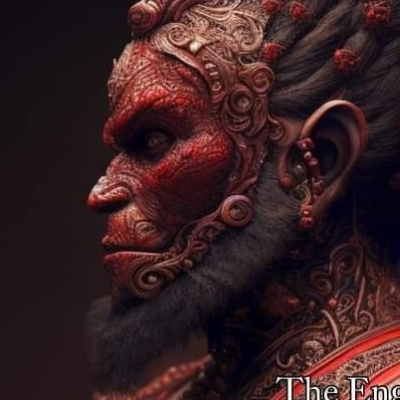
Nala is a vanara — a member of the monkey race — who serves in Sugriva's army and is identified in the Valmiki Ramayana as the son of Vishvakarma, the divine architect of the gods. He is the engineer and architect of the Rama Setu — the great bridge across the ocean between Rameswaram and Lanka — whose construction in five days made possible Rama's invasion of Lanka, Ravana's defeat, and Sita's liberation. The bridge is also known as Nala Setu in his honour. His identity as Vishvakarma's son gave him an architectural capability that no other vanara possessed — the specific technical knowledge of how to design and supervise the construction of a structure of unprecedented scale across open water — and it is precisely this divine inheritance that Varuna reveals to Rama when suggesting the bridge's construction. The Valmiki Ramayana's Bala Kanda verse 1.17.12 records Vishvakarma's fathering of Nala explicitly: "The divine architect Vishvakarma procreated the great monkey called Nala." The Yuddha Kanda verse 6.22.50 records Varuna's words to Rama: "This one, named Nala, a glorious person, is the son of Vishvakarma; who was given a boon by his father and is equal to Vishvakarma." Beyond the bridge construction, Nala also participated in the Yuddha Kanda's battles, fought in a single combat with the Rakshasa warrior Pratapana, and brought water from the sea for Rama's coronation ceremony on Lanka's conclusion. He appears in the Valmiki Ramayana's Bala Kanda and Yuddha Kanda, and in the Vamana Purana in the context of his parents' biography.
✦ The Name
The name Nala in Sanskrit carries two primary meanings — the common reed or hollow stalk of a water plant, and the lotus. Both meanings are relevant to his identity in different ways. The reed is the craftsman's measuring instrument — the rod used for setting out dimensions in construction — connecting the name to his architectural vocation. The lotus carries connotations of beauty arising from base material, of the sacred emerging from the mundane, which resonates with his specific achievement: the raising of a great sacred bridge from raw natural materials — trees, rocks, boulders — thrown into the sea by an army of monkeys. The patronymic Vishvakarmaja means "son of Vishvakarma." Nalasetu-nirmata means "the maker of the Nala Setu." Kapishilpi means "the sculptor-architect of the vanaras." Setubandha-kartri means "the maker of the dam or binding of the bridge."
✦ Lineage
- Father: Vishvakarma — the divine architect of the gods, son of Prabhasa the eighth Vasu and Angirasi the daughter of Angiras. The Valmiki Ramayana's Bala Kanda verse 1.17.12 is the primary source: "Vishvakarma procreated the great monkey Nala." This verse is part of the account in the Bala Kanda of how Brahma directed the gods and divine beings to produce vanara sons in order to create an army for Rama's eventual mission. Vishvakarma's specific contribution to this divine army-generation was Nala — a vanara who inherited his father's architectural skill and who would be exactly the being needed when the army had to cross an ocean. The Britannica article on Vishvakarma confirms: "Vishvakarma's son Nala is one of the monkeys in the epic and serves as the architect who assists Rama and his allies in building a bridge to Lanka." His profile is given separately in this series.
- Mother: A vanara woman — identified in the Vamana Purana's account of the Vishvakarma-Ghritachi episode as born of a union between Vishvakarma and Ghritachi when Vishvakarma was in his vanara (monkey) form following a sage's curse. The Wikipedia article on Nala states he "was born when Vishwakarma embraced Nala's vanara mother and has an ejaculation." This means Nala's mother was a vanara woman of the Kishkindha tradition, and his dual inheritance — Vishvakarma's divine architectural skill from the divine father and the vanara's physical strength and agility from the vanara mother — gave him the precise combination of capabilities that the bridge's construction required.
- Paternal grandfather: Prabhasa — the eighth Vasu. His profile is given separately in this series.
- Paternal grandmother: Angirasi — also called Bhanumati. Her profile is given separately in this series.
- The primary texts do not record Nala's wife or children.
✦ The Context of Nala's Birth — Brahma's Command
The Valmiki Ramayana's Bala Kanda contains a passage — often called the Sarga on the creation of the vanara army — in which Brahma, foreseeing that Vishnu would descend as Rama and require a vast army to defeat Ravana, commanded all the gods and divine beings to produce vanara sons with vanara mothers. The purpose was explicitly to create an army of beings who combined divine capabilities with the physical strength, agility, and adaptability of the vanara form. Each divine being who participated in this command was to produce sons who carried the specific quality of that divine being's domain into the vanara world. Vishvakarma's son Nala would carry the divine craftsman's skill into the army. Agni's son Nila would carry fire's power. Sugriva was the son of Surya. Bali was the son of Indra. Hanuman was the son of Vayu. The entire vanara army thus constituted a deliberate divine creation — each member carrying a specific divine quality precisely chosen for its usefulness in Rama's mission. Nala's divine-father assignment was the most functionally specific of all: his was the one divine capability that would be needed not in battle but in the crossing of the ocean, which was the mission's single greatest logistical challenge.
✦ The Boon Given by Vishvakarma
The Valmiki Ramayana's Yuddha Kanda verse 6.22.50 — Varuna's words to Rama — specifically states that Nala was "given a boon by his father and is equal to Vishvakarma." The boon from Vishvakarma was the specific transmission of the divine architect's skill and knowledge to his vanara son — a deliberate gift that ensured Nala would be capable of the work his father foresaw would be needed. The boon was not merely a general enhancement of Nala's capabilities but a specific architectural knowledge — the ability to design, supervise, and execute large-scale construction. The ocean god Varuna's revelation of this boon to Rama is the mechanism by which Nala came to the centre of the Yuddha Kanda's opening challenge: how to cross the ocean. Varuna told Rama he could not simply part the waters — it was not in his nature to become shallow — but that a being in Rama's own army possessed the specific skill to build a bridge that the ocean would support.
✦ The Construction of the Rama Setu
The construction of the Rama Setu is narrated in the Valmiki Ramayana's Yuddha Kanda — specifically in the Setu Bandha section — with precise detail about the engineering process and the daily progress of the construction over five days. The primary sources give the bridge's dimensions as one hundred yojanas in length and ten yojanas in width — a causeway of extraordinary scale. When Varuna revealed Nala's identity and capability to Rama, Nala immediately stepped forward and identified himself, declaring his readiness to build the bridge and his confidence in his ability to do so. His words in the Yuddha Kanda — "I am the son of Vishvakarma, capable of constructing a bridge across the ocean" — are one of the most direct acts of self-identification in the Ramayana's battle preparation.
The construction proceeded in five days. On the first day fourteen yojanas were completed; on the second twenty yojanas; on the third twenty-one yojanas; on the fourth twenty-two yojanas; and on the fifth twenty-three yojanas — accounting for the full hundred yojanas across the five-day construction period. The Valmiki Ramayana's Setu Bandha section gives the specific yojana counts day by day, making this one of the most numerically precise engineering narratives in the Sanskrit canonical tradition. The vanara army felled trees, collected rocks and boulders, and brought them to the sea's edge. Nala supervised the assembly — directing the placement of trees, logs, rocks, and stones in the specific configurations that allowed the causeway to rise above the ocean's surface.
The completed bridge is described in the Valmiki Ramayana as shining like the milky way of stars across the sky — "sa nalena kritah setuh sagare makara alaye shushubhe subhagah shriiman svaati patha iva ambare" — beautiful and luminous, a wonder visible to the gods, Gandharvas, Siddhas, and sages who came to witness the marvel. The bridge's construction is described as the most difficult engineering enterprise conceivable — "acintyam asahyam ca adbhutam loma harshaNam" (inconceivable, unbearable to contemplate, extraordinary, and causing the hair to stand on end). Nala is specifically credited at the conclusion: "This way, Nala, that strong and illustrious son of Visvakarma and a noble vanara, built the great bridge across the sea, indeed as perfectly as his father himself would have probably thought of building it."
✦ The Floating Stones Tradition
The widely known popular tradition — that the stones of the Rama Setu floated because Rama's name was written on them, or because of Nala and Nila's specific power to make stones float on water — is not the account of the Valmiki Ramayana's critical edition. The Hinduism Stack Exchange source is explicit: "No floating stones and other irrelevant theory is written in Valmiki Ramayana." The Ramayana's own account of the construction describes a conventional engineering process using trees, logs, rocks, and boulders under Nala's architectural supervision, with Varuna's promise to support on his sea-bed whatever Nala placed in the water. The floating stones tradition is a later popular and devotional elaboration — present in the Ramacharitmanas of Tulsidas and in regional oral traditions — that supplements the engineering account with a specifically devotional miracle. Both traditions co-exist in the living culture of the Ramayana without conflict; the scholarly profile records the primary canonical source's engineering account as its authoritative version.
The Ananda Ramayana adds a specific detail not in the Valmiki text: that Rama worshipped nine stones installed by Nala as the Navagraha deities before commencing the bridge construction — giving Nala's work a ritual as well as an architectural dimension.
✦ Nala and Nila — Distinction and Relationship
Nala and Nila are frequently paired in the Ramayana tradition and are sometimes conflated in secondary accounts, but the Valmiki Ramayana's primary text distinguishes them clearly. Nala is the son of Vishvakarma and is the architect and engineer responsible for the bridge's design and construction. Nila is the son of Agni the fire god — "Pavakasya sutah shriman nilah agni sadrishaprabhah" (the brilliant son of Fire is Nila whose blaze is like that of fire) — and is primarily a military commander rather than an engineer. In the Yuddha Kanda's battle narrative Nila is one of the foremost vanara commanders, fighting against Ravana's generals and killing Prahasta and Mahodara. His fiery nature and his role as a battle leader are his defining characteristics, distinct from Nala's architectural function. The Ramacharitmanas of Tulsidas credits both Nala and Nila for the bridge's creation — "Jaamavanta bole dou bhaai, Nala Nila-hi sab katha sanaai" (Jambavan spoke to the two brothers Nala and Nila and told them the whole story) — calling them brothers. The Valmiki Ramayana's critical edition does not explicitly call them brothers or twins; the Hinduism Stack Exchange source notes they are likely not twins, as the twins in the vanara army were Mainda and Dvivida.
✦ Nala's Combat and Service at the War's Conclusion
Beyond the bridge construction Nala participated in the Yuddha Kanda's battles as a warrior. The Valmiki Ramayana at 6.43.23 records that Nala fought an extraordinary single combat with the Rakshasa warrior Pratapana — one of the named individual combats that the Yuddha Kanda records for each of the principal vanara commanders. His participation in battle demonstrates that the divine inheritance of his architectural skill did not make him exclusively a craftsman — he was also a fighter capable of engaging the Rakshasa army's warriors. The Valmiki Ramayana at 6.128.57 records that "that virtuous Nala swiftly brought water from the sea for Lord Shri Rama's rajatilak" — Nala's service extended to the coronation ceremony of Lanka itself, where he provided the sea water used in Vibhishana's installation rites. He was thus present at and contributing to the war's conclusion in its most ceremonially significant moments.
✦ The Childhood Episode — the Floating Images
The Wikipedia article on Nala records a tradition regarding his childhood — that Nala and Nila in their youth were very mischievous and used to throw the murtis (sacred images) worshipped by sages into the water. The sages, rather than cursing them, blessed them so that what they threw into the water would float rather than sink — hoping to reduce the disrespect by ensuring the sacred images would not be permanently lost beneath the water. This blessing — given in response to childhood mischief — became the specific capability that made the bridge construction possible: the ability to make heavy objects float when thrown into water. Whether this story is accepted as canonical or understood as a popular explanatory tradition, it gives Nala's bridge-building capability an origin narrative that connects his childhood mischief to his greatest adult achievement — the troublesome habit that exasperated sages becoming the providential gift that enabled a cosmic mission.
✦ The Rama Setu — Physical and Historical Dimensions
The Rama Setu — also known as Adam's Bridge — is a chain of natural limestone shoals connecting Rameswaram in Tamil Nadu to Mannar Island in Sri Lanka. The structure has attracted considerable scientific attention: geological analysis has noted that the limestone rocks sitting on the sandbar are approximately seven thousand years old while the sandbar on which they sit is approximately four thousand years old — a discrepancy that some researchers have interpreted as suggesting the rocks were placed on the sandbar by human or extraordinary agency rather than having accumulated naturally in the same period. Whether this geological evidence relates to the Ramayana narrative is a question beyond the scope of this genealogical reference — but the physical fact of the Rama Setu's existence and the ancient date of the limestone rocks it comprises is a matter of documented geological record, and Nala's name is permanently associated with it in the tradition as the Nala Setu.
✦ Textual Variants and Inconsistencies
Whether Nala and Nila are brothers: The Ramacharitmanas calls them brothers; the Valmiki Ramayana's critical edition does not explicitly establish a fraternal relationship between them. Their different divine fathers — Vishvakarma for Nala and Agni for Nila — and the absence of a clear statement of their having the same vanara mother means the fraternal relationship is a regional tradition rather than a canonical primary source fact.
The mechanism of the bridge's construction — engineering versus miracle: The Valmiki Ramayana's critical edition gives an engineering account without the floating stones miracle. Regional traditions and the Ramacharitmanas incorporate the floating stones. Both coexist in the tradition and serve different theological purposes — the engineering account honours Nala's inherited skill and Vishvakarma's divine patronage of construction, while the devotional miracle account emphasises Rama's divine name as the power that makes the impossible possible.
The Vamana Purana account of Nala's birth: The Vamana Purana's account — in which Vishvakarma was in vanara form when Nala was conceived, following a sage's curse — gives the maternal side of Nala's genealogy as vanara but does not name the specific vanara mother. The Wikipedia article simply says "Vishvakarma embraced Nala's vanara mother and has an ejaculation" — an involuntary seed discharge parallel to the other extraordinary births in the tradition — giving Nala the same type of birth narrative as Drona and Shuka.
✦ Theological and Narrative Significance
Nala's theological significance is concentrated in the demonstration that the divine inheritance of craftsmanship — Vishvakarma's specific creative skill transmitted through the boon to his son — was as essential to Rama's mission as the martial strength of Bhima's equivalent Vayu-son Hanuman. The Ramayana required both: the power to leap across the ocean to find Sita, and the skill to build the bridge for the army to follow. Both capabilities were held by Vayu's sons — Hanuman for the leap and the scouting, Nala (through Vishvakarma, who was connected through Angirasi to Angiras and thus to the primordial creative tradition) for the construction. The completeness of Brahma's foresight in commanding the divine army's creation is demonstrated precisely in this pairing: every specific capability that Rama's mission would need was seeded into the vanara army in advance. Nala's existence as Vishvakarma's son was not accidental but divinely planned from the beginning for the specific purpose he fulfilled.
✦ Connection to the Wider Genealogy
Through his father Vishvakarma and paternal grandfather Prabhasa the eighth Vasu, Nala is connected to the elemental cosmic tradition of the Vasus and through Prabhasa's mortal incarnation as Bhishma to the Mahabharata's central dynastic world. Through his paternal grandmother Angirasi and her father Angiras, he descends from the primordial Angirasa sage lineage and through it from Brahma's creative line. Through his mother Ghritachi — whose extraordinary range of children spans the Mahabharata's supreme teacher Drona, the Bhagavata Purana's narrator Shuka, the sage Ruru, and the builder of the bridge to Lanka — he is embedded in the most consequential network of extraordinary births in the entire tradition. Through the Rama Setu that he built, his single most consequential act made possible the Ramayana's war and Ravana's defeat — the entire course of events that led to Sita's liberation, Vibhishana's installation as Lanka's king, and the restoration of the cosmic order that the Ramayana's central action was designed to accomplish.
✦ References
Primary Sources
- Valmiki Ramayana, Bala Kanda, verse 1.17.12: "The divine architect Vishvakarma procreated the great monkey called Nala" — the primary canonical source establishing Nala's parentage as Vishvakarma's son.
- Valmiki Ramayana, Yuddha Kanda, verse 6.22.50: Varuna's words to Rama — "This one, named Nala, a glorious person, is the son of Vishvakarma; who was given a boon by his father and is equal to Vishvakarma" — revealing Nala's identity and the boon that made the bridge possible.
- Valmiki Ramayana, Yuddha Kanda, chapter 22 — Setu Bandha section: The primary narrative of the bridge's construction — Nala's self-identification, his direction of the vanara workforce, and the day-by-day progress of the bridge across five days with specific yojana measurements.
- Valmiki Ramayana, Yuddha Kanda, 6.43.23: Nala's single combat with Pratapana in the battle of Lanka.
- Valmiki Ramayana, Yuddha Kanda, 6.128.57: Nala bringing water from the sea for Rama's coronation ceremony at Lanka's conclusion.
- Valmiki Ramayana, Yuddha Kanda, 2.22.71: "The noble vanara Vishvakarmaja built a bridge over the sea, just as his father himself would have built it" — the concluding verse of the construction account directly crediting Nala as Vishvakarma's son.
- Vamana Purana: The account of Vishvakarma's vanara form and the birth of Nala through a vanara mother; the Ghritachi-Vishvakarma episode giving the maternal context of Nala's birth.
- Tulsidas, Ramacharitmanas (c. 1575 CE): The vernacular account that credits both Nala and Nila as brothers for the bridge's construction; significant as the most widely read Ramayana text in North India.
- Ananda Ramayana: The additional detail of Nala installing nine stones as the Navagraha before commencing the bridge construction.
Modern Reference Works
- Vettam Mani, Puranic Encyclopaedia (1975): Entry on Nala; identifies his parentage, the bridge construction, and his role in the Lanka war.
- Robert P. Goldman and Sally J. Sutherland Goldman (translators), The Ramayana of Valmiki — Yuddha Kanda: Critical translation with scholarly notes on the Setu Bandha passages; the most authoritative English-language treatment of the primary source for the bridge construction narrative.