
About
Soma — Son of Savitr and Prishni, Divine Form of the Soma Sacrifice
Soma · Somayajna · Soma Deva (in this genealogical context)
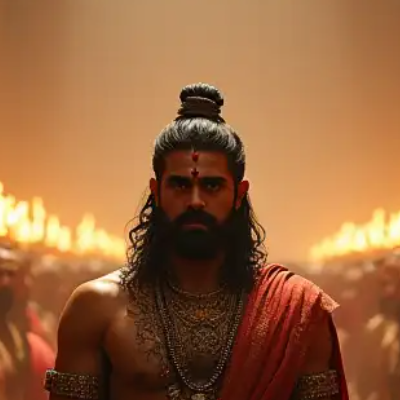
Soma is named in the Bhagavata Purana, Canto 6, Chapter 18, verse 1 as one of the sons of Prishni and the Aditya Savitr. His brothers are Agnihotra, Pasu, Caturmasya, and the five Mahayajnas; his sisters are Savitri, Vyahriti, and Trayi. As a son of Savitr in this specific genealogical context, Soma represents the personalised divine form of the Somayajna — the category of Vedic srauta sacrifices centred on the pressing, purification, and ritual offering of the Soma plant's juice, which constitutes the most prestigious tier of the Vedic sacrificial system. It is essential to note that this Soma as a son of Savitr is a distinct figure in the genealogical tradition from the Soma who is the moon-god — a major deity of the Vedic and Puranic tradition, son of the sage Atri and Anasuya according to one account, and progenitor of the Lunar dynasty of kings. The two share a name and a broad association with the Soma plant and its ritual use, but belong to entirely different genealogical and mythological contexts. This profile concerns only the Soma who is a son of Savitr and Prishni.
✦ The Name
The name Soma in the Vedic tradition refers primarily to the sacred plant whose juice is pressed and offered in the Soma sacrifices — a plant of disputed botanical identity that produces a ritual drink of great sacred potency, offered to the gods and consumed by the priests in the context of the sacrifice. The name is related to Sanskrit roots associated with pressing or distilling. Soma is simultaneously the plant, the ritual drink prepared from it, the deity presiding over that drink and its ritual use, and — in the lunar context — the moon-god who is identified with the Soma drink's coolness and nourishing quality. As a son of Savitr in the Bhagavata Purana genealogy, Soma represents the Somayajna — the class of most prestigious Vedic sacrifices — as a divine being within the solar lineage.
✦ Lineage
- Father: Savitr — the fifth of the twelve Adityas, son of Kashyapa and Aditi; presiding deity of divine impulsion and the animating solar force.
- Mother: Prishni — consort of Savitr.
- Brothers: Agnihotra, Pasu, Caturmasya, and the five Mahayajnas.
- Sisters: Savitri, Vyahriti, and Trayi.
- Paternal grandfather: Kashyapa — one of the Saptarishis; son of Marichi, born from Brahma.
- Paternal grandmother: Aditi — daughter of Daksha; mother of all the Adityas.
✦ The Somayajna and its Significance
The Somayajnas form the highest and most elaborate tier of the Vedic srauta sacrificial system, beyond the pakayajnas and the haviryajnas in prestige, complexity, and the scale of resources required. The defining feature of all Soma sacrifices is the ritual pressing of the Soma plant, the purification of its juice through a woollen strainer, and its offering into the sacred fire as well as its consumption by the officiating priests. The most basic of the Soma sacrifices is the Agnishtoma, a one-day rite; more elaborate forms include the Ukthya, the Shodashin, the Vajapeya, the Atiratra, and the Aptoryama, each involving progressively more complex ritual procedures. The most prestigious of all is the Ashvamedha, the horse sacrifice, which is technically classified within the Soma sacrifice category.
The Rigveda contains more hymns addressed to Soma than to almost any other deity — only Indra receives more — reflecting the central place of the Soma sacrifice in the Vedic ritual imagination. The Ninth Mandala of the Rigveda is devoted entirely to hymns accompanying the pressing and purification of the Soma. As a son of Savitr, Soma the Somayajna represents the solar animating principle as it manifests in the most elevated form of sacrificial practice — the offering of the sacred plant's essence to the gods, through which the worshipper participates most fully in the cosmic exchange between human and divine.
✦ References
- Bhagavata Purana, Canto 6, Chapter 18, verse 1: The primary source naming Soma as a son of Prishni and Savitr in the genealogical tradition.
- Rigveda, Mandala IX (entire): Devoted to hymns accompanying the Soma pressing; the primary Vedic source establishing Soma's central place in the sacrificial tradition.
- Shatapatha Brahmana: Extensive treatment of the Soma sacrifices, their procedures, and cosmic significance.
- Vettam Mani, Puranic Encyclopaedia (1975): Reference for the genealogical data and for distinguishing the Soma who is son of Savitr from the moon-god Soma.