
About
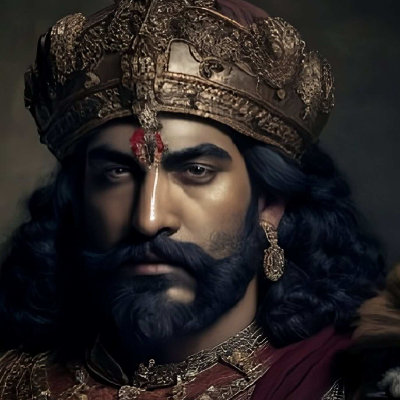
Bhanumantha — King of Dakshina Kosala, Father of Kaushalya
Bhanumantha · Sukaushala · Bhanumat · Kosalendra
Bhanumantha, also known as Sukaushala in certain textual traditions, was a king of Dakshina Kosala — the southern Kosala kingdom corresponding broadly to the region of modern Chhattisgarh in central India. He is recorded in later Puranic and regional traditions as the father of Kaushalya, the eldest wife of King Dasharatha of Ayodhya and the mother of Rama — the avatara of Vishnu and the protagonist of the Valmiki Ramayana. The Valmiki Ramayana itself does not name Kaushalya's father, referring to her only through the patronymic Kosalendraduhita — daughter of the king of Kosala — without specifying the king's personal name. The names Bhanumantha and Sukaushala are preserved in later Puranic accounts and regional traditions of Dakshina Kosala, where they are understood as two designations for the same ruler. Bhanumantha is thus attested primarily in the post-Valmiki textual and regional tradition rather than in the primary Sanskrit epic corpus.
✦ The Name
The name Bhanumantha is a compound of the Sanskrit bhanu, meaning the sun or solar radiance, and mantha or manta, associated with stirring, churning, or one who possesses that quality — carrying the sense of one who stirs or embodies solar brilliance. It is a name consistent with the solar dynasty — the Suryavamsha — within which the kings of Kosala are placed in the Puranic tradition, Kosala being one of the principal kingdoms of the solar lineage descending from the sun god Surya through Ikshvaku. The alternate name Sukaushala means one of excellent skill or one who is supremely adept — su indicating excellence and kaushala meaning skill or proficiency — a name of royal and administrative distinction. The patronymic Kosalendra, meaning lord of Kosala, identifies him by his kingdom rather than his personal name, as is common for royal figures in the Valmiki Ramayana's indirect references.
✦ Lineage
- Dynasty: The solar dynasty — Suryavamsha — the lineage of kings descending from the sun god Surya through Ikshvaku, the founding king of the Ikshvaku dynasty; the same broad lineage to which Dasharatha and Rama of Ayodhya belong, making Bhanumantha and Dasharatha members of the same dynastic tradition through different branches.
- Kingdom: Dakshina Kosala — the southern Kosala kingdom, a territory corresponding broadly to modern Chhattisgarh; to be distinguished from Uttara Kosala, the northern Kosala kingdom whose capital was Ayodhya and whose king was Dasharatha.
- Wife: Amritaprabha — recorded in later Puranic and regional traditions as the consort of Bhanumantha and the mother of Kaushalya; not named in the Valmiki Ramayana.
- Daughter: Kaushalya — the eldest and principal wife of King Dasharatha of Ayodhya, king of Uttara Kosala; the mother of Rama, regarded in the Vaishnava tradition as an avatara of Vishnu and the protagonist of the Valmiki Ramayana; her name Kaushalya means the woman of Kosala, a demonym identifying her by her natal kingdom of Dakshina Kosala.
✦ The Marriage Alliance with Ayodhya
The marriage of Bhanumantha's daughter Kaushalya to Dasharatha of Ayodhya constituted a significant political and dynastic alliance between the two Kosala kingdoms — the northern Uttara Kosala centred on Ayodhya and the southern Dakshina Kosala centred in the region of modern Chhattisgarh. Both kingdoms belonged to the broader solar dynasty tradition, and the marriage united two branches of the same dynastic heritage. The Valmiki Ramayana identifies Kaushalya consistently as the daughter of the king of Kosala — Kosalendraduhita — marking her natal identity and the political significance of her lineage throughout the epic, even as it leaves her father unnamed.
✦ Geographic and Regional Significance
The regional tradition of Chhattisgarh, which identifies Dakshina Kosala as the natal kingdom of Kaushalya and thus the kingdom of Bhanumantha, is centred particularly on the village of Chandkhuri near Raipur, where the Mata Kaushalya Temple is located. This temple, believed to be the only temple in India dedicated specifically to Kaushalya as a primary deity rather than as a secondary figure in a Rama temple complex, is the principal site of the living worship tradition associated with Bhanumantha's lineage and kingdom. The temple and its associated tradition give the otherwise sparsely attested Bhanumantha a concrete geographic and devotional anchor in the landscape of Chhattisgarh, where the regional identity of Dakshina Kosala as Rama's maternal homeland has been preserved and celebrated continuously.
✦ Textual Variants and Inconsistencies
The principal inconsistency surrounding Bhanumantha is the absence of his name from the Valmiki Ramayana itself. The primary Sanskrit epic identifies Kaushalya only as Kosalendraduhita — the daughter of the lord of Kosala — without specifying which Kosala kingdom is meant or naming its king. Later Puranic and regional traditions supply the name Bhanumantha or Sukaushala for this unnamed king, but the precise textual sources in which these names first appear are not uniformly agreed upon across the scholarly tradition. The identification of the two names as referring to the same ruler is consistent across the regional tradition of Chhattisgarh but should be noted as a post-Valmiki development rather than a claim grounded in the primary epic.
✦ References
- Primary Sources:
- Valmiki Ramayana, Ayodhya Kanda and Bala Kanda: Refers to Kaushalya as Kosalendraduhita — daughter of the king of Kosala — without naming her father; the primary textual basis for the existence of the unnamed king of Dakshina Kosala who is later identified as Bhanumantha.
- Later Puranic and regional texts: Supply the names Bhanumantha and Sukaushala for the unnamed father of Kaushalya; specific chapter references vary across editions and regional recensions.
- Secondary Sources:
- Vettam Mani, Puranic Encyclopaedia (1975): Entry on Kaushalya noting the patronymic Kosalendraduhita and the regional tradition identifying her natal kingdom as Dakshina Kosala.
- Wisdom Library, Kaushalya: Aggregates textual and regional references to Kaushalya's parentage and the Dakshina Kosala tradition.