
About
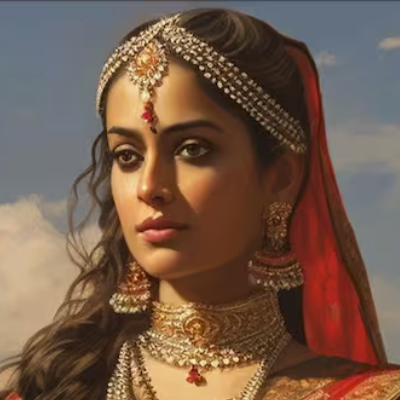
Yadavi — Wife of King Bahu (Bahuda), Mother of Sagara, the Poisoned Queen Who Gave Birth to an Ocean
Yadavi · Yādavī · Vijaya · Bahu-patni · Bahuda-patni · Talajangha-bhagini · Sagara-mata · Aurva-ashrita · Ikshvaku-vadhupa · Gara-bhakshita · Sagara-namahetu
Yadavi — also called Vijaya in some Puranic sources — is the chief queen of King Bahu (Bahuda, Bahuka, Asita) of the Ikshvaku Solar Dynasty; described in the Glorious Hinduism source as the sister of Talajangha — the Haihaya king whose attack drove her husband from Ayodhya and caused his death in exile; the mother of Sagara — the great Solar Dynasty emperor who reconquered Ayodhya, performed a hundred Ashvamedha sacrifices, and gave his name to the ocean through the sixty thousand sons who dug its floor; and the woman whose seven-year poisoned pregnancy — caused by a jealous co-wife who administered poison to prevent her from bearing the royal heir — gave the tradition's most celebrated emperor his very name: Sa (with) + gara (poison) = Sagara, the one born with poison. Her story is recorded in the Harivamsa (Chapter 14), the Vishnu Purana (Book 4, Chapter 3), the Bhagavata Purana (Canto 9, Chapter 8), the Brahmanda Purana (Chapter 63), the Matsya Purana (Chapter 12), the Vayu Purana (Chapter 88), the Valmiki Ramayana (Bala Kanda, Chapter 38), and the Brahma Purana. She is one of the Solar Dynasty's most consequential queens — the woman whose poisoned womb produced the king whose dynasty eventually gave the world Bhagiratha and the descent of the Ganga.
✦ The Name
The name Yadavi — written Yādavī — is a patronymic or lineage designation meaning of the Yadu lineage, pertaining to the Yadavas, a woman of the Yadu clan. The Harivamsa (Chapter 14) uses the precise Sanskrit: patnyā cha anugato duHkhī vane prANAn avAsR^ijat — patnī tu yAdavī tasya sa-garbhā — confirming that Yadavi means the wife who was of the Yadu race or lineage. If Talajangha was indeed her brother as the Glorious Hinduism source records — a detail that would identify her as a Haihaya-Talajangha princess rather than a Yadava princess — then the name Yadavi may record a more complex genealogical identity: the Talajangha and Haihaya kingdoms had Yadava connections through the broader Lunar Dynasty lineage, making the designation Yadavi potentially accurate on multiple levels simultaneously. Her alternate name Vijaya — used in the Aroydendsouza source — means the victorious one, and its appropriateness is confirmed by her story: she survived poison, survived widowhood, survived a seven-year delayed pregnancy, and produced a son who reconquered everything that had been taken from her husband.
✦ Lineage
- Brother (Glorious Hinduism source): Talajangha — king of the Haihayas; who led the combined Haihaya and Talajangha attack on Ayodhya that defeated Bahu; supported by Shakas, Yavanas, Paradas, Kambojas, and Pahlavas; the man whose conquest of Ayodhya drove his own sister's husband into exile; whose actions made his sister a fugitive in the forest and eventually a widow at Aurva's hermitage
- Husband: Bahu (Bahuda, Bahuka, Asita) — son of Vrika; king of Ayodhya of the Ikshvaku Solar Dynasty; described in the Vayu Purana and the Sagar World Blog source as having initially been militarily successful (he had helped drive out the Haihayas in an earlier period) before later losing his kingdom; who fled with his queens to Aurva's forest hermitage; who died there in old age and sorrow;
- Co-wife (unnamed): the second or junior wife of Bahu; who was consumed by jealousy when Yadavi became pregnant; who administered poison to Yadavi's food to prevent the birth of the royal heir; who is described in the Harivamsa as having acted from the motive that since Talajangha had killed their husband and made them all widows, a child of Yadavi's would grow up to be a danger to the Haihaya-Talajangha power that had displaced them — suggesting the co-wife's poisoning was as much political as personal
- Protector and teacher: Aurva — the Bhrigu-lineage sage; son of Apnavana and Ruchi; grandson of Chyavana and Sukanya; who stopped Yadavi from entering the funeral pyre; who took her to his hermitage; who delivered Sagara; who named Sagara; who performed all Sagara's samskaras (childhood rites); who taught Sagara the Vedas, the Vedangas, and the arts of warfare; who gave Sagara the Agneyastra weapon; who later helped Sagara's own two wives in their prayers for sons;
- Son: Sagara — born at Aurva's hermitage after a seven-year poisoned pregnancy; named for the poison (gara) that had afflicted his mother's womb; who grew up at Aurva's hermitage; who reconquered Ayodhya using the Agneyastra weapon Aurva had given him; who performed a hundred Ashvamedha sacrifices; who had sixty thousand sons through his wife Sumati and one son Asamanjasa through his wife Keshini; whose sixty thousand sons dug the ocean floor searching for the stolen Ashvamedha horse and were burned to ash by the sage Kapila; whose liberation was accomplished generations later when Bhagiratha brought the Ganga to earth; the ocean is called Sagara because his sons dug it or because it commemorates him
✦ The Exile — Following Her Husband into the Forest
When Bahu's kingdom was overwhelmed by the combined attack of the Haihayas, Talajanghas, Shakas, Yavanas, Paradas, Kambojas, and Pahlavas, the defeated king fled eastward to the forest with his queens. The Harivamsa records the sequence directly: the king went to the forest in misery with his wives and breathed his last there. Among the queens was Yadavi — faithful, loyal, and in the early stages of pregnancy. The tradition's description of her as Bahu's prime wife who belonged to the Yadu dynasty, and the Glorious Hinduism source's identification of Talajangha as her brother, create the most painful of narrative ironies: she accompanied her husband into the exile that her own brother had caused. The co-wives who were with her in the forest were hostile — the Glorious Hinduism source preserves their reasoning explicitly: her brother had attacked and killed their husband and made them all widows; they should poison her, preventing her from bearing the heir who would someday take revenge. They administered the poison. Yadavi's pregnancy continued, but was now afflicted — the child could not be born naturally while the poison remained active in the womb. The pregnancy extended to seven years.
✦ Bahu's Death and the Prevented Sati
Bahu died in the forest hermitage — old, broken, stripped of everything. The Vayu Purana adds the detail that he went to fetch water, slipped into the waters, and died — the final indignity of a king who had fallen from universal sovereignty to accidental drowning in a forest stream. When the funeral pyre was prepared, Yadavi mounted it — the act of a devoted wife (sati) who chose to follow her husband in death. She was seven months pregnant (Wikipedia's account) or at the end of a seven-year pregnancy (Harivamsa's account) — the two traditions differ on whether the poison had extended the pregnancy from its natural length or had simply afflicted it continuously. Either way she was about to die with her child still unborn. Aurva — the Bhrigu-lineage sage whose hermitage was nearby, and who had already once intervened in the Solar Dynasty's family affairs when he stopped Yadavi the queen of Subahu from entering a funeral pyre in an earlier generation — came forward. The tradition records his words with gentle precision: he told her the child she carried would grow up to be a great and fortunate emperor who would achieve fame throughout the three worlds. She should not die. She should not take the child with her into the fire. Yadavi heard him, stepped back from the pyre, and went with him to his hermitage.
✦ The Birth of Sagara — A Name Given by the Poison
At Aurva's hermitage Yadavi gave birth. The Vishnu Purana and Bhagavata Purana record the naming precisely: the child had been born along with the poison that had been given to his mother — the poison that had extended his time in the womb did not kill him but emerged together with him at the moment of birth. The child had survived the poison. Aurva named him Sagara — from sa (with, together) and gara (poison) — the one born with poison. It was Aurva who named him. Yadavi had given birth to the future emperor in a sage's forest hermitage, the widow of a defeated king, surrounded by the evidence of everything that had been taken from her and her husband. Her son's very name recorded the violence that had been done to her body. The Wikipedia Sagara article adds one detail of particular emotional precision: once, when Sagara was growing up at Aurva's hermitage and addressed Aurva as his father — as naturally and unreflectively as any child would address the man who had raised him — Yadavi wept. When Sagara, puzzled by her tears, asked her the reason, she told him everything: his real father's name, his royal lineage, what had been taken from them, and why they were here. It was Yadavi's weeping at the word father that was the occasion for Sagara to learn his own identity, his heritage, and his destiny.
✦ Depicted in Temple Sculpture
The Wisdomlib Bahuka entry records an extraordinary detail from the archaeological record: at Pattadakal in Karnataka — one of the most important early Chalukya temple complexes (7th–8th century CE, a UNESCO World Heritage Site) — a sculptural panel on the third pillar of the southern half of the mandapa of the temple of Lokeshvara depicts a scene from Yadavi's story. The panel shows three sequential scenes: a lady lying on a bed feeding her baby (Yadavi nursing the infant Sagara); a man and his consort sitting beside the bed (Bahu holding his second wife's hand to restrain her from harming the child); and the two ladies after Bahu's death. The identification of this Solar Dynasty narrative in a Pattadakal Chalukya temple panel — far in the south, in a temple decorated primarily with Shaiva and Vaishnava iconographic programmes — confirms the pan-Indian cultural reach of Yadavi's story and its importance to the tradition's sculptural programme across the subcontinent.
✦ References
- Harivamsa (Chapter 14) — the primary canonical source with the most precise Sanskrit: the king died in the forest in misery; his prime wife Yadavi who belonged to the Yadu dynasty was pregnant; co-wives poisoned her from jealousy; she mounted the funeral pyre; Aurva the Bhargava stopped her compassionately; she delivered Sagara in his hermitage along with the poison; Aurva performed the boyhood ceremonies and taught him Vedic scriptures; the Agneyastra given; Sagara's reconquest of the Haihayas
- Vishnu Purana (Book 4, Chapter 3) — the defeat by Haihayas and Talajanghas; the exile with the queens; the poisoning; Aurva's intervention at the funeral pyre; Sagara born at Aurva's hermitage; named Sa-gara
- Bhagavata Purana (Canto 9, Chapter 8) — the parallel account; Yadavi identified as the co-wife of Bahuka who was pregnant when he died; Aurva forbidding her death; the poison not acting but the son born with it
- Brahmanda Purana (Chapter 63); Matsya Purana (Chapter 12); Vayu Purana (Chapter 88) — parallel genealogical and narrative accounts confirming all key details of Yadavi's story
- Valmiki Ramayana (Bala Kanda, Chapter 38) — Vishvamitra narrating the Sagara story to Rama; Bahu's defeat mentioned as backstory; Yadavi's pregnancy and Aurva's intervention implied in the narrative setup
- Wikipedia — Sagara (Hinduism) — the most comprehensive modern reference for Yadavi's story: the seventh-month poisoning; the seven-year extended pregnancy; Aurva's prophecy; Sagara's birth and naming; the episode of Yadavi weeping when Sagara called Aurva father; Sagara asking her the reason and learning his true identity
- Glorious Hinduism — Sagara — the crucial detail that Talajangha was Yadavi's brother; the co-wives' political reasoning behind the poisoning
- Wisdomlib — Bahuka (22 definitions) — the Pattadakal sculptural panel depicting Yadavi nursing Sagara; Bahu restraining the co-wife; the two wives after Bahu's death; the archaeological confirmation of the story's pan-Indian significance
- Aroydendsouza.com — Ikshvaku Kings: The Tales of Kukshi, Bahuka, and Sagara; HinduPad — Sagara's Vrittantha; Sagar World Blog — King Sagar and His Sixty Thousand Sons: modern summaries drawing from the above primary sources