
About
Shanda (Sanda) — Son of Shukracharya and Urjasvati, Teacher of Prahlada, Priest of the Daitya Household
Shanda · Ṣaṇḍa · Sanda · Chanda · Shukra-putra · Urjasvati-suta · Prahlada-guru · Hiranyakashipu-purohita · Amarka-bhrata
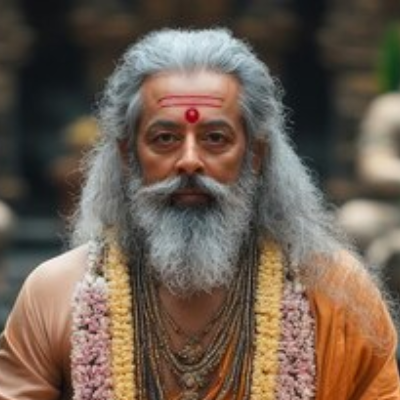
Shanda — written Ṣaṇḍa in the Bhagavata Purana's Sanskrit, also known as Sanda and Chanda in variant textual traditions — is the elder of the two sons of Shukracharya (the preceptor of the Asuras, son of Bhrigu) and his wife Urjasvati (daughter of Priyavrata, elder son of Svayambhuva Manu); the brother of Amarka, Tvastr, and Dharaatra; and the royal preceptor jointly appointed with Amarka by the Daitya king Hiranyakashipu to educate his son Prahlada. He is named in the Bhagavata Purana (Canto 7, Chapter 5) as Ṣaṇḍa — a form confirmed by the Vaniquotes source drawing from the Sanskrit commentary of the Bhagavata Purana — as one of Shukracharya's two sons who taught Prahlada the paths of dharma, artha, and kama in accordance with Hiranyakashipu's instructions. His entire canonical record is contained within the Prahlada education episode. No primary text records any episode of his life beyond this role, no marriage, no children, and no further personal history. A note on the name: the variant form Chanda — used in many popular and secondary sources — is a different Sanskrit word (meaning fierce, the moon) from Ṣaṇḍa (meaning a bull or powerful one); their phonetic proximity in certain manuscript traditions led to their conflation, but the Bhagavata Purana's own text uses Ṣaṇḍa consistently.
✦ The Name
The Sanskrit name Shanda — written Ṣaṇḍa — derives from the root meaning a bull, a powerful male animal, a strong man, or in another derivation one who is sexually continent (referring to a castrated bull used metaphorically for a celibate). As a name it carries the sense of the powerful one, the one of bull-like strength. The alternate popular form Chanda — from the root meaning fierce, passionate, or the moon — is a completely different word that has been applied to this figure through phonetic confusion in some manuscript and popular traditions.
✦ Lineage
- Father: Shukracharya — the Asura preceptor; son of Bhrigu and Kavyamata; possessor of the Mrita Sanjivani Vidya; the planet Venus; who entrusted his two sons with the education of Hiranyakashipu's heir
- Mother: Urjasvati — daughter of Priyavrata (elder son of Svayambhuva Manu) and his wife Surupa; the principal wife of Shukracharya
- Paternal grandfather: Bhrigu — one of the seven Saptarishis; one of Brahma's ten mind-born sons
- Maternal grandfather: Priyavrata — elder son of Svayambhuva Manu; king who ruled seven continents
- Brothers: Amarka — who taught Prahlada alongside Shanda; Tvastr; and Dharaatra
- Half-sister: Devayani — daughter of Shukracharya by Jayanti (daughter of Indra); who married King Yayati; whose son Yadu is the ancestor of Krishna
- Student: Prahlada — son of Hiranyakashipu and Kayadhu; the supreme devotee of Vishnu; one of the twelve Mahajanas; who could not be diverted from Vishnu-devotion by any instruction in worldly subjects
✦ Teaching Prahlada — The Failed Mission
Hiranyakashipu sent Prahlada to the hermitage of Shanda and Amarka when the boy was five years old. The two teachers were assigned the task of educating him in dharma (religion as understood from the Daitya perspective — duty toward the Asura code), artha (economics and statecraft), and kama (the arts of pleasure and governance). These three — dharma, artha, kama — represented the complete worldly education appropriate for a future Daitya king who would need to govern, administer, fight, and maintain power. Liberation (moksha) was not part of the curriculum. The Bhagavata Purana (Canto 7, Chapter 5) records with theological precision: the teachers tried to induce Prahlada to accept the materialistic way of life — they chastised and threatened their disciple in various ways — but their attempt was a failure.Every time the teachers were absent from the classroom, Prahlada taught his classmates — all sons of demon households — the nine processes of devotional service to Vishnu. When the teachers returned they found the curriculum entirely displaced. This happened repeatedly. When Hiranyakashipu discovered what was happening and questioned Prahlada, the boy unhesitatingly described the glories of Vishnu and the nature of bhakti. Hiranyakashipu turned on Shanda and Amarka furiously, accusing them of teaching his son this devotion to his enemy. The two teachers demonstrated their innocence — they had followed the traditional syllabus faithfully; the devotion was entirely Prahlada's own. Satisfied by their explanation, Hiranyakashipu sent them back to try again. They tried again. They failed again.The two teachers were eventually dismissed from Prahlada's education when Hiranyakashipu gave up on redirection and resolved to kill his son directly. Shanda and Amarka returned to their father Shukracharya's hermitage having done their professional duty without fault.
✦ References
- Bhagavata Purana (Canto 7, Chapter 5) — the primary canonical source: Shanda (Ṣaṇḍa) and Amarka named as sons of Shukracharya; appointed by Hiranyakashipu to teach Prahlada; the three subjects of instruction; Prahlada's continuous devotion; the teachers' chastisement and threats; their report to Hiranyakashipu; their proof of innocence; their failed second attempt
- Mahabharata (Adi Parva, Chapter 65) — Shukracharya's sons as priests of the Asuras: Chanda, Amarka, Tvastr, and Dharaatra; the Epic's naming of Chanda as the variant form of Shanda
- Vaniquotes — Sanda and Amarka, the teachers of Prahlada Maharaja (direct Bhagavata Purana commentary) — the canonical Sanskrit form Ṣaṇḍa confirmed; the theological commentary on why their teaching failed
- Wikipedia — Prahlada; VedicFeed — Guru Shukracharya; ISKCON Bangalore — Lord Narasimha; Bhagavata Keshavaswami — Prahlada's Education: modern summaries drawing from the above primary sources