
About
Vasu — Daughter of Daksha, Wife of Dharma, and Mother of the Eight Vasus
Vasu · Vasudha (in certain secondary readings) · not to be confused with the eight Vasus her sons, nor with other figures of this name in the tradition
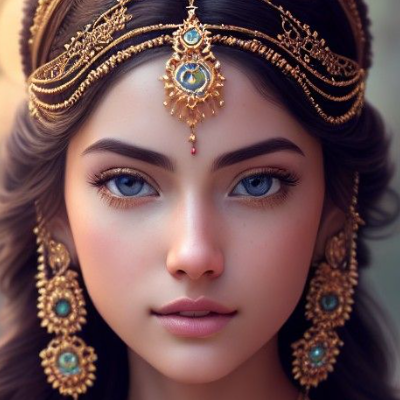
Vasu is a figure in the Hindu Puranic and epic tradition, identified as one of the ten daughters given by Daksha Prajapati — one of the progenitors of creation and a son of Brahma in his second birth — to Dharma, the personification of cosmic righteousness and duty. She is identified across the Mahabharata, the Harivamsa, the Brahma Purana, the Vishnu Purana, and the Bhagavata Purana as the mother of the eight Vasus — a group of elemental divine beings associated with fire and light who form part of the thirty-three principal gods of the Vedic and Puranic tradition. Her most significant primary attestation for the genealogical fact of her motherhood is the Mahabharata, Adi Parva, Chapter 66, which names her explicitly as the wife of Dharma from whom the Ashtavasus were born. The Bhagavata Purana, Skandha 6, Chapter 6, provides the most detailed Puranic account of the eight Vasus as her sons, giving their names and the names of their respective wives and offspring. Vasu is thus a figure of considerable cosmological significance, despite the relative brevity of the primary passages that address her directly as an individual: she is the maternal origin of a group of gods whose presence pervades Vedic ritual, cosmological doctrine, and the major narrative episodes of the Mahabharata.
✦ The Name
The name Vasu derives from the Sanskrit root vas, meaning to shine, to be bright, to dwell, or to be good. It encompasses a range of semantic associations: brightness and luminosity, goodness and auspiciousness, and the quality of being a beneficent or excellent dwelling. In its most common substantive usage across Sanskrit literature, vasu denotes wealth, goods, or an excellent thing, and by extension a bright or beneficent being. As the name of one of the daughters of Daksha, it functions as a personal name whose implicit meaning — brightness or goodness — is consistent with her cosmological role as the mother of the Ashtavasus, the eight elemental divine beings whose collective name is derived from the same root. The Brihadaranyaka Upanishad's discussion of the Vasus glosses the term as those in whom all things dwell or reside, further enriching the semantic field from which the name draws its significance. The eight Vasus as a group thus share their name with their mother, and the Bhagavata Purana's list of the eight Vasus itself includes one named Vasu — creating a layered naming relationship between the mother Vasu and her son also called Vasu.
✦ Lineage
- Father: Daksha Prajapati — one of the principal progenitors of creation; born in his second birth as a son of the ten Prachetas and their wife Marisha; in this second birth he takes Asikni as his wife and through her produces sixty daughters who become the ancestral mothers of the gods, demons, nagas, and all other major categories of beings. In his first birth Daksha is a mind-born son of Brahma who marries Prasuti, daughter of Svayambhuva Manu. Vasu belongs to the daughters of the second birth.
- Mother: Asikni — also called Panchajani or Virani; daughter of the Prajapati Virana or Panchajana; the wife of Daksha in his second birth; mother of sixty daughters who are distributed among Dharma, Kashyapa, Chandra, and other recipients.
- Sisters given to Dharma: Maruvati, Jami, Lamba, Bhanu, Urjja, Sankalpa, Muhurtha, Sadhya, and Vishva — the nine other daughters of Daksha and Asikni given in marriage to Dharma alongside Vasu, each of whom is the mother of a distinct category of divine beings.
- Husband: Dharma — the personification of cosmic righteousness, duty, and the sustaining moral order of the universe; described in the Puranas as a son or creation of Brahma; one of the most important cosmological beings in the Puranic scheme, representing the principle by which the universe is held together and beings are guided toward liberation. He takes multiple wives from among Daksha's daughters in this second-birth account, each wife producing a different class of divine progeny.
- Sons — the eight Vasus: The names of the eight Vasus vary across primary sources. The Mahabharata, Adi Parva, Chapter 66 — the earliest and most widely cited source for Vasu's identity as the Vasus' mother — names them as Dhara, Dhruva, Soma, Ahar, Anila, Anala, Pratyusha, and Prabhasa. The Vishnu Purana names them as Apa, Dhruva, Soma, Dharma, Anila, Anala, Pratyusha, and Prabhasa. The Bhagavata Purana, Skandha 6, names them as Drona, Prana, Dhruva, Arka, Agni, Dosha, Vasu, and Vibhavasu. The Harivamsa names them as Akha, Dhara, Dhruva, Soma, Anila, Anala, Pratyusha, and Prabhasa. These variant enumerations are discussed below.
✦ The Eight Vasus and Their Significance
The eight Vasus whom Vasu bears to Dharma are among the most important of the thirty-three gods of the Vedic and Puranic tradition. In Vedic cosmology they are elemental divine beings associated with the phenomena of the natural world — fire, wind, water, earth, the pole star, the sun, dawn, and the sky or space — who function as attendant deities of Indra and later of Vishnu. They are invoked extensively in Vedic ritual and appear prominently in the Brihadaranyaka Upanishad, the Shatapatha Brahmana, the Mahabharata, and the Puranas. Their most famous narrative episode is the curse of the sage Vasishtha: when one of the Vasus, at the instigation of his wife, stole the sage's divine cow Nandini from his hermitage, Vasishtha cursed all eight Vasus to be born as mortals. The seven relatively innocent Vasus were subsequently born as the sons of the river goddess Ganga and King Shantanu of the Kuru dynasty and immediately drowned by Ganga at birth, spending only the briefest moment in mortal form. The eighth Vasu — the one who actually committed the theft, identified in the Mahabharata as Prabhasa or in some accounts as Dyau — was born as Bhishma, the great warrior and patriarch of the Kuru dynasty, and was compelled to live a full mortal life as the consequence of his greater culpability. This narrative, which provides the Puranic and epic explanation for the birth of Bhishma, is one of the most celebrated episodes in the Mahabharata and gives the Ashtavasus their most sustained narrative presence in the primary literature. As the mother of all eight Vasus, Vasu is the cosmic ancestral source of this entire narrative lineage.
The Bhagavata Purana, Skandha 6, Chapter 6, extends the genealogical account of the eight Vasus by recording the names of each son's wife and offspring. Among the most significant of these grandchildren of Vasu are: from Drona and his wife Abhimati, children named Harsha, Shoka, and Bhaya, the presiding deities of joy, sorrow, and fear; from Prana and his wife Urjasvati, sons named Sahas, Ayus, and Purojava; from Dhruva and his wife Dharani, various cities and towns; from Arka and his wife Vasana, sons including Tarsha; from Agni and his wife Dhara, sons including Dravinaka, and from another wife Krittika the son Skanda; from the Vasu called Vasu and his wife Angirasi, the son Vishvakarma, the celestial architect, whose son is the sixth Manu Chakshusha; from Vibhavasu and his wife Usha, sons named Vyushtha, Rochisha, and Atapa, and from Atapa the son Panchayama. The most cosmologically significant among these grandchildren of Vasu is Vishvakarma — the divine architect of the gods — born of her son the Vasu Vasu and his wife Angirasi, who is the sister of Brihaspati.
✦ Textual Variants and Inconsistencies
The principal textual variants concerning Vasu fall into two categories: the variation in the names of the eight Vasus across sources, and the variation in the account of Daksha's daughters given to Dharma across the two principal genealogical schemes.
Regarding the names of the eight Vasus: the Mahabharata, Vishnu Purana, Bhagavata Purana, and Harivamsa all give different lists, though Dhruva, Anila or its equivalent, Anala or Agni, and Prabhasa appear consistently across most lists. The Puranic Encyclopaedia of Vettam Mani acknowledges that some of the variation is due to different names being used for the same deity across different textual traditions, while some variation may reflect genuinely different enumerations. The Ramayana contains a different account entirely, describing the Vasus as children of Kashyapa and Aditi rather than of Dharma and Vasu daughter of Daksha — this represents a distinct genealogical tradition rather than a variant within the same tradition, and the two accounts should be understood as belonging to different cosmological registers within the broader Puranic-epic corpus.
Regarding Daksha's daughters given to Dharma: the primary sources present two distinct groupings depending on which birth of Daksha is being described. When Daksha's first birth is treated — as the mind-born son of Brahma who marries Prasuti, daughter of Svayambhuva Manu — thirteen daughters including Shraddha, Lakshmi, and others representing virtues of the mind and body are given to Dharma, as recorded in the Vishnu Purana, Book 1, Chapter 7, and the Bhagavata Purana, Skandha 4. When Daksha's second birth is treated — as the son of the ten Prachetas who marries Asikni — ten daughters including Vasu are given to Dharma, as recorded in the Mahabharata, the Harivamsa, the Brahma Purana, and the Bhagavata Purana, Skandha 6. Vasu as the mother of the eight Vasus belongs exclusively to the second-birth Daksha account; no equivalent figure appears among the thirteen daughters of Daksha's first birth given to Dharma. Some secondary sources list a Vasu among the daughters of Prasuti as well — this appears to reflect a conflation of the two groups and is not consistently supported by the primary texts.
✦ Disambiguation
Several distinct figures and concepts bearing the name Vasu require separation. First, Vasu as treated in this profile: the daughter of Daksha and Asikni, wife of Dharma, and mother of the eight Vasus, attested in the Mahabharata, Harivamsa, Brahma Purana, Vishnu Purana, and Bhagavata Purana. Second, the eight Vasus as a group: the divine sons of this Vasu, who collectively bear the same name as their mother and whose name designates their class-identity as elemental bright beings. Third, the individual Vasu who is one of the eight Vasus in the Bhagavata Purana's list — the sixth of the eight, husband of Angirasi, and father of Vishvakarma the divine architect. Fourth, Vasu as a common noun meaning wealth, goods, or an excellent being, which appears throughout Sanskrit literature in numerous contexts unrelated to any of the above figures. Fifth, the name Vasu borne by various other figures in the Puranic tradition, including certain kings and sages — none of whom are related to the daughter of Daksha treated in this profile.
✦ Connection to the Wider Genealogy
Vasu is a daughter of Daksha Prajapati in his second birth and is thus related to the vast network of creation associated with that birth. Her sisters given to Daksha's other recipients include Aditi — mother of the twelve Adityas including Vishnu, Indra, and Surya — Diti — mother of the Daityas — Kadru — mother of the Nagas — Vinata — mother of Garuda and Aruna — and the other daughters of Daksha and Asikni whose offspring populate the entire created universe. Through her husband Dharma and her eight Vasu sons, Vasu is the maternal ancestor of Vishvakarma the divine architect, of Skanda the commander of the divine army through the Vasu Agni's son, of Bhishma the great warrior-patriarch of the Mahabharata through the Vasu Prabhasa or Dyau, and of the deity presiding over the sixth Manvantara, Chakshusha Manu, through Vishvakarma's son. The Vasu lineage thus radiates outward from Vasu through her eight sons to encompass some of the most prominent figures in the entire Puranic and epic tradition.
✦ References
Primary Sources
- Mahabharata, Adi Parva, Chapter 66, verses 17–18 — the earliest and most authoritative attestation of Vasu as the wife of Dharma and the mother of the eight Vasus, naming all eight sons.
- Bhagavata Purana, Skandha 6, Chapter 6, verses 10–16 — the most detailed Puranic account of the eight Vasus as sons of Vasu, recording their names, their wives, and the names of their principal offspring including Vishvakarma and the ancestors of Bhishma.
- Vishnu Purana, Book 1, Chapter 15 — names the eight Vasus as Apa, Dhruva, Soma, Dharma, Anila, Anala, Pratyusha, and Prabhasa, born of Dharma and Vasu daughter of Daksha; provides an alternate list from the Mahabharata account.
- Harivamsa, Book 1 (Adi Parva), Chapter 3 — records Vasu among the ten daughters of Daksha given to Dharma and names the eight Vasus as Akha, Dhara, Dhruva, Soma, Anila, Anala, Pratyusha, and Prabhasa.
- Brahma Purana — records Vasu as one of the ten daughters of Daksha and Asikni given to Dharma, and names her sons as the eight Vasus including Apa, Dhruva, Soma, Dhara, Salila, Anala, Pratyusha, and Prabhasa.
- Mahabharata, Adi Parva, Chapters 91–100 — narrates the episode of the Vasus' curse by Vasishtha, Ganga's agreement to be their mortal mother, and the birth and drowning of the seven Vasus as sons of Shantanu and Ganga, with the eighth Vasu born as Bhishma; provides the most sustained narrative context for understanding Vasu's sons as cosmological beings with a mortal episode.
- Brihadaranyaka Upanishad, Book 3 — contains the early philosophical discussion of the eight Vasus as elemental cosmic beings in whom all things dwell, providing the conceptual background for the class of divine beings of which Vasu is the Puranic mother.
- Ramayana, Bala Kanda — contains the alternate genealogical tradition attributing the Vasus to Kashyapa and Aditi rather than to Dharma and Vasu daughter of Daksha, relevant to understanding the textual multiplicity of the Vasus' parentage.
Modern Reference Works
- Vettam Mani, Puranic Encyclopaedia (1975), entries on Vasu (daughter of Daksha) and Ashtavasu — the most comprehensive secondary collation of the primary references to Vasu as the mother of the eight Vasus, with verse-level citations from the Mahabharata, Vishnu Purana, Bhagavata Purana, and Harivamsa, and a discussion of the variant name-lists of the eight sons.
- Wendy Doniger O'Flaherty, Women, Androgynes, and Other Mythical Beasts (1980) — discusses the role of the wives of Dharma as the mothers of cosmological classes of divine beings in the Puranic scheme.
- Wisdom Library (wisdomlib.org), entry on the Ashtavasu — provides verse-level references to all principal primary sources for the eight Vasus and their parentage from Vasu daughter of Daksha and Dharma.
- Wikipedia, entry on Vasu — collates the textual references across the Mahabharata, Harivamsa, Vishnu Purana, and Bhagavata Purana for Vasu as the Daksha-daughter who is the mother of the eight Vasus.