
About
Asuurtarajasa — Son of Kusha and the Vidarbha Princess, Founder of Dharmaaranya, and the Noble-Minded City-Builder
Asuurtarajasa · Asūrtarajasa · Adhuurtarajasa · Amurtyaraja · Kusha-tritiya-putra · Brahma-prapautra · Dharmaaranya-nirmata · Vaidarbhi-nandana
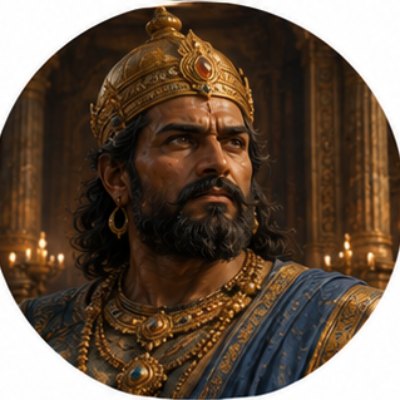
Asuurtarajasa is the third of the four sons of Kusha — the mind-born son of Brahma — and of the princess of Vidarbha, and the builder of the city of Dharmaaranya whose name encodes the sacred forest character of its founder's vision. He is one of the four city-founding brothers whose story is narrated by Vishvamitra in the Valmiki Ramayana's Bala Kanda sarga 32, and he is individually characterised in that passage with the epithet mahaamatiH — "noble-minded" or "of great intellect" — the specific quality the Ramayana assigns to him among the four brothers. His name is the most semantically complex of the four brothers' names and carries the most theologically resonant content — whether in the form Asuurtarajasa (meaning "he whose royal splendour is not transient") or Adhuurtarajasa (meaning "he whose royal nature is not deceitful" or "the genuine king") — and its alternative form Amurtyaraja given in the Hari Prasad Shastri translation meaning "the formless king" or "the king without physical limitation." The city he built — Dharmaaranya, meaning "the forest of dharma" — is unique among the four brothers' cities in having a name that explicitly encodes a sacred moral principle rather than a royal or personal name, suggesting that Asuurtarajasa's vision for his city was specifically oriented toward the establishment of a dharmic order rather than toward the commemoration of his own name. He appears in the Valmiki Ramayana at Bala Kanda sarga 32 verse 7 as the third-named of the four brothers.
✦ The Names
The name Asuurtarajasa — also written Asurtarajasa — is a compound whose precise etymology is a subject of some textual variation. The most common reading separates it as a (not, without) + suurtara (more swift, more transient) + jaasa or raja (royal quality, regal splendour) — yielding "he whose royal splendour is not transient" or "the king of imperishable excellence." The alternative form Adhuurtarajasa reads as a (not) + dhuurta (deceitful, wicked, roguish) + rajasa (royal quality) — yielding "the king who is not deceitful" or "the genuinely royal one." Both readings present a positive characterisation through negation of a negative quality — a naming convention that emphasises integrity and permanence as the defining royal virtues. The Hari Prasad Shastri translation's Amurtyaraja — "the formless king" or "the king beyond physical form" — represents yet another reading in which the first element is a-muurtya (without material form, formless, transcending physical limitation). The epithet Mahaamati means "of noble mind" or "of great intellect" — the specific quality the Valmiki Ramayana gives Asuurtarajasa individually. The city name Dharmaaranya means "the forest of dharma" — from dharma (sacred order, virtue, duty) and aranya (forest, wilderness) — encoding a sacred quality that distinguishes his city from the other three whose names are derived from the royal founder's personal name.
✦ Lineage
- Father: Kusha — the mind-born son of Brahma, the kingly sage. See Kushamba's profile above for the full account.
- Mother: The princess of Vidarbha — described as Vaidarbhi in the Sanskrit text, of noble birth and eligible as Kusha's wife.
- Paternal grandfather: Brahma.
- Brothers: Kushamba (builder of Kaushambii — profiled above), Kushanaabha (builder of Mahodaya — profiled separately in this series), and Vasu (builder of Girivraja — profiled below).
- The primary sources do not give Asuurtarajasa's wife, children, or dynastic succession with specificity. Like Kushamba, his significance in the tradition is concentrated in the founding act and the individual characterisation his name and epithet provide rather than in extended biographical narrative.
✦ The Founding of Dharmaaranya
The Valmiki Ramayana's Bala Kanda sarga 32 verse 7 gives the specific statement: "noble-minded Asuurtarajasa built a city named Dharmaaranya." The name Dharmaaranya — "the forest of dharma" — is the most theologically significant of the four city names. While Kaushambii is named for Kushamba, Mahodaya means "great prosperity," and Girivraja means "the mountain enclosure," Dharmaaranya encodes an explicitly sacred moral principle — the city is not named for its royal founder but for the sacred purpose that motivated its foundation. This naming choice reflects either the tradition's own characterisation of Asuurtarajasa as mahaamatih — the most intellectually and philosophically inclined of the four brothers — or the actual orientation of his city-founding vision toward the establishment of a settlement specifically dedicated to dharmic order and sacred forest character. The identification of Dharmaaranya with a specific modern location is not as well-established as Kaushambii's identification with Kosam or Girivraja's identification with Rajgir, and different regional traditions claim different sites.
✦ Theological Significance — the City Named for Dharma
The choice to name his city Dharmaaranya rather than after himself — as the other three brothers all did — gives Asuurtarajasa a specific theological profile within the quartet of city-founders. The tradition's individual characterisations of the four brothers are sparse — one epithet each — and Asuurtarajasa's epithet mahaamati (noble-minded, of great intellect) combined with the dharma-oriented city name gives him the most explicitly intellectual and philosophical identity among the four. The "forest of dharma" as a city concept encodes a vision in which the sacred forest's qualities of austerity, simplicity, and devotion to virtue are brought into the urban setting — not a city that commemorates its founder's name but a city that aspires to embody a principle.
✦ References
- Valmiki Ramayana, Bala Kanda, sarga 32, verses 2–7: The primary canonical source — verses 2-3 for his birth alongside his three brothers, verse 7 specifically for his founding of Dharmaaranya and his individual characterisation as mahaamatih.
- Robert P. Goldman (translator), The Ramayana of Valmiki — Bala Kanda (1984): Critical translation with notes on the genealogical passage.
- Vettam Mani, Puranic Encyclopaedia (1975): Entry noting Asuurtarajasa as Kusha's son and founder of Dharmaaranya.