
About
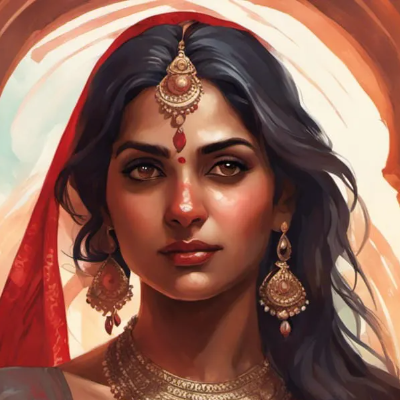
Svarvithi — Wife of Vatsara, Mother of the Six Cosmic Sons
Svarvithi · Svarvīthi · Vithi · Swarvithi · the Stellar Pathway · wife of Vatsara
Svarvithi is a figure in the Hindu Puranic tradition, identified in the Bhagavata Purana's fourth canto as the wife of Vatsara — a king of the primordial lineage descending from Dhruva, the celebrated child-devotee who attained eternal lordship over the Pole Star through his unswerving meditation on Vishnu and was established as the fixed point of the celestial sphere — and as the mother of six sons who embody specific aspects of cosmic time, seasonal vegetation, solar energy, and stellar order. Her attestation rests on the Bhagavata Purana Canto 4 Chapter 13 verses 11 and 12, with parallel support in the Vishnu Purana Book 1 Chapter 13 and the Harivamsha Chapter 2. Her own parentage and personal narrative are not recorded in the primary sources. Her profile is proportionally brief, reflecting the limited biographical data available beyond her genealogical position, her marriage, and her six sons.
✦ The Name
The name Svarvithi is a Sanskrit compound of svar — meaning heaven, the celestial realm, or the luminous sky — and vithi, meaning path, avenue, course, or way. The compound therefore carries the sense of "the pathway of heaven" or "the course of the stars," a name associated in Sanskrit astronomical and cosmological literature with the Milky Way or the celestial road along which the stars travel. The variant spellings Vithi and Swarvithi found across different manuscript recensions reflect standard orthographic variation rather than substantive difference in identity or meaning. The name places Svarvithi within the Puranic tradition of assigning cosmologically resonant names to figures in the primordial lineages — her husband Vatsara embodies the cyclical year, and their union as the stellar pathway joining with the year to produce seasonal bloom encodes within the names themselves the cosmological significance of the lineage they found.
✦ Lineage
- Husband: Vatsara — a king of the primordial Dhruva lineage; his name in Sanskrit means "the year," encoding the cyclical measurement of cosmic time; son within the lineage descending from Dhruva through Utkala or through the Sishti-Bhrami sub-branch depending on the recension consulted.
- Ancestral context: Dhruva — the great-grandfather of the lineage in which Vatsara stands; the celebrated child-devotee of Vishnu who as a young boy performed intense austerities on the banks of the Yamuna river after being slighted by his stepmother, attained direct vision of Vishnu, and was established by divine grace as the lord of the Pole Star — the fixed celestial point around which all other stars revolve — a position he holds throughout the current cosmic cycle; one of the most celebrated devotional figures of the Bhagavata Purana's fourth canto.
- Son: Pushparna — the eldest of the six sons born of Svarvithi and Vatsara; his name means "one who brings forth clusters of flowers" from pushpa meaning flower and arna meaning bearing or producing; he embodies the onset of spring, fertile vegetation, and agricultural abundance; through his own sons Prabha — meaning radiance or day — and Dosha — meaning twilight or night — the lineage continues into the divisions of earthly time.
- Son: Tigmaketu — the second son; his name meaning "he whose banner is fierce heat" or "the sharp-rayed one"; embodying intense solar radiation and the fierce energy of the sun at its height.
- Son: Isha — the third son; his name meaning "lord" or "ruler"; embodying the structural governance of cosmic order.
- Son: Urja — the fourth son; his name meaning "vital energy" or "life force"; embodying the fundamental animating energy that sustains living beings and cosmic processes.
- Son: Vasu — the fifth son; his name meaning "that which is good" or "elemental substance"; embodying the material foundational elements of the physical world.
- Son: Jaya — the sixth son; his name meaning "victory" or "conquest"; embodying the unidirectional forward progression of cosmic time toward its ordained resolution.
✦ Textual Variants and Inconsistencies
The Bhagavata Purana Canto 4 Chapter 13 is the principal source and the Vishnu Purana Book 1 Chapter 13 and the Harivamsha Chapter 2 provide parallel support. Minor phonetic variants of Svarvithi's name — Vithi and Swarvithi — appear across manuscript traditions without affecting the substance of her identification. The enumeration of her six sons is broadly consistent across the three sources, though the ordering and precise names show minor variant readings in some recensions. The genealogical position of Vatsara within the Dhruva lineage varies slightly across recensions — some place him as a son of Utkala, Dhruva's ascetic son who renounced the throne, while others insert the intermediate figures of Sishti or Bhrami — without affecting Svarvithi's own identity or her sons' names.
✦ Connection to the Wider Genealogy
Svarvithi occupies a structurally significant position in the primordial genealogy of the Dhruva lineage as recorded in the Bhagavata Purana's fourth canto. Through her husband Vatsara she is connected to Dhruva — one of the most celebrated devotional figures of the entire Puranic tradition — and through Dhruva to the broader lineage of Svayambhuva Manu, the first man and lawgiver of the current cosmic order. Through her six sons she initiates the next generational expansion of the lineage into the cosmic dimensions of time, light, energy, and seasonal cycle. Through Pushparna's sons Prabha and Dosha — radiance and twilight — the lineage moves into the divisions of the earthly day, completing a cosmological sequence in which the Stellar Pathway united with the Year produces the Seasonal Bloom, which in turn produces the Light of Day and the Darkness of Twilight. The Puranic tradition's consistent use of allegorically resonant names in this lineage cluster reflects the fourth canto's characteristic mode of encoding cosmological relationships within genealogical structures.
✦ References
- Bhagavata Purana, Canto 4, Chapter 13, verses 11–12: The principal primary source naming Svarvithi as the wife of Vatsara and the mother of his six sons including Pushparna; situated within the broader genealogical account of Dhruva's lineage narrated in the fourth canto.
- Vishnu Purana, Book 1, Chapter 13: Parallel primary source providing the genealogical framework of the Dhruva lineage within which Vatsara and Svarvithi are situated; contributes supporting attestation for the six sons and their cosmic identities.
- Harivamsha Purana, Chapter 2: Further parallel source for the primordial lineage genealogy; provides supporting data on the Dhruva lineage sequence and the figures descending through Vatsara.
- Vettam Mani, Puranic Encyclopaedia (1975): Secondary reference consolidating the Puranic data on the Dhruva lineage, the figure of Vatsara, and the six sons of Svarvithi within the cosmological genealogical framework of the fourth canto.