
About
Kroshtu — Son of Yadu and Progenitor of the Kroshtu Branch of the Yadava Lineage
Kroshtu · Kroshta · Krausthu · Kroshtri · Kroshtu (the dynasty named after him)
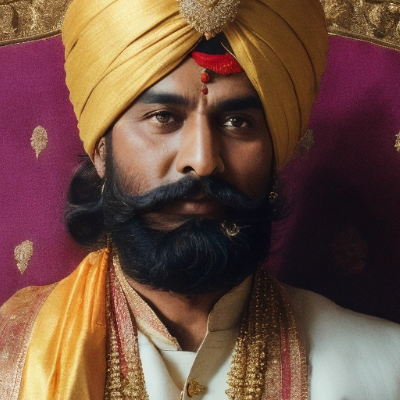
Kroshtu was a son of King Yadu, the eldest son of Emperor Yayati of the lunar Chandravamsha, and the founding patriarch of the Kroshtu branch of the Yadava lineage. His line is among the most genealogically significant in the Puranic tradition, being the branch from which the Vrishnis, the Satvatas, the Andhakas, the Kukuras, the Bhojas, the Chedis, the Vidarbhas, and the Surasenas all ultimately descended — and through the Vrishni and Satvata lines, the line that produced Vasudeva and his son Krishna. His dynasty is treated as the principal continuing thread of the Yaduvansha in the Harivamsha, the Vishnu Purana, the Bhagavata Purana, the Matsya Purana, and the Vayu Purana. The Harivamsha devotes a full chapter — Chapter 33's closing encomium and then Chapters 34 and 36 — specifically to the family of Kroshtu, and declares that hearing the account of this dynasty frees a person from all sins, because the birth of Vishnu as Krishna occurred within it.
✦ The Name
The Sanskrit word kroshtu is established in the classical dictionaries as meaning a jackal — the animal Canis aureus, which typically hunts in groups at night. The word is formed from the verbal root krush, meaning to cry out or to howl, with the suffix tun as given in the Unadi-sutra (1.69), so that the literal sense is the howling one or the crying one — a designation appropriate to the jackal. The Wisdomlib Sanskrit dictionary confirms this derivation and definition. The same word occurs in the Bhagavata Purana in zoological contexts as the common noun for the animal. As a personal name, Kroshtu carries a totemically evocative character found in several early Puranic and epic lineage names. Later in the genealogy, a descendant named Vrishni, the son of Satvata, was also called Kroshtu — identified in some sources as Kroshtu II — because he bore the same name as this ancestor, confirming the ongoing prestige attached to the name within the line.
✦ Lineage
- Paternal grandfather: Yayati, a celebrated emperor of the lunar dynasty and son of the king Nahusha. Yayati had two wives: Devayani, daughter of the sage Shukracharya, and Sharmishtha, daughter of the Daitya king Vrishaparva. Yadu was born of Devayani and Yayati refused to exchange his old age for Yadu's youth, leading to Yadu's curse.
- Father: Yadu, the eldest son of King Yayati and the eponymous patriarch of the entire Yadava race. Yadu refused to exchange his years of youth with his aged father Yayati and was consequently cursed that none of his progeny would possess the dominion his father commanded. Yadu's descendants therefore established their own lineage under the name Yaduvansha, distinct from the Puru-descended Kuru line.
- Brothers: The primary sources differ on the number of Yadu's sons. According to the Vishnu Purana, the Bhagavata Purana, and the Garuda Purana, Yadu had four sons; according to the other Puranas he had five. The Harivamsha Chapter 33 gives five sons in this order: Sahasrada, Payoda, Kroshta, Neela, and Anjika — placing Kroshtu third. Sahasrada (also called Sahasrajit), the first son, was the ancestor of the Haihaya confederation. Payoda (named second in the Harivamsha list) and Neela and Anjika are mentioned in the genealogical lists but their lines are not developed at length in the surviving texts.
- Wives: The Harivamsha Chapter 34 records that Kroshtu had two wives named Gandhari and Madri — not to be confused with the Gandhari and Madri of the later Mahabharata generation. From Gandhari, Kroshtu had a son named Anamitra. From Madri, he had sons Yudhajit and Devamidusha. These three — Anamitra, Yudhajit, and Devamidusha — gave rise to three branches of the Vrishni race. This placement of the Gandhari-Madri wives at Kroshtu's own generation is a specific tradition in the Harivamsha, noted below in the variants section.
- Son (main succession): Vrijinivan (also rendered Vrajinivan or Vrijinivant), described in the Harivamsha as highly illustrious, who carried forward the principal line. The succession from him runs: Vrijinivan → Svahi (Swaji) → Rushadgu (Ushadgu) → Chitraratha → Shashabindu.
- Descendants of note: Shashabindu, a Chakravartin and son of Chitraratha, who was the great-great-grandson of Kroshtu, gave rise to the Shashabindava clan mentioned in the Balakanda of the Valmiki Ramayana (70.28) alongside the Haihayas and the Talajanghas. Further down the line came Satvata, a descendant of Kroshtu through whom the Satvata clans — the Andhakas, Vrishnis, Kukuras, Bhojas, and Surasenas — all ultimately descended. Through Satvata → Vrishni → Devamidhusha → Shura → Vasudeva descended Vasudeva, the father of Krishna and Balarama.
✦ The Curse of Yayati and Its Dynastic Consequence
The foundational context for Kroshtu's lineage is the curse of Yayati. When Yayati asked each of his sons to exchange their youth for his old age, Yadu refused, and was consequently cursed by Yayati that no descendant of his would rule as sovereign in the manner of the Paurava line. The Puranas and the Vishnu Purana record this refusal and its consequence. Because of this curse, Kroshtu's line — like all the Yadava branches — did not inherit the central imperial throne at Pratishthana. Yet within the genealogical tradition, this exclusion from imperial sovereignty is counterbalanced by the tradition, recorded in the List of Puru and Yadu Dynasties article, that Yayati also granted Yadu a compensating boon: that Lord Narayana himself would be born in Yadu's dynasty. The Harivamsha's encomiastic framing of Kroshtu's line — declaring that hearing of the Krausthu family purifies a man of sin because Vishnu as Krishna was born within it — is the textual expression of this boon's fulfilment.
✦ The Krausthu Genealogy in the Harivamsha
The Harivamsha Purana devotes specific chapters to the lineage descending from Kroshtu, treating it as the principal Yadava succession leading to Krishna. Chapter 33 introduces Kroshtu as the most excellent and powerful head of the Yadu family, a performer of Vedic yajnas, and declares that his dynasty begot Vishnu as Krishna. Chapter 36 provides the detailed succession: Kroshtu fathered the highly illustrious Vrijinivan; Vrijinivan's son was Svahi, foremost among sacrificers; Svahi's son was King Rushadgu, foremost among speakers, who desired a most excellent son and propitiated the celestials with great sacrifices, thereby obtaining Chitraratha as his son; Chitraratha's son was the royal sage Shashabindu, who was a hero, performed sacrifices, and gave profuse gifts; Shashabindu's son was the illustrious Prithushrava. The sequence continues through Antara, Suyajna, Ushata, and Shineyu in the Harivamsha account.
Chapter 34 of the Harivamsha opens a parallel sequence from Kroshtu through his children by Gandhari and Madri: from Anamitra, Yudhajit, and Devamidusha came three further offshoots. Devamidusha's son begat Vrishni and Andhaka; Vrishni's sons were Shaphalka and Citraka; and the text describes the extraordinary virtue and auspiciousness attending on Shaphalka — wherever the righteous Shaphalka resided, there was no fear from disease or drought. Akrura, one of the most prominent Vrishni figures of the Mahabharata period, was the son of Shaphalka.
✦ The Major Clans Descended from Kroshtu
Through the intermediate figure of Satvata — a descendant of Kroshtu some generations removed — the following major Yadava clans all trace their origin: the Andhakas, the Vrishnis, the Kukuras, the Bhojas, and the Surasenas. These five are collectively known in the Puranic tradition as the Satvata clans. Two further lines also descend from Kroshtu through other branches. The Vidarbhas are traced through Vidarbha, son of Jyamagha, a descendant of Kroshtu; the most celebrated Vidarbha king was Bhishmaka, whose daughter Rukmini became a principal queen of Krishna. The Chedis are descended from Chidi, son of Kaishika, grandson of Vidarbha, himself a descendant of Kroshtu. The Shashabindavas are descended from Shashabindu, great-great-grandson of Kroshtu himself. The Vrishnis and Andhakas of Mathura and later Dvaraka — including Ugrasena, Devaki, Vasudeva, Balarama, and Krishna — are all within the Kroshtu line through the Satvata branch.
✦ Textual Variants and Inconsistencies
Birth order among Yadu's sons: The Harivamsha Chapter 33 gives five sons of Yadu — Sahasrada, Payoda, Kroshta, Neela, and Anjika — placing Kroshtu third. The Vishnu Purana, the Bhagavata Purana, and the Garuda Purana record only four sons of Yadu, omitting one of the five names. The user's supplied notes describe Kroshtu as a younger son and identify Sahasrajit as the elder brother, which is consistent across both the four-son and five-son versions. However, the user's framing as "younger son" in the binary sense (implying only two sons) is an oversimplification; the sources agree there were either four or five sons, not two. The specific claim of Kroshtu as second son is not consistent with the Harivamsha, which places him third with Payoda between him and Sahasrada.
The wives of Kroshtu versus the wives of Vrishni: The Harivamsha Chapter 34 assigns the wives Gandhari and Madri to Kroshtu himself. The Puranic tradition recorded in the Wisdomlib Vrishni entry and the Wikipedia Vrishni article assigns the same names Gandhari and Madri as wives to Vrishni, a much later descendant of Kroshtu. This is a significant divergence. One Quora-sourced analysis of the Harivamsha suggests that Vrishni (son of Satvata) was also called Kroshtu II because he bore his ancestor's name, and that the confusion of the Gandhari-Madri wives between the two figures may reflect this naming overlap in different textual traditions.
Kroshtu's son's name: The Harivamsha renders the son's name as Vrijinivan (Chapter 36 in Sanskrit: vR^ijinIvAn). The user's notes give Vrijinivant or Vrajinivan. These are rendering variants of the same name and do not represent a substantive discrepancy.
The genealogical chain to Shashabindu: The user's notes give the sequence as Kroshtu → Vrijinivant → Svahi → Rusadgu → Citraratha → Shashabindu, which exactly matches the Harivamsha Chapter 36 succession as rendered in the prose translation (Krausthu's Family section). The Yadava Wikipedia article describes Shashabindu as the son of Chitraratha and great-great-grandson of Kroshtu, which is consistent: Kroshtu (1) → Vrijinivan (2) → Svahi (3) → Rushadgu (4) → Chitraratha (5) → Shashabindu (6), making Shashabindu four generations removed from Kroshtu, not technically a great-great-grandson unless counting inclusively. The user's notes give "great-great-grandson" for Chitraratha rather than Shashabindu, which requires attention: Chitraratha is four generations removed, making him a great-great-grandson of Kroshtu in the standard reckoning, while Shashabindu is his son and thus Kroshtu's great-great-great-grandson.
✦ Connection to the Wider Genealogy
Kroshtu stands as the root node from which virtually the entire non-Haihaya Yadava world of the Mahabharata and Puranas descends. Through the Shashabindu sub-line, he is the ancestor of the Shashabindava clan mentioned in the Ramayana. Through the Jyamagha and Vidarbha sub-line, he is the ancestor of the Vidarbha kings, including Bhishmaka and thus ultimately of Rukmini, Krishna's primary queen. Through the Satvata line — Satvata → Andhaka → Kukura → Ahuka → Ugrasena and Devaka — he is the ancestor of Kamsa and Devaki, thus of Krishna's maternal lineage. Through the Satvata → Vrishni → Devamidhusha → Shura → Vasudeva line he is the ancestor of Krishna's paternal lineage. The entirety of the Dvarika Yadava world — Balrama, Krishna, Pradyumna, Aniruddha, Akrura, Satyaki, Kritavarma, Ugrasena, and the clans of Mathura and Dvaraka — traces ancestry through Kroshtu.
✦ References
Primary Sources
- Harivamsha Purana, Adi Parva, Chapter 33 (Wisdomlib, Dutt translation; dvaipayana.net Sanskrit text) — Introduces Kroshtu as the third son of Yadu (in a five-son list: Sahasrada, Payoda, Kroshta, Neela, Anjika); describes him as the most excellent and powerful head of the Yadu family, a performer of yajnas; declares that Krishna was born in this family and that hearing of it purifies all sins.
- Harivamsha Purana, Adi Parva, Chapter 34 (Wisdomlib, Dutt translation) — Records that Kroshtu had two wives named Gandhari and Madri; from Gandhari came Anamitra, and from Madri came Yudhajit and Devamidusha; records Vrishni and Andhaka as sons of Devamidusha and begins the Shaphalka sub-line.
- Harivamsha Purana, Adi Parva, Chapter 36 (mahabharata-resources.org Sanskrit text; harivamsam.arasan.info translation) — Provides the principal succession: Kroshtu → Vrijinivan → Svahi → Rushadgu → Chitraratha → Shashabindu → Prithushrava, with descriptive epithets for each king.
- Vishnu Purana, Book IV — Gives Yadu as having four sons (variant from the five-son list of the Harivamsha); records Kroshtu as a son of Yadu and traces the Yadava genealogy through his line to the Vrishni clans.
- Bhagavata Purana, Canto 9, Chapter 23 — Treats the Yadava genealogy; one of the three texts (with the Vishnu Purana and the Garuda Purana) recording only four sons for Yadu; records the Kroshtu line as the genealogical foundation of the Satvata and Vrishni clans.
- Valmiki Ramayana, Balakanda 70.28 — Names the Shashabindavas alongside the Haihayas and Talajanghas; Shashabindu was a descendant of Kroshtu through the Chitraratha line, confirming the antiquity of this branch of the Krausthu genealogy in the epic tradition.
Secondary and Reference Sources
- Wisdomlib — "Kroshtu: 10 definitions" (wisdomlib.org/definition/kroshtu) — Provides the Sanskrit dictionary derivation of the name as meaning a jackal, from the root krush with Unadi-sutra suffix; cites the Brahma Purana and Linga Purana for related content.
- Wikipedia — "Yadu dynasty" (en.wikipedia.org/wiki/Yadu_dynasty) — Records Kroshtu as a younger son of Yadu from whom the Chedis, Vidarbhas, Satvatas, Andhakas, Kukuras, Bhojas, Vrishnis, and Surasenas all descended; notes Shashabindu as the son of Chitraratha, great-great-grandson of Kroshtu.
- Wikipedia — "Yadava" (en.wikipedia.org/wiki/Yadava) — Confirms the breadth of clans descending from Kroshtu; details Satvata and the Satvata sub-clans; records the Vrishni lineage through Devamidhusha and Shura to Vasudeva and Krishna.
- Wisdomlib — "Vrishni: 16 definitions" (wisdomlib.org/definition/vrishni) — Notes the alternative genealogical path that traces Vrishni through the Haihaya Sahasrajit branch in a different Puranic account; confirms the naming overlap between Kroshtu and Vrishni (Kroshtu II).
- Wisdomlib — Harivamsha Purana, Chapter 34 page (wisdomlib.org/hinduism/book/harivamsha-purana-dutt/d/doc485511.html) — Provides the Dutt prose translation of the Gandhari-Madri wives passage and the three-branch Vrishni-race genealogy at Kroshtu's level.