
About
Keshini — Elder Wife of King Sagara, Daughter of the King of Vidarbha, Mother of Asamanjas, Ancestress of Rama
Keshini · Keśinī · Kesini · Vidarbha-rajkumari · Sagara-patni-jyeshtha · Asamanjas-mata · Anshuman-pitamahi · Dilipa-prapitamahi · Bhagiratha-praprapitamahi · Rama-pitamahi-parampara
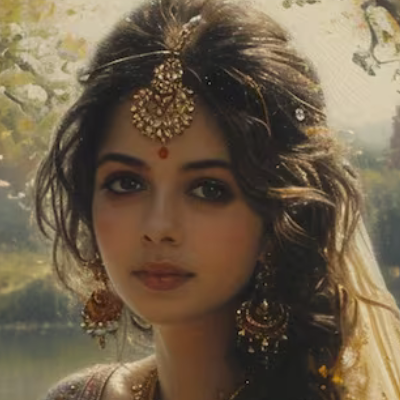
Keshini is the elder and chief queen of King Sagara of Ayodhya; the daughter of the King of Vidarbha, virtue-minded and an advocate of truth and the mother of Asamanjas — through whose son Anshuman the Solar Dynasty continued to the line of Dilipa, Bhagiratha, Raghu, Aja, Dasharatha, and Rama. Her story is narrated in the Valmiki Ramayana (Bala Kanda, Chapter 38) as part of Vishvamitra's account of King Sagara's life. She is described as Sagara's chief queen, virtuous and truthful. When Sagara and his two wives performed a hundred years of tapas at the mountain Bhriguprasravana in the Himalayas, the sage Bhrigu appeared and offered a boon — one wife would bear one son to perpetuate the dynasty, the other would bear sixty thousand powerful sons. Keshini, in the presence of King Sagara, chose one son who enriches the dynasty. In due course the chief Queen Keshini gave birth to a son who was called Asamanjasa. No further personal episode, description of her character, or narrative involving Keshini independently is recorded in any primary canonical source beyond her identification as the daughter of the Vidarbha king, her choice of one dynasty-perpetuating son, and the birth of Asamanjas. A textual note: the Wisdomlib Keshini entry and the Brahmanda Purana (III.49.2) describe her as a queen of Sagara and mother of Asamanjasa; a vamshakarta by Aurva's grace; the daughter of the Vidarbha king. Some sources identify her father as a king of the Shivi kingdom rather than Vidarbha — the Valmiki Ramayana's explicit statement that she was a daughter of the King of Vidarbha is followed as the primary authority.
✦ The Name
The Sanskrit name Keshini — written Keśinī — derives from kesha (hair) with the feminine suffix ini (she who possesses). The name means she who has (beautiful) hair, the long-haired one. As a name for a princess of the Vidarbha royal household it records the beauty of her appearance. The same name is shared by several other distinct figures in the tradition — an apsara who is a daughter of Kashyapa and Pradha (Mahabharata Adi Parva), a Matrika in the Matsya Purana, and a Rakshasī in the Brahmanda Purana — none of whom are the same person as the wife of Sagara.
✦ Lineage
- Father: the king of Vidarbha — named in the Valmiki Ramayana (Bala Kanda, Chapter 38) as the father of Keshini; the Glorious Hinduism source adds the detail that King Vidarbha had a large kingdom centered around modern-day Gujarat and decided to give part of his kingdom to his new son-in-law Sagara his personal name is not given in any primary canonical source consulted
- Husband: Sagara — king of Ayodhya; son of Bahu and Yadavi; raised and educated by Aurva; who reconquered Ayodhya from the Haihayas; who performed a hundred Ashvamedha sacrifices; profiled separately in this series
- Co-wife: Sumati — daughter of Arishtanemi; sister of Garuda; who chose sixty thousand sons; profiled separately below
- Son: Asamanjas — who used to throw children into the river Sarayu for amusement; whom Sagara expelled from the kingdom; whose son Anshuman recovered the Ashvamedha horse and received Kapila's prophecy about the Ganga
- Grandson: Anshuman — son of Asamanjas; who reached Patala, found the horse and the ash heaps of the sixty thousand princes, and received Kapila's blessing and prophecy; who became king after Sagara; whose son was Dilipa
- Descendants: Anshuman → Dilipa → Bhagiratha → Kakutstha → Raghu → Aja → Dasharatha → Rama; through this chain Keshini's choice of one dynasty-perpetuating son produced the line that culminated in Rama — the seventh avatar of Vishnu
✦ The Choice at Bhriguprasravana
The canonical account of Keshini's most significant act is preserved entirely in the boon-choosing scene. Sagara accompanied both wives to the Himalayan mountain Bhriguprasravana — the mountain on which the sage Bhrigu's benevolence perpetually flows — and performed tapas for a hundred years. Bhrigu pleased, came to Sagara and said, "my son, one of your wives shall give birth to one son who will carry on your dynasty. The other will have sixty thousand sons of great valour and perseverance." Kesini and Sumati reverently asked the sage, "Brahmin, which one will have the one son and which one will give birth to many?" To that question, Bhrigu's answer was that they had the freedom to choose. Kesini then chose to have the one son who would be the heir. Her choice was the conservative one — the dynasty-perpetuating single son over the sixty thousand sons of glory. Its conservatism was its wisdom: the sixty thousand were eventually burned to ash in Patala; the one son's line produced Rama.
✦ References
- Valmiki Ramayana (Bala Kanda, Chapter 38) — the primary canonical source: Keshini identified as daughter of the King of Vidarbha; virtue-minded and advocate of truth; her choice of one dynasty-perpetuating son; the birth of Asamanjas
- Bhagavata Purana (Canto 9, Chapter 8, Verse 8 and 15); Brahmanda Purana (III.49.2 and 59; 51.37; 63.154); Vayu Purana (88.155–160); Vishnu Purana (IV.4.1–5.1) — all confirming Keshini as wife of Sagara and mother of Asamanjasa
- Wisdomlib — Kesini (22 definitions); Wikipedia — Asamanja; Glorious Hinduism — Sagara: modern summaries drawing from the above primary sources