
About
Pratah — Personification of Morning, Son of Pushparna and Prabha
Pratah · Pratar · Pratahkala · Pratahsandhya
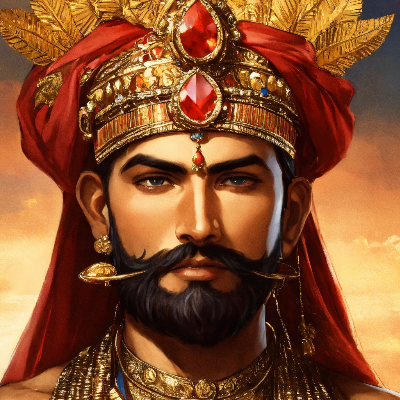
Pratah is recorded in the Bhagavata Purana's fourth Skandha as the eldest of three sons born to Pushparna and his wife Prabha, within the allegorical genealogy of the Dhruva lineage. His name means morning or the early hours of dawn, and the Monier-Williams Sanskrit dictionary explicitly records him as morning personified, a son of Pushparna and Prabha in the Bhagavata Purana. He is the counterpart figure to his half-brother Pradosha — the personification of dusk born of Pushparna's other wife Dosha — and he stands at the opening of the day-cycle just as Pradosha stands at the opening of the night-cycle. His two brothers born of Prabha are Madhyadina (noon) and Saya (evening), together constituting the three divisions of the daytime. The Bhagavata Purana assigns no narrative episodes, individual deeds, marriage, or progeny to Pratah. His presence in the text is entirely constituted by his role as a personification within the cosmological-genealogical scheme.
✦ The Name
The Sanskrit word pratar or pratah is an adverb meaning early, in the morning, or at dawn. It is among the most ancient temporal designations in the Sanskrit language, appearing frequently in the Rigveda in its standard adverbial use. The Monier-Williams dictionary derives it from the root pra combined with the temporal suffix, giving the sense of the very beginning of the day. In the Bhagavata Purana's genealogical usage, the adverb is converted into a masculine proper noun — Pratah, morning itself as a being — through the same personalising process that transforms all six divisions of day and night into named sons of Pushparna. The term is also widely used in compound forms in the Sanskrit liturgical and ritual tradition: pratahsandhya denotes the sacred junction of dawn used for the morning prayers, and pratahkala designates the morning period in Dharmashastra texts.
✦ Lineage
- Father: Pushparna — eldest of six sons born to Vatsara and his wife Svarvithi; his name means one who possesses flowers or whose leaves are flowers; he married two wives, Prabha and Dosha, and fathered two sets of three sons — the three daytime personifications by Prabha and the three nocturnal personifications by Dosha.
- Mother: Prabha — first wife of Pushparna; her name means radiance, brightness, or lustre; she is the mother of the three sons who personify the three divisions of the day. Her own parentage and lineage are not recorded in the primary sources.
- Paternal grandfather: Vatsara — the younger of Dhruva's two sons by his wife Bhrami, daughter of Shishumara; he was installed as king because his elder brother Utkala renounced the throne for a life of austerity; his name means year, and like his own sons and grandsons he belongs to a branch of the Dhruva genealogy that the Bhagavata Purana explicitly frames as a personification of cosmic time.
- Paternal great-grandfather: Dhruva — son of Uttanapada and Suniti; grandson of Svayambhuva Manu; the royal ascetic who performed intense penance in the forest as a child and was elevated by Vishnu to the imperishable station of the Pole Star.
- Brothers (by Prabha): Madhyadina — the personification of noon, second son of Pushparna and Prabha; and Saya — the personification of evening, third son of Pushparna and Prabha.
- Half-brothers (by Dosha): Pradosha (dusk), Nishitha (midnight), and Vyushta (the final watch of night) — sons of Pushparna by his other wife Dosha, who personify the three divisions of the night.
✦ The Allegorical Scheme and Pratah's Place Within It
The Bhagavata Purana's account of Dhruva's lineage converts the royal genealogy into a systematic map of cosmic time. The scheme is structurally precise: Dhruva's son Vatsara — whose name is the Sanskrit word for year — marries Svarvithi and fathers six sons. The eldest of these sons, Pushparna, marries two wives. Prabha, whose name means light or radiance, is the appropriate mother of the three sons who personify the three brightening periods of the day. Dosha, whose name means darkness or night, is the appropriate mother of the three sons who personify the three darkening periods of the night. Pratah as morning stands at the beginning of this sixfold division, opening the cycle of day, and is thus the first named figure in the entire scheme of time-personifications that the Bhagavata Purana encodes within the Dhruva lineage. Wilson, in his Vishnu Purana commentary, noted this Bhagavata scheme as a divergence from the other Puranas that present the Dhruva genealogy in purely dynastic terms, and observed that the personifications are the author's allegorical creation rather than historical figures.
✦ References
Primary Sources
- Bhagavata Purana, Skandha 4, Chapter 13: The sole primary source for Pratah's parentage within the allegorical Dhruva genealogy.
- Vishnu Purana, Book I, Chapter XIII, footnote 1 (Wilson translation): Records the Bhagavata's scheme and names Pratah, Madhyadina, and Saya as the three daytime divisions born of Prabha to Pushparna.
Secondary Sources
- Monier-Williams Sanskrit-English Dictionary, entry on Pratar: Records Pratah as morning personified, a son of Pushparna and Prabha in the Bhagavata Purana, confirming both the parentage and the allegorical character of the figure.
- Wisdomlib.org, entry on Pratar: Provides the Bhagavata Purana reference and lexical data on the term's meaning as early morning or dawn.
- Wisdomlib.org, entry on Vatsara: Confirms the genealogical chain from Dhruva through Vatsara to Pushparna and the six sons.