
About
Pradosha — Personification of Dusk, Son of Pushparna and Dosha
Pradosha · Pradosa · Pradosham
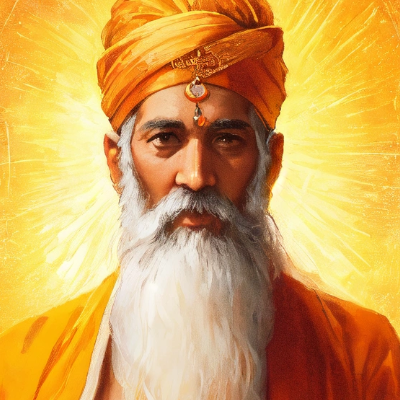
Pradosha is a figure recorded in the Bhagavata Purana's fourth Skandha as one of three sons born to Pushparna and his wife Dosha. He belongs to the Dhruva lineage within the Bhagavata Purana's distinctive account of that dynasty, in which the descendants of Dhruva — the celebrated royal ascetic, son of Uttanapada and grandson of Svayambhuva Manu — are presented as personifications of cosmic time rather than as ordinary kings. Pradosha's name means dusk or the early hours of night, and he represents that division of the night cycle in the Bhagavata's allegorical genealogy. He is the eldest of three brothers, the other two being Nishitha, who personifies midnight, and Vyushta, who personifies the final watch of night before dawn. The Bhagavata Purana's treatment of Dhruva's lineage differs substantially from that given by the Vishnu Purana, and the figures in this portion of the genealogy are understood by the tradition's own commentators as symbolic personifications of temporal divisions rather than as historical individuals.
✦ The Name
The Sanskrit word pradosha — also rendered as Pradosh or Pradosham in regional usage — derives from the root dosa meaning darkness, night, or fault, combined with the prefix pra indicating commencement or intensity. The term designates specifically the period immediately following sunset, roughly the first two hours of night, and is widely used in the Sanskrit astronomical and liturgical tradition to denote the early evening period. In the context of the Bhagavata Purana's genealogy, his name directly identifies him as the embodiment of this portion of the day. The word pradosha is also used independently in the Hindu ritual tradition — particularly in the Shaiva context — to designate the auspicious period of the thirteenth lunar tithi at dusk, known as Pradosha Vrata, a fast observed in honour of Shiva. This ritual usage is distinct from the genealogical figure, though both draw on the same primary meaning of the term.
✦ Lineage
- Father: Pushparna — the eldest of six sons born to Vatsara and his wife Svarvithi; Pushparna had two wives, Prabha and Dosha, and fathered two distinct sets of three sons corresponding to the three divisions of day and the three divisions of night respectively.
- Mother: Dosha — one of Pushparna's two wives; her name means darkness or night, and she is the mother of the three sons who personify the three watches of night. Her own lineage is not recorded in the primary sources.
- Paternal grandfather: Vatsara — second son of Dhruva by his wife Bhrami, daughter of Shishumara; made king in place of his elder brother Utkala, who renounced the throne for a life of austerity; husband of Svarvithi.
- Paternal great-grandfather: Dhruva — son of Uttanapada and his queen Suniti; grandson of Svayambhuva Manu; the royal ascetic who performed intense penance in the forest as a child and was granted by Vishnu the imperishable station of the Pole Star.
- Brothers: Nishitha — the personification of midnight, second son of Pushparna and Dosha; and Vyushta — the personification of the last watch of night, the third son, through whom the genealogical line continues.
- Half-brothers (by Prabha): Three sons of Pushparna by his other wife Prabha — Pratah (dawn), Madhyadina (noon), and Saya (evening) — who personify the three divisions of the day and are thus the counterpart set to Pradosha and his brothers.
✦ The Allegorical Nature of the Bhagavata Purana's Dhruva Lineage
The Bhagavata Purana presents the descendants of Dhruva in a manner that diverges entirely from the account given in the Vishnu Purana, the Matsya Purana, and the Vayu Purana. Wilson, in his commentary on the Vishnu Purana (Book I, Chapter XIII, footnote 1), noted that the Bhagavata has converted the family of Dhruva into personifications of divisions of time and of day and night, and characterised these as evidently the creatures of the author's imagination. The Vishnu Purana's own footnote records the Bhagavata's sequence: Dhruva by Bhrami fathered Kalpa and Vatsara; Vatsara by Svarvithi fathered six sons including Pushparna; Pushparna by Dosha fathered Pradosha, Nishitha, and Vyushta — the beginning, middle, and end of night. The symbolic character of these three figures is transparent: their mother Dosha herself means night, their half-brothers by Prabha represent the three watches of day, and the entire scheme constitutes an allegorical map of the cosmic cycle of time expressed through genealogical form. No narrative episodes, individual actions, marriages, or progeny are recorded for Pradosha in any primary source.
✦ Textual Variants
The Wisdomlib Puranic Encyclopaedia entry on Pradosha identifies him as the grandson of Dhruva, with Pushparna described as the son of Dhruva — compressing the Vatsara generation. The Wikipedia article on Vena, drawing directly on the Bhagavata Purana's fourth Skandha, correctly places Vatsara between Dhruva and Pushparna, giving the full sequence. The Wisdomlib entry on Nishitha introduces a further inconsistency by associating that figure with Prabha as mother in one reading and with Dosha in another. The Bhagavata Purana's own account, as cited in Wilson's Vishnu Purana footnote and confirmed by the Vena article, clearly assigns Pradosha, Nishitha, and Vyushta to Dosha as their mother. The name Vyushta also appears as Vyushtha in some transliterations; these are variant renderings of the same Sanskrit name.
✦ References
Primary Sources
- Bhagavata Purana, Skandha 4, Chapter 13: The sole primary source for Pradosha's parentage and the allegorical genealogy of Dhruva's descendants as personifications of time.
- Vishnu Purana, Book I, Chapter XIII, footnote 1 (Wilson translation): Records and analyses the Bhagavata Purana's divergent account of Dhruva's lineage, naming Pradosha, Nishitha, and Vyushta as the beginning, middle, and end of night born to Pushparna by Dosha.
Secondary Sources
- Wisdomlib.org, entry on Pradosha: Confirms the parentage and Bhagavata Purana reference; notes Pradosha as grandson of Dhruva through Pushparna.
- Wikipedia, article on Vena (Hindu king): Provides the most complete summary of the Bhagavata Purana's Dhruva genealogy, confirming Dosha as mother of Pradosha, Nishitha, and Vyushtha.
- Wisdomlib.org, entry on Vatsara: Confirms Vatsara as the son of Dhruva by Bhrami who married Svarvithi and fathered Pushparna among six sons.