
About
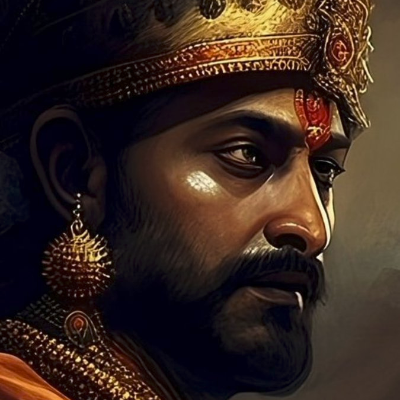
Arishtanemi — Sage and Son of Vinata
Arishtanemi · Arishtanemis · Tarkshya · Kashyapa (as synonym in specific passages)
The name Arishtanemi belongs to several distinct figures in the Hindu scriptural tradition, and this profile addresses them separately and honestly. The most significant for the genealogical series centred on the Kashyapa-Vinata lineage is Arishtanemi the son of Vinata, named in the Mahabharata's Adi Parva as one of Vinata's children and therefore a sibling of Garuda and Aruna. This figure appears in the Mahabharata's Aranya Parva with a brief but striking episode demonstrating his ascetic power, and in the Shanti Parva as a teacher of liberation-doctrine to King Sagara of the solar dynasty. His daughter Sumati, identified by the Valmiki Ramayana's Bala Kanda as the wife of Sagara, connects his lineage to the royal house of Ayodhya. A second entirely distinct figure named Arishtanemi appears in the Bhagavata Purana as a king of the Ikshvaku solar line. A third figure named Arishtanemi is the twenty-second Tirthankara of the Jain tradition, considered a cousin of Krishna in that canon. The name also appears four times in the Rigveda as an epithet or divine name. In the Valmiki Ramayana's Kishkindha Kanda and in the Devi Bhagavata, Arishtanemi is given as a synonym or alternate name of Kashyapa himself. These five distinct usages are addressed separately below. They share nothing beyond the name and must not be conflated.
✦ The Name
The Sanskrit compound Arishtanemi consists of arishta meaning unhurt, unharmed, or auspicious — with the prefix a negating rishta meaning broken or destroyed — and nemi meaning the rim or felly of a wheel. The full name therefore means one whose wheel-rim is unbroken or he whose wheel proceeds without damage, a metaphor for one whose progress is unobstructed, whose cosmic movement is intact and whole. In early Vedic usage this imagery of the unbroken wheel carried associations of solar movement and cosmic order. In Jain interpretation, the name was explained through a dream of the Tirthankara's mother in which she saw a wheel of black jewels. The name Tarkshya, given in some passages as a synonym or related epithet, connects to the same avian and solar complex as Garuda and Aruna.
✦ Arishtanemi — Son of Vinata (Mahabharata, Valmiki Ramayana)
The Mahabharata's Adi Parva at Chapter 65 verse 40 names the children of Vinata as Arishtanemi, Tarkshya, Aruna, Garuda, Para, Aruni, and Shri Varuni. The genealogical line given is Vishnu — Brahma — Kashyapa — and then, by Kashyapa's wife Dhritarashtri, a daughter Shuki; from Shuki came Nata, from Nata came Vinata, and from Vinata came these children. This places Arishtanemi as a son of Vinata and a sibling of both Aruna and Garuda, though in a genealogical framework derived through Dhritarashtri rather than through the direct Daksha-daughter line used in the principal account. Arishtanemi's own genealogical line through this passage makes him a member of the Vainateya avian lineage descended from Kashyapa. The Valmiki Ramayana's Bala Kanda at Sarga 38 verse 4 identifies Sumati, the wife of King Sagara, as the daughter of Arishtanemi, establishing a direct link between this sage and the solar royal dynasty of Ayodhya. This connection is also confirmed in the Puranic Encyclopaedia of Vettam Mani and in the Manuscrypts reference drawing on primary passages.
✦ Lineage of Arishtanemi Son of Vinata
- Father: Kashyapa — one of the seven primordial sages, son of Marichi and grandson of Brahma; the supreme progenitor of the cosmos through his many wives.
- Mother (via the Mahabharata Adi Parva genealogical line): Vinata — reached through the line Kashyapa by Dhritarashtri, daughter of Daksha; Shuki their daughter; Nata daughter of Shuki; Vinata daughter of Nata. This variant places Vinata as Kashyapa's great-granddaughter through the female line rather than his direct wife, creating the genealogical complexity noted in the Sumati profile.
- Siblings (per Mahabharata Adi Parva, Chapter 65, verse 40): Tarkshya, Aruna — the charioteer of Surya the sun god; Garuda — the great eagle-deity and vehicle of Vishnu; Para; Aruni — the female form of the dawn; and Shri Varuni.
- Daughter: Sumati — wife of King Sagara, emperor of Ayodhya of the Ikshvaku solar dynasty; mother of sixty thousand sons whose ashes were redeemed by the descent of the Ganga brought to earth by Bhagiratha; the connection between the Vainateya lineage and the Ikshvaku royal house.
- Son (unnamed, per Mahabharata Aranya Parva): A son who performed intense austerities alongside Arishtanemi in the forest; meditating in a deer-skin, he was mistaken for a deer and shot by Parapuranjaya, king of Hehaya; restored to life by his father's ascetic power.
- Wives (per Agni Purana, Chapter 19): Multiple wives from whose wombs sixteen children were born; no individual names given in this passage.
✦ The Episode of the Slain Son (Mahabharata, Aranya Parva)
The Mahabharata's Aranya Parva at Chapter 184 records an episode in which Arishtanemi was performing austerities in a forest with his son. The son, deep in meditative absorption and clad in a deer-skin, was shot by Parapuranjaya, the prince of Hehaya, who mistook him for a deer. On discovering his error, the prince was overcome with grief and remorse and went to Arishtanemi to beg forgiveness. Arishtanemi then pointed out his son standing alive beside him and asked the king whether this was the one he had killed. When the astonished king asked how this was possible, Arishtanemi explained that the power of their accumulated tapas was so great that no being could cause their death. He then spoke at length on the greatness of the brahmin class and on the invincible spiritual protection that accumulated austerities confer. The episode illustrates the quality of Arishtanemi's ascetic power and forms one of two substantive narrative episodes attributed to this sage in the Mahabharata. In this same Aranya Parva chapter, Arishtanemi is also said to have been in a previous episode identified as Tarkshya, the name shared with his brother and with Garuda.
✦ Spiritual Counsel to King Sagara (Mahabharata, Shanti Parva)
The Mahabharata's Shanti Parva at Chapter 288 verses 5 through 46 records an extended discourse in which Arishtanemi gives spiritual counsel to King Sagara of the solar dynasty. The teaching concerns the path of liberation — moksha dharma — and the nature of the Supreme. Sagara, whose daughter-in-law was Sumati, is the same king whose sixty thousand sons were destroyed by Kapila and whose royal line ultimately gave rise to Bhagiratha and the descent of the Ganga. In this Shanti Parva passage, Arishtanemi is also referred to by the name Tarkshya. The content of his teaching is described in secondary scholarship as emphasising that true happiness lies in liberation rather than in worldly accumulation, and that attachment to wealth, children, and material pleasures obstructs the path to moksha. The teaching has been noted by Jain scholars as strongly resembling Jain tenets on liberation, though this observation belongs to the domain of comparative religious history rather than to the primary text itself.
✦ Arishtanemi as a Synonym of Kashyapa
The Valmiki Ramayana's Kishkindha Kanda at Sarga 66 verse 4 and the Devi Bhagavata's Seventh Skandha both give Arishtanemi as an alternate name or synonym of Kashyapa himself. This usage is entirely separate from the figure who is Vinata's son. The Agni Purana's Chapter 19, which states that Arishtanemi's wives bore sixteen children, may refer to Kashyapa in this synonymous usage rather than to the sage who is Vinata's son, since the Agni Purana's genealogical context at that chapter is primarily concerned with Kashyapa's progeny. The Mahabharata-Purana Kosh research project notes this identification explicitly. The shared name between Kashyapa and one of Kashyapa's own sons through Vinata is an unusual genealogical feature that the primary texts do not address or explain, and it has contributed to the confusion in secondary literature around the parentage of Sumati.
✦ Textual Variants and Inconsistencies
The principal inconsistency surrounding Arishtanemi as Vinata's son is the tension between two different genealogical frameworks for Vinata herself. The Mahabharata Adi Parva Chapter 65 verse 40, which names Arishtanemi among Vinata's children, presents Vinata as descended from Kashyapa through the female line Dhritarashtri — Shuki — Nata — Vinata rather than as a direct daughter of Daksha married to Kashyapa. This conflicts with the principal Mahabharata account elsewhere in the Adi Parva and with the Vishnu Purana, Bhagavata Purana, and Valmiki Ramayana, all of which treat Vinata as a direct daughter of Daksha. The Mahabharata Adi Parva Chapter 65 may represent a different genealogical tradition that was incorporated into the epic without harmonisation with the more familiar account. The list of Vinata's children in that verse — which includes Arishtanemi, Tarkshya, Aruna, Garuda, Para, Aruni, and Shri Varuni — is considerably longer than the standard two-son account of Aruna and Garuda found in the birth narrative of the Astika Parva, which does not acknowledge Arishtanemi, Tarkshya, Para, or the others as Vinata's children. These two passages within the same Adi Parva thus give different and irreconcilable accounts of who Vinata's children were.
The identification of Arishtanemi as Sumati's father in the Valmiki Ramayana stands in tension with the Brahmanda Purana's identification of Sumati as a daughter of Vinata herself and a sibling of Garuda. If the Ramayana account is taken — Arishtanemi is Sumati's father — then Sumati is Garuda's niece, not his sister. If the Brahmanda Purana account is taken — Vinata is Sumati's mother — then Arishtanemi does not enter the picture at all. These two accounts cannot be harmonised, and the primary sources do not attempt to do so.
✦ Connection to the Wider Genealogy
Arishtanemi the son of Vinata sits at an unusual genealogical junction. He is a member of the Vainateya avian lineage through his mother and through Kashyapa as his ultimate patrilineal progenitor. Through his daughter Sumati's marriage to Sagara of Ayodhya, the Vainateya lineage enters the Ikshvaku solar dynasty. Through Sagara's line — via Asamanjas, Anshuman, Dilipa, and Bhagiratha — this connection ultimately reaches Raghu, Aja, Dasharatha, and Rama. Arishtanemi is therefore a figure who connects the cosmic avian race, descended from the sky and the sun, to the most celebrated royal lineage of the Hindu epic tradition. His role as a teacher of moksha-dharma to Sagara himself adds a further dimension: he is not merely connected to Sagara through his daughter but was also the king's spiritual guide, creating a bond between the sage and the royal house at both genealogical and philosophical levels.
✦ References
- Mahabharata, Adi Parva, Chapter 65, verse 40: Names Arishtanemi, Tarkshya, Aruna, Garuda, Para, Aruni, and Shri Varuni as children of Vinata; the primary source for Arishtanemi's placement in the Vainateya lineage.
- Mahabharata, Aranya Parva, Chapter 184: Narrates the episode of Arishtanemi's son being shot and revived through ascetic power; contains Arishtanemi's discourse on the greatness of the brahmin class; identifies him in this context also as Tarkshya.
- Mahabharata, Shanti Parva, Chapter 288, verses 5–46: Records Arishtanemi's extended spiritual discourse to King Sagara on moksha dharma; here again he is referred to as Tarkshya in one passage.
- Valmiki Ramayana, Bala Kanda, Sarga 38, verse 4: Identifies Sumati, wife of King Sagara, as the daughter of Arishtanemi; the primary Ramayana source for his connection to the solar dynasty of Ayodhya.
- Valmiki Ramayana, Kishkindha Kanda, Sarga 66, verse 4: Gives Arishtanemi as a synonym of Kashyapa; one of the sources for the identification of these two names.
- Bhagavata Purana, Skandha IX, Chapter 13, verse 23: Names an Arishtanemi as son of Purujit of the Ikshvaku line with a son Shrutayu; the entirely distinct royal-line figure bearing the same name.
- Agni Purana, Chapter 19: States that sixteen children were born from the wives of Arishtanemi; may refer to Kashyapa under this synonym rather than to the sage who is Vinata's son.
- Devi Bhagavata, Seventh Skandha: Gives Arishtanemi as a synonym of Kashyapa, alongside the Kishkindha Kanda passage.
- Rigveda, 1.89.8 (and three other occurrences): The Shanti Mantra invoking Tarkshya Arishtanemi for well-being and protection; the earliest occurrence of the name in the canonical literature.
- Hemacandra, Trishashtishalaka Purushcharitra (11th century CE): Primary Jain source for the twenty-second Tirthankara Arishtanemi or Neminatha; treats him as a figure of the Yadu dynasty and cousin of Krishna.
- Wisdomlib.org, Story of Arishtanemi (Puranic Encyclopaedia of Vettam Mani, 1975): Modern reference; consolidates all primary source references for Arishtanemi the son of Vinata across Mahabharata, Ramayana, and Puranic passages.
- Manuscrypts.com, Arishtanemi entry: Modern secondary reference; lists the specific chapter and verse references for each episode and genealogical statement concerning Arishtanemi the Vainateya sage.
- Mahabharat-Puran Kosh (Netaji Institute for Asian Studies): Modern scholarly reference; notes the identification of Arishtanemi with Kashyapa as a synonym and the connection of his daughter to Sagara.
- Wikipedia, Neminatha article: Modern secondary reference for the Jain Tirthankara tradition surrounding Arishtanemi-Neminatha.