
About
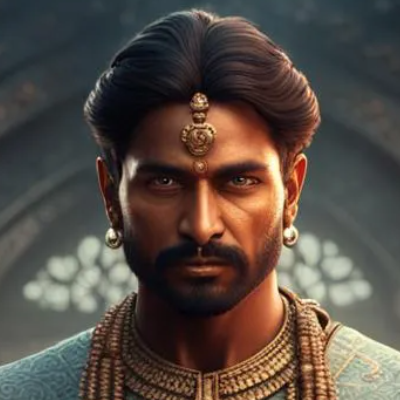
Shlishti — Son of Dhruva and Shambhu, Ancestor of Chakshusa Manu
Shlishti · Slishti · Shlishta · Shlishti Dhruveya
Shlishti is identified in the Agni Purana, the Brahma Purana, and the Puranic Encyclopaedia as a son of Dhruva — the celebrated devotee of Vishnu, son of Uttanapada and Suniti and grandson of Svayambhuva Manu — born of a wife named Shambhu. He does not appear in the Bhagavata Purana's account of Dhruva's sons, which names only Kalpa and Vatsara by Bhrami and Utkala by Ila, and makes no mention of Shambhu as a third wife or of Shlishti as a son. His attestation therefore belongs to the Agni Purana and Brahma Purana tradition rather than to the Bhagavata Purana. The Garuda Purana also mentions a son of Dhruva named Shlishta — a variant form of the same name — identifying him as the father of Prachinvarhi. Shlishti's genealogical significance lies in his being an ancestor of Chakshusa Manu — the sixth Manu of the present Kalpa — through the line that runs from Shlishti through his son Ripu and thence through several generations to the sixth Manu.
✦ The Name
The name Shlishti derives from the Sanskrit root slish meaning to embrace, to cling to, or to adhere, yielding the substantive meaning of one who embraces or the one who adheres. The variant form Shlishta carries the same root meaning as a past participle: the embraced one or the one who has been held close. Neither form is etymologically elaborated in the primary sources in relation to this specific figure. The name Shambhu given to his mother means the one who brings happiness or the benevolent one — a name most famously applied to Shiva but used in the Puranic genealogical tradition as a personal name for female figures as well.
✦ Lineage
- Father: Dhruva — son of Uttanapada and Suniti; the celebrated devotee of Vishnu who attained the Pole Star position; grandson of Svayambhuva Manu and great-grandson of Brahma.
- Mother: Shambhu — named in the Agni Purana and the Puranic Encyclopaedia as the wife of Dhruva through whom Shlishti was born; she is a third wife not mentioned in the Bhagavata Purana's account of Dhruva's family. Her parentage is not recorded in the primary sources consulted.
- Wife: Succhaya — named in the Puranic Encyclopaedia as the wife of Shlishti; she is also identified as his sister in that account — a daughter of Dhruva by Shambhu — making their union a sibling marriage, a type of union attested in certain early Puranic genealogies as a cosmogonic device for the propagation of the earliest lineages. The primary sources do not comment on this aspect.
- Sons: Five — Ripu, Ripunjaya, Punya, Vrkala, and Vrkatejas — born of Shlishti and Succhaya according to the Puranic Encyclopaedia. The Agni Purana gives a slightly variant list naming Ripu, Ripunjaya, Ripra, Vrkala, and Vrkatejas.
- Paternal grandfather: Uttanapada — younger son of Svayambhuva Manu.
- Paternal great-grandfather: Svayambhuva Manu — the first Manu, mind-born son of Brahma.
✦ The Descent from Shlishti to Chakshusa Manu
The Agni Purana, Chapter 18 traces a genealogical line from Shlishti to Chakshusa Manu — the sixth Manu of the present Kalpa — through the following sequence. Shlishti and Succhaya begot five sons of whom the eldest was Ripu. Ripu and his wife Brihati begot Chakshusa, who became the sixth Manu. This is a more direct line to the sixth Manu than the sequence given in the Bhagavata Purana through Vatsara, where the descent passes through Pushparna, Vyushta, and Sarvatejas before reaching Chakshusa. The two Puranic traditions thus offer different routes of descent from Dhruva to Chakshusa Manu — the Bhagavata Purana through Vatsara, and the Agni Purana through Shlishti — reflecting the broader pattern of genealogical variation across the Puranas in which the same figure can be reached by different ancestral lines in different texts.
✦ Textual Variants and Inconsistencies
The most significant inconsistency concerning Shlishti is his complete absence from the Bhagavata Purana's account of Dhruva's family. The Bhagavata Purana, Canto 4, Chapters 10 and 13, which contain the most detailed treatment of Dhruva's life and descendants in any single Mahapurana, names only three sons of Dhruva — Kalpa and Vatsara by Bhrami, and Utkala by Ila — and makes no mention of a wife named Shambhu or a son named Shlishti. Shlishti's attestation rests on the Agni Purana, the Brahma Purana, and the Puranic Encyclopaedia, with a variant form Shlishta in the Garuda Purana. These sources use Shlishti to provide the genealogical link from Dhruva to Chakshusa Manu independently of the Bhagavata Purana's Vatsara line. The name variant Shlishta in the Garuda Purana — where he is named as Dhruva's son and father of Prachinvarhi — is generally understood as an orthographic variant of Shlishti rather than a different figure.
✦ References
- Agni Purana, Chapter 18: Primary source naming Shlishti as a son of Dhruva by Shambhu, listing his five sons including Ripu, and tracing the descent from Ripu to Chakshusa Manu.
- Brahma Purana: Corroborating source for Shlishti as son of Dhruva and his genealogical significance in the lineage leading to Chakshusa Manu.
- Garuda Purana: Names a son of Dhruva called Shlishta — a variant form of Shlishti — identifying him as the father of Prachinvarhi in the dynastic descent from Dhruva.
- Vettam Mani, Puranic Encyclopaedia (1975), Shlishti entry: Records Shlishti as son of Dhruva by Shambhu, names Succhaya as his wife and sister, and lists his five sons Ripu, Ripunjaya, Punya, Vrkala, and Vrkatejas.
- Bhagavata Purana, Canto 4, Chapters 10 and 13: Cited as the primary source that does not mention Shlishti or Shambhu in Dhruva's family, establishing the textual basis for the inconsistency between the Bhagavata Purana and the Agni Purana traditions.