
About
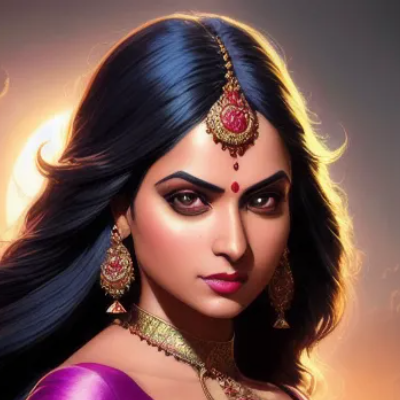
Succhaya — Wife of Shlishti, Mother of Ripu
Succhaya · Suchchaya · Succhaya · Succhaya Agneyī
Succhaya is recorded in the Vishnu Purana as the wife of Shlishti — also written Shishti or Shlishti — one of the two sons born to the great devotee Dhruva and his wife Shambhu, and the mother of five blameless sons of whom the eldest, Ripu, continued the main dynastic line. Through Ripu and his descendants she stands as the matrilineal bridge linking the household of Dhruva to Chakshusa Manu, the presiding sovereign of the sixth Manvantara. The Matsya Purana and the Cologne Sanskrit Dictionaries further identify Succhaya as a daughter of Agni, the fire deity, which would make her of divine origin. Her account appears principally in Book 1, Chapter 13 of the Vishnu Purana, with brief parallel references in the Matsya Purana. The Bhagavata Purana treats the same genealogical position with an almost entirely different set of names and allegorical identifications.
✦ The Name
The name Succhaya is a Sanskrit compound of su, meaning good, excellent, or auspicious, and chhaya, meaning shade, shadow, or reflection — conveying the sense of one who is an excellent or beautiful reflection, or who casts an auspicious light. The name appears in transliterated editions variously as Succhaya, Suchchaya, Succhaaya, and Succhaya. No etymological commentary on the name is offered in the primary texts themselves.
✦ Lineage
- Father: Agni, the Vedic fire deity and one of the principal cosmic powers, identified as her father in the Matsya Purana and the Cologne Purana Index; this parentage is not stated in the Vishnu Purana itself.
- Father-in-law: Dhruva, son of King Uttanapada and his wife Suniti, celebrated across the Vishnu Purana and the Bhagavata Purana for his intense childhood austerities performed in devotion to Vishnu, through which he attained eternal residence as the Pole Star, Dhruvaloka.
- Mother-in-law: Shambhu, one of the two wives of Dhruva named in the Vishnu Purana, and the mother of his sons Bhavya and Shlishti.
- Husband: Shlishti (also Shishti), son of Dhruva by Shambhu, described in the Vishnu Purana as one of two sons; the text characterises him as blameless.
- Son — Ripu: eldest son of Succhaya and Shlishti, who continued the primary dynastic line; father of the illustrious Chakshusa by his wife Vrihati.
- Son — Ripunjaya: second son of Succhaya and Shlishti; no further narrative is recorded for him in the primary texts.
- Son — Vipra: third son; no further narrative is recorded.
- Son — Vrikala: fourth son; no further narrative is recorded.
- Son — Vrikatejas: fifth son; no further narrative is recorded.
✦ Role in the Dynastic Succession
The Vishnu Purana presents Succhaya's five sons collectively as virtuous and without blemish — akalmasha in the Sanskrit text — placing this quality as an inherited characteristic of the household of Dhruva. Of her five sons, only Ripu generates a named descendant in the primary text. Ripu's son by his wife Vrihati was Chakshusa, described as illustrious; Chakshusa in turn fathered Chakshusa Manu upon Pushkarini, herself a daughter of the patriarch Anaranaya and of the lineage of Varuna. Chakshusa Manu is thus Succhaya's great-grandson, and he presides over the sixth Manvantara — the Chakshusa epoch — in the cosmic cycle of time. Through this line Succhaya occupies a significant position in the Puranic genealogical system, connecting the devotional household of Dhruva to one of the fourteen Manus who govern successive world-ages.
✦ Textual Variants and Inconsistencies
Three significant divergences exist across the primary texts for this genealogical segment. First, regarding Succhaya's parentage: the Vishnu Purana does not identify her father. The Matsya Purana, cited in the Cologne Purana Index (Matsya Purana 4.38), states that she was a daughter of Agni. This divine parentage, if accepted, would make her a figure of celestial origin and would explain the emphasis on the blamelessness of her sons. Second, regarding the number of generations between Dhruva and Chakshusa Manu: the Vayu Purana introduces an additional generation, naming the eldest son of Shlishti (called Pushti in that text) as the father of Udaradhi, and Udaradhi as the father of Ripu; in the Vishnu Purana account, Ripu is the direct son of Shlishti and Succhaya, with no intermediate generation. Third, the Bhagavata Purana takes a substantially different approach to this entire genealogical cluster, converting the descendants of Dhruva into personifications of cosmic time and the divisions of day and night — with Dhruva's wife named Bhrami, a daughter of Shishumara the celestial sphere, and the children bearing names that signify time-units and cosmological phenomena — with virtually no overlap with the names given in the Vishnu Purana account in which Succhaya appears.
✦ Connection to the Wider Genealogy
Succhaya belongs to the lineage descending from Swayambhuva Manu, the first Manu, through the patriarchal line of Uttanapada and Dhruva. Her husband Shlishti is a brother of Bhavya, Dhruva's other son by Shambhu. Through her eldest son Ripu and his son Chakshusa, her line connects to Chakshusa Manu, whose ten sons by his wife Navala — among them Uru, Pura, Satadyumna, Tapasvi, Kavi, and Abhimanyu — form the population of the sixth Manvantara. The line further continues through Uru's son Anga, and from Anga by his wife Sunitha was born the king Vena, from whose arm the sage-priests produced by churning the celebrated monarch Prithu — the first sovereign to bear the title of king in the Puranic tradition — after whom the earth itself received the name Prithivi.
✦ References
- Vishnu Purana, Amsha 1, Chapter 13: Primary source. The principal text in which Succhaya is named; records her marriage to Shlishti, the names and blameless character of her five sons, and the descent from Ripu to Chakshusa to Chakshusa Manu. The most direct and detailed Puranic account.
- Matsya Purana, Chapter 4, verse 38: Primary source. Cited in the Cologne Purana Index and Wisdomlib Purana Index; identifies Succhaya as a daughter of Agni and wife of Shishta (Shlishti), adding the detail of her divine parentage absent from the Vishnu Purana.
- Vayu Purana: Primary source. Introduces an additional generation between Shlishti and Ripu, naming an intermediate figure Udaradhi as Ripu's father and Shlishti's son; diverges from the Vishnu Purana in the number of generations separating Dhruva from Chakshusa Manu.
- Bhagavata Purana, Skandha 4: Primary source. Treats the same genealogical position with an almost entirely different set of names and allegorical personifications of time and cosmic phenomena; does not name Succhaya and does not overlap significantly with the Vishnu Purana's account for this lineage segment.
- Wisdomlib — Succhaya entry (Puranic Encyclopaedia and Cologne Digital Sanskrit Dictionaries): Modern secondary resource. Aggregates references from the Vishnu Purana, Matsya Purana, and Cologne index; confirms Succhaya's identification as daughter of Agni across the secondary lexical tradition.
- Sacred-texts.com — The Vishnu Purana, Book I, Chapter XIII (H. H. Wilson translation): Modern secondary resource. Provides the English translation of the primary passage on Succhaya and the note on Matsya Purana and Vayu Purana variants, including the additional generation in the Vayu Purana account.