
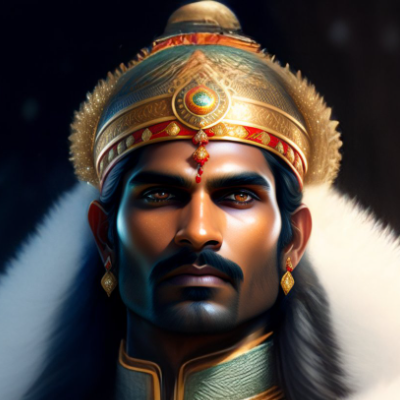
About
Ripu — Son of Shilisti, Father of Chakshusha Manu, Prince of the Primordial Solar Lineage
Ripu · Shilisti-putra · Chakshusha-pita · Dhruva-vamshaja · Svayambhuva-vamshaja
Ripu is a prince of the primordial Solar lineage, the eldest of the five sons of Shilisti — himself a son of Dhruva, the celebrated boy-devotee of Vishnu who was granted the eternal position of the pole star — and his wife Suchhaya. He is named in the Bhagavata Purana's fourth skandha as the figure through whom the genealogical line of this branch of Dhruva's descendants is continued, the text tracing the lineage specifically through Ripu rather than through his four brothers. His primary significance in the tradition is genealogical — he is the father of Chakshusha, who is identified in the Bhagavata Purana, the Vishnu Purana, and other Mahapuranas as Chakshusha Manu, the Manu of the sixth manvantara — the sixth great cosmic age within the current kalpa. As the father of a Manu, Ripu occupies a position of genuine cosmological importance in the Puranic genealogical system, even though he himself receives no individual narrative episode in any primary text consulted. He appears also in the Vishnu Purana in the same genealogical context.
✦ The Name
The name Ripu is Sanskrit, meaning enemy, foe, or adversary — from the root rip or related forms carrying the sense of one who is hostile or opposed. The name Ripu is used in Sanskrit literature both as a straightforward designation of an enemy and, in compound names, as a component meaning destroyer of enemies — the compound ripu-ghna or ripu-han meaning slayer of foes. Used as a personal name in the royal and martial tradition, Ripu encodes the quality of a warrior who is himself an enemy to those who oppose dharma — a king whose very nature is inimical to unrighteousness. Names encoding martial power and hostility to enemies are common in the naming conventions of the primordial Solar lineage, and Ripu's name belongs to this pattern. His brother Ripunjaya bears a closely related name — Ripunjaya meaning one who conquers his enemies — reinforcing the martial naming tradition of this generation of Dhruva's descendants.
✦ Lineage
- Father: Shilisti — also rendered Shishti in certain transliterations — one of the sons of Dhruva, the celebrated boy-devotee of Vishnu who through extraordinary austerities at the age of five years received the direct vision of Vishnu and was granted the eternal position of the pole star. Shilisti's wife was Suchhaya, and their five sons were Ripu, Ripunjaya, Vipra, Vrikala, and Vrikatejas.
- Paternal grandfather: Dhruva, son of King Uttanapada and his wife Suniti, who ruled as king for thirty-six thousand years before ascending to the Dhruva nakshatra — the pole star position — around which all stars, planets, and celestial beings revolve for the duration of the current cosmic age.
- Paternal great-grandfather: Uttanapada, king of the Solar dynasty, son of Manu Svayambhuva — the first Manu and primordial sovereign of humanity in the current cosmic age.
- Paternal great-great-grandfather: Manu Svayambhuva, the first Manu, mind-born son of Brahma.
- Brothers: Ripunjaya, Vipra, Vrikala, and Vrikatejas — the four other sons of Shilisti and Suchhaya named in the Bhagavata Purana's fourth skandha; none of these four receives individual narrative treatment in the primary sources, and the genealogical continuation passes through Ripu rather than through any of his brothers.
- Wife: Brihati, named in the Bhagavata Purana as the wife of Ripu; her parentage is not specified in the primary sources consulted.
- Son: Chakshusha, the son of Ripu and Brihati, identified in the Bhagavata Purana, the Vishnu Purana, and other Mahapuranas as Chakshusha Manu — the Manu of the sixth manvantara, the sixth great cosmic age within the current kalpa. Each manvantara is presided over by a Manu who governs the world and maintains the dharmic order for the duration of that age, and the line of Manus constitutes one of the most important genealogical sequences in the entire Puranic cosmological framework. That Ripu's son is a Manu gives Ripu's position in the lineage a significance that his own minimal narrative treatment does not otherwise suggest.
✦ Ripu as the Father of a Manu — Cosmological Significance
The Puranic tradition identifies fourteen Manus as the successive sovereigns of the fourteen manvantaras that constitute a single kalpa — a day of Brahma. Each Manu presides over one manvantara, which the tradition describes as lasting approximately 306 million human years. The first Manu of the current kalpa is Svayambhuva Manu — Dhruva's own ancestor — and the subsequent Manus govern the succeeding ages in order. Chakshusha Manu, Ripu's son, is the sixth Manu in this sequence, presiding over the sixth manvantara. The current age is the seventh manvantara, presided over by Vaivasvata Manu — the Manu of the Solar dynasty from whose line Ikshvaku, Dilipa, Raghu, Dasharatha, and Rama descend. Chakshusha Manu therefore immediately precedes the Manu of the current age in the cosmological sequence.
The genealogical chain that connects Ripu to the Manus is thus of genuine cosmological significance within the Puranic framework. The lineage runs from Brahma through Manu Svayambhuva through Uttanapada through Dhruva through Shilisti through Ripu to Chakshusha — and from Chakshusha to the sixth manvantara that immediately precedes the age of Vaivasvata Manu in which the Solar dynasty of Ayodhya, the story of Rama, and the events of the current cosmic age unfold. Ripu stands at a pivotal juncture in this cosmological genealogy, and his significance is entirely a function of his position as the father of Chakshusha Manu rather than of any individual narrative or achievement attributed to him in the primary sources.
✦ Textual Variants
The genealogical list of Dhruva's descendants in the Bhagavata Purana and the corresponding list in the Vishnu Purana agree on the main outline of the sequence — Dhruva, Shilisti, Ripu, Chakshusha — but differ in certain details. The Vishnu Purana's account of this portion of the lineage names some of the same figures but may vary in the name of Ripu's wife or in other details of the intermediate generations. These variations are consistent with the general pattern of variation in the primordial genealogical registers across the major Puranas and do not affect the core identification of Ripu as the father of Chakshusha Manu. Pargiter's comparative analysis of the Puranic lists addresses this portion of the genealogy and notes the broad agreement on the main sequence despite the variation in details.
✦ References
Primary Sources
- Bhagavata Purana, Skandha 4, Chapter 13: Names Ripu as the eldest son of Shilisti and Suchhaya; identifies Brihati as his wife and Chakshusha as his son; the principal primary source for his genealogical placement and for the identification of his son as Chakshusha Manu.
- Bhagavata Purana, Skandha 4, Chapter 13 and subsequent verses: Continues the genealogical register from Ripu through Chakshusha and into the sixth manvantara; provides the cosmological context for Ripu's significance as the father of a Manu.
- Vishnu Purana, Book 1, sections on Dhruva's lineage and the Manus: Names Ripu in the genealogical continuation of the Dhruva line and identifies Chakshusha as a Manu; provides a parallel account with some variation in detail from the Bhagavata Purana.
- Bhagavata Purana, Skandha 8, sections on the manvantaras: Provides the broader cosmological context for the sequence of fourteen Manus within which Chakshusha Manu occupies the sixth position; establishes the significance of Ripu's genealogical place as the father of the sixth Manu.
Modern Reference Works
- Vettam Mani, Puranic Encyclopaedia (Motilal Banarsidass, 1975), entries on Ripu and Chakshusha: Notes Ripu's identification as the son of Shilisti and the father of Chakshusha Manu; addresses the cosmological significance of Chakshusha as the sixth Manu and Ripu's position in the lineage of Dhruva's descendants.
- Ganesh Vasudeo Tagare (trans.), Bhagavata Purana, Part 2 (Motilal Banarsidass, 1976): Critical translation of the fourth skandha including the genealogical continuation through Shilisti, Ripu, and Chakshusha; the notes address the significance of the Manu identification and the cosmological framework of the manvantaras.
- F. E. Pargiter, Ancient Indian Historical Tradition (Oxford University Press, 1922): Analyses the Puranic genealogical lists for the descendants of Dhruva comparatively across the major Puranas and addresses the sequence leading from Shilisti through Ripu to Chakshusha Manu.