
About
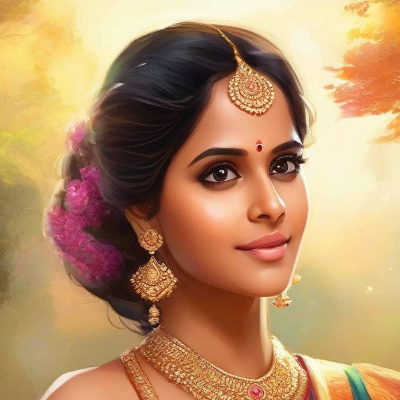
Brihati — Wife of Ripu, Mother of Chakshusha
Brihati · Brhati
Brihati is a queen of the Svayambhuva Manu lineage, recorded as the wife of Ripu and the mother of the mighty Chakshusha. Ripu is one of the five sons of Shishti — himself a son of Dhruva, the celebrated devotee of Vishnu and son of king Uttanapada — born to Shishti by his wife Succhaya. Through her son Chakshusha and his own son Chakshusha Manu, Brihati stands in the direct maternal line leading to the sixth Manu, progenitor of the sixth manvantara. Her name appears in the Vishnu Purana (Book I), the Harivamsa, the Saurapurana, and is confirmed in Vettam Mani's Puranic Encyclopaedia. No narrative episode and no record of her own parentage or origin are preserved in any primary source; her presence in the tradition is solely as a genealogical link in the line from Dhruva to Chakshusha Manu.
✦ The Name
The name Brihati (Sanskrit Brhati) is the feminine form of the adjective brhat, meaning great, large, vast, or lofty — derived from the root brh (to be great, to grow, or to increase). As a feminine substantive it carries the sense of a great or noble woman. In the Vedic tradition the word Brhati also designates one of the principal Vedic metres — a metre of thirty-six syllables arranged in specific patterns — making the name carry associations of sacred literary form and cosmic order. In the botanical tradition the name is applied to the plant Solanum indicum, one of the ten roots (dashamula) of Ayurvedic medicine. In the context of this profile, Brihati is used as a personal name carrying the sense of greatness and nobility.
✦ Lineage
- Husband: Ripu — eldest of the five sons of Shishti and Succhaya; Ripu is a grandson of Dhruva and a great-grandson of Uttanapada; his four brothers are Ripunjaya, Vipra, Vrkala, and Vrkatejas
- Son: Chakshusha — described in the Vishnu Purana as highly effulgent; father of Chakshusha Manu by Pushkarini, daughter of Viranprajapati of Varuna's family; to be distinguished from his own son, Chakshusha Manu, who is the sixth Manu and progenitor of the sixth manvantara
✦ Genealogical Context
To understand Brihati's place in the broader tradition it is necessary to set out the line in which she stands. Svayambhuva Manu — the first Manu, born of Brahma — had two sons, Priyavrata and Uttanapada. Uttanapada had two wives, Suruchi and Suniti: by Suruchi he had Uttama, and by Suniti he had Dhruva — the celebrated child-devotee who achieved the fixed celestial position known as Dhruvaloka through his unwavering meditation on Vishnu. Dhruva's wife Shambhu bore him two sons, Shishti and Bhavya. Shishti's wife Succhaya bore five sons: Ripu, Ripunjaya, Vipra, Vrkala, and Vrkatejas. It is Ripu, the eldest of these five, who married Brihati. Their son was Chakshusha, described in the Vishnu Purana as highly effulgent. Chakshusha in turn married Pushkarini, daughter of Viranprajapati, of the family of Varuna, and by her begot a son called Chakshusha Manu — the sixth of the fourteen Manus, progenitor of the sixth manvantara and father of ten sons including Uru, whose wife Agneyi bore the six foundational kings Anga, Sumanas, Svati, Kratu, Angiras, and Shiva.
The name Chakshusha requires disambiguation. The Vishnu Purana and the Harivamsa distinguish clearly between two bearers of this name in consecutive generations: Chakshusha the father, son of Ripu and Brihati; and Chakshusha Manu the son, born of Chakshusha and Pushkarini and known as the sixth Manu. The Markandeya Purana offers an alternative account of the sixth Manu's origin — recording that in a previous birth he was an ascetic named Ananda who was blessed by Brahma to be reborn as Chakshusha Manu — but this does not contradict the genealogical line placing Chakshusha son of Ripu and Brihati as the father in the Vishnu Purana tradition. The two accounts address different aspects of the same figure's origin and are not in direct contradiction.
✦ Textual Record
Brihati is named in the Vishnu Purana (Book I, Chapter 13) in the passage narrating the genealogy of Dhruva's descendants: Ripu is named as the father, Brihati as the mother, and Chakshusha as their son. The Vyasa Online rendering of the same passage confirms: the son of Ripu by Brihati was the illustrious Chakshusha, who in turn begot the Manu Chakshusha on Pushkarini of the family of Varuna. The Harivamsa preserves the same information. Vettam Mani's Puranic Encyclopaedia (entry on Chakshusha Manu) confirms the line: Ripu — by Brhati — Cakshusha — by Pushkarini daughter of Viranaprajapati — Chakshusha Manu. The Saurapurana, an Upapurana, also attests Brhati as the wife of Ripu and mother of Cakshusha. No source names Brihati's own father, mother, or dynasty; no narrative episode, personal quality, or individual act is recorded for her beyond her role in this genealogical sequence.
✦ References
- Primary Sources:
- Vishnu Purana, Book I, Chapter 13 (H.H. Wilson translation; also Vyasa Online rendering): The principal source; names Brihati (Brhati) as the wife of Ripu and mother of Chakshusha in the Dhruva genealogical sequence; describes Chakshusha as highly effulgent
- Harivamsa, Adi Parva (genealogical section on Dhruva's descendants): Attests Brihati as wife of Ripu and mother of Chakshusha; consistent with the Vishnu Purana account
- Saurapurana, Vamsha section (as cited in Wisdomlib, Shodhganga critical study): States that Brhati the wife of Ripu gave birth to Cakshusha; places the entry within the genealogy descending from Dhruva through Srishti and Ripu
- Secondary Sources:
- Vettam Mani, Puranic Encyclopaedia, entry on Chakshusha Manu (Wisdomlib): Confirms the line Ripu — Brhati — Cakshusha — Pushkarini — Chakshusha Manu; notes the descent from Svayambhuva Manu through Uttanapada and Dhruva
- Dharmawiki, article on Dhruva: Provides the full Vishnu Purana passage in translation, naming Brihati (Brhati) as the mother of Chakshusha and locating her within the five-generation chain from Svayambhuva Manu to Chakshusha Manu