
About
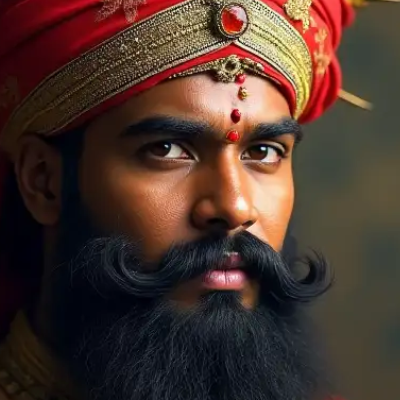
Dilipa — Son of Anshuman, King of Ayodhya, Father of Bhagiratha, the King Who Could Not Bring the Ganga
Dilipa · Dīlīpa · Anshuman-putra · Yashodha-pati · Bhagiratha-pita · Ganga-jijnasa-dvitiya · Ikshvaku-vamsha-nripa · Raghuvamsha-purvajanma
Dilipa is the son of King Anshuman (grandson of Sagara, who received Kapila's prophecy about the Ganga); the father of Bhagiratha — who finally accomplished the descent of the Ganga from heaven to earth and liberated the sixty thousand sons of Sagara; and a king of the Ikshvaku Solar Dynasty of Ayodhya. His position in the dynasty is confirmed across the Valmiki Ramayana (Bala Kanda, Chapters 43–44), the Vishnu Purana (Book 4, Chapter 4), the Bhagavata Purana (Canto 9, Chapter 9), and the Harivamsa. He was a righteous and able king who ruled his kingdom well. Like his father Anshuman before him, he undertook intense tapas in the Himalayas in the hope of accomplishing what Kapila had prophesied — the descent of the Ganga — but was unable to succeed. He died still attempting this task, leaving it to his son Bhagiratha. The Valmiki Ramayana's account of him is brief — he ruled for thirty thousand years per the tradition's measurement, performed great austerities, could not accomplish the Ganga descent, and left the kingdom to Bhagiratha. A critical textual note: the Dilipa who appears as the protagonist of Kalidasa's celebrated epic poem Raghuvamsha — the childless king who served the divine cow Nandini for twenty-one days at Vasishtha's direction and received the son Raghu as his reward — is a different and later Dilipa in the Solar Dynasty succession, placed many generations after Bhagiratha; he is the father of Raghu (who gave the dynasty its name Raghuvamsha), grandfather of Aja, and great-grandfather of Dasharatha and Rama. Both Dilipas are real and canonical figures — they simply belong to different generations of the same dynasty and share the same name.
✦ The Name
The Sanskrit name Dilipa — written Dīlīpa — is interpreted in the tradition through the etymology recorded in the Wisdomlib entry: dilī is said to be the barbarous or archaic name of Hastinapura (or in alternate readings, an old name for Delhi) and pa means the ruler or protector. The compound gives the sense of protector of the city, ruler of the capital. The Wisdomlib entry confirms: dilīpaḥ — the name of a king and ancestor of Rama; dilī the barbarous name of Hastinapur and pa who protects or rules. Whether this etymology accurately reflects the historical origin of the name is uncertain — it is a traditional interpretive derivation rather than a Vedic-root compound etymology.
✦ Lineage
- Father: Anshuman — son of the expelled prince Asamanjas; grandson of Sagara; who recovered the Ashvamedha horse from Patala; who received Kapila's prophecy that his grandson would bring the Ganga to earth; who also tried and failed to accomplish this in his own lifetime; profiled separately in this series
- Paternal grandfather: Asamanjas — son of Sagara and Keshini; expelled from Ayodhya for throwing children in the Sarayu; who in the Bhagavata Purana tradition was secretly a great yogi who revived all the children
- Paternal great-grandfather: Sagara — who named the ocean; whose sixty thousand sons were burned to ash in Patala by Kapila;
- Wife: Yashodha — named in some Puranic sources; her parentage is not individually recorded in the primary canonical sources consulted
- Son: Bhagiratha — who accomplished what both his father and grandfather could not; who performed the most extreme tapas in the Solar Dynasty tradition; who brought the Ganga from heaven to earth; who liberated the sixty thousand sons of Sagara; after whom the act of accomplishing an extraordinary seemingly impossible task through sustained effort is called Bhagirath Prayatna (Bhagiratha's effort) in the living language tradition; profiled separately below
- Position in Solar Dynasty: Sagara → Asamanjas → Anshuman → Dilipa → Bhagiratha → Kakutstha → Raghu → Aja → Dasharatha → Rama
- The other Dilipa: several generations after Bhagiratha in the same Solar Dynasty, another king also named Dilipa appears — the father of Raghu, protagonist of Kalidasa's Raghuvamsha; that Dilipa is placed between Kakutstha-lineage descendants and Raghu in the succession and is a completely distinct figure sharing only the name
✦ The Quest to Bring the Ganga — Second Attempt, Second Failure
Dilipa knew from his father Anshuman the prophecy Kapila had given: that it would be Anshuman's grandson who would bring the Ganga to earth and liberate the sixty thousand princes. The prophecy said grandson — not son. Anshuman had understood this to mean his own grandson, and had accordingly tried himself and failed, intending to leave the task to Bhagiratha. When Dilipa succeeded Anshuman as king, he ruled with justice and competence. The Valmiki Ramayana (Bala Kanda, Chapter 43) records the sequence with sparse precision: Anshuman ruled for thirty-two thousand years, handed the kingdom to Dilipa, and retired to the Himalayas for tapas to bring the Ganga — but could not succeed and died. Dilipa then ruled for thirty thousand years. He also undertook severe tapas to bring the Ganga and was also unable to succeed. He died with the task incomplete. He left the kingdom to his son Bhagiratha. The tradition does not explain why Dilipa's tapas failed — Kapila's prophecy had said Anshuman's grandson would accomplish this, which technically meant Dilipa's son, not Dilipa himself. Both Anshuman and Dilipa may have been attempting a task that was never prophesied for them — their failures being structurally built into the cosmic arrangement, not evidence of inadequate spiritual effort. Dilipa's failure was therefore not a personal deficiency but a temporal one — the work was not yet due. The two generations of failed effort made Bhagiratha's eventual success a story not merely of one man's penance but of a three-generation family mission finally achieved.
✦ References
- Valmiki Ramayana (Bala Kanda, Chapters 43–44) — the primary canonical source: Anshuman handing the kingdom to Dilipa; Dilipa ruling for thirty thousand years; his tapas to bring the Ganga; his failure; his death; Bhagiratha succeeding him; the three-generation structure of the quest
- Vishnu Purana (Book 4, Chapter 4) — the genealogical chain Anshuman → Dilipa → Bhagiratha confirmed
- Bhagavata Purana (Canto 9, Chapter 9) — the parallel Puranic account of the succession; Dilipa's position confirmed
- Wisdomlib — Dilipa (16 definitions) — the name etymology; the distinction between Dilipa son of Anshuman (father of Bhagiratha) and Dilipa of Kalidasa (father of Raghu); both confirmed as separate canonical figures
- Wikipedia — Dilipa; Antaryamin.wordpress.com — Ancestors of Lord Rama; Booksfact.com — Lord Rama Lineage: modern summaries drawing from the above primary sources