
About
Chakshusa — Son of Ripu and Brhati, Father of Chakshusa Manu
Chakshusa · Chakshus · Cakshusha · Chakshusa Ripuja
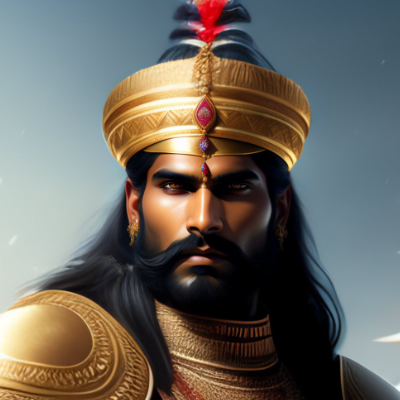
Chakshusa is a figure of the Puranic genealogical tradition identified in the Vishnu Purana, the Brahmanda Purana, the Vayu Purana, the Agni Purana, and the Puranic Encyclopaedia as the son of Ripu — himself the eldest son of Shlishti, who was born of Dhruva by his wife Shambhu — and his wife Brhati. His singular genealogical significance lies in being the father of Chakshusa Manu — the sixth of the fourteen Manus who preside over the successive Manvantaras of the present Kalpa — through his wife named Pushkarini or Varuni, a daughter of the Prajapati Virana and one of the offspring of Varuna. Through this paternity Chakshusa stands as the crucial generational link between the ancient lineage descending from Dhruva and the cosmic administrative figure of the sixth Manu. He does not feature in any major independent narrative episode in the primary sources; his profile in the tradition is entirely genealogical. His name derives from the Sanskrit chakshus meaning eye, and the Vishnu Purana records that this name relates to the tradition that in a prior existence this figure was born from the eye of Brahma.
✦ The Name
The name Chakshusa is derived from the Sanskrit chakshus, meaning eye or the organ of sight, with the suffix -a forming an adjectival or nominal derivative meaning of or relating to the eye, or the eye-born one. The Vishnu Purana provides a direct etymological explanation: in a prior existence this being was born from the eye of Brahma, and it is from that ocular birth — with chakshus meaning eye — that the name Chakshusa derives. The Markandeya Purana develops an elaborate narrative around this etymology, describing how in a former life he was the sage Ananda who was exchanged as a newborn by the demoness Jataharini with the son of King Vikranta, grew up as a prince, eventually revealed the truth of his origins, performed tapas, and was blessed by Brahma to be born as Chakshusa Manu in a subsequent birth. The name is thus simultaneously a genealogical designation, an etymological reference to an ocular origin, and a link to a prior-existence narrative.
✦ Lineage
- Father: Ripu — eldest of the five sons of Shlishti and Succhaya; named in the Vishnu Purana, Agni Purana, Brahmanda Purana, and Puranic Encyclopaedia as the father of Chakshusa.
- Mother: Brhati — named in the Vishnu Purana, Brahmanda Purana, Vayu Purana, and Puranic Encyclopaedia as the wife of Ripu and mother of Chakshusa; her parentage is not recorded in the primary sources consulted.
- Paternal grandfather: Shlishti — son of Dhruva by Shambhu; who married Succhaya and begot five sons of whom Ripu was the eldest.
- Paternal great-grandfather: Dhruva — the celebrated child-devotee of Vishnu, son of Uttanapada and Suniti, grandson of Svayambhuva Manu and great-grandson of Brahma; granted by Vishnu the immovable position of the Pole Star.
- Wife: Pushkarini — named in the Puranic Encyclopaedia and Saurapurana as the wife of Chakshusa and mother of Chakshusa Manu; identified as a daughter of the Prajapati Virana and one of the offspring of Varuna. The Brahmanda Purana and Vayu Purana use the name Varuni for this wife, designating her as a daughter of Varuna; this is consistent with the identification of Pushkarini as being of Varunic lineage.
- Son: Chakshusa Manu — the sixth of the fourteen Manus of the present Kalpa; who presided over the sixth Manvantara, married Nadvala daughter of the Prajapati Vairaja, and begot ten sons — Kuru, Puru, Shatadyumna, Tapasvi, Satyavan, Shuchi, Agnishtoma, Atiratra, Sudyumna, and Abhimanyu — who extended the human lineage through the sixth cosmic epoch.
✦ Genealogical Position and Significance
Chakshusa occupies a precise and essential position in the lineage that connects the devotee-king Dhruva — operating in the first Manvantara's time — to the sixth Manu who governs the sixth Manvantara. Through Dhruva, Chakshusa descends from Uttanapada, from Svayambhuva Manu, and ultimately from Brahma himself. Through his son Chakshusa Manu, his lineage connects directly to the cosmic administrative order of the sixth Manvantara, within which the Vishnu Purana records that Manojava served as Indra, the gods were grouped as Adyas, Prastutas, Bhavyas, Prithugas, and Lekhas with eight in each group, and the seven sages included Sumedhas, Viraja, and others. The Bhagavata Purana records that during the sixth Manvantara the Lord appeared as Ajita, born from Vairaja's wife, as the avatar who upheid dharma for that epoch.
✦ Textual Variants and Inconsistencies
The most significant textual complexity surrounding Chakshusa is not about his own identity — which is consistently attested across the Vishnu Purana, Brahmanda Purana, Vayu Purana, and Agni Purana as son of Ripu and Brhati and father of Chakshusa Manu — but about the genealogical route from Dhruva to Chakshusa. Two distinct traditions exist across the primary sources.
The Vishnu Purana, Agni Purana, Brahma Purana, and Puranic Encyclopaedia trace the line through Dhruva's wife Shambhu, then through Shlishti, Ripu, and Chakshusa to Chakshusa Manu. The Bhagavata Purana, Canto 4, Chapter 13 traces the line through Dhruva's wife Bhrami, then through Vatsara, Pushparna, Vyushta, and Sarvatejas — and from Sarvatejas through his wife Akuti directly to Chakshusa Manu — entirely bypassing Shlishti, Ripu, and Chakshusa. In the Bhagavata Purana account, Chakshusa Manu is the son of Sarvatejas and Akuti, not of Chakshusa and Pushkarini.
These two genealogical traditions cannot be reconciled: they identify different parents for Chakshusa Manu and different intermediate generations between Dhruva and the sixth Manu. Both sets of sources are primary and authoritative within their own Puranic traditions. The figure of Chakshusa as son of Ripu and father of the sixth Manu belongs specifically to the Vishnu Purana tradition and its allied texts, and does not appear in the Bhagavata Purana's genealogical account at all.
Additionally, a figure named Chakshusa appears in the Bhagavata Purana Canto 9, in the genealogy of the Lunar dynasty through a different lineage entirely — the son of Khanitra and father of Vivimshati in the line of Pururava. That Chakshusa is a completely distinct figure from the son of Ripu and should not be conflated with him.
✦ The Prior-Existence Narrative
The Markandeya Purana preserves a narrative about the prior existence of the being who became Chakshusa Manu, which casts light on the name Chakshusa itself. In that prior existence, the being was named Ananda, son of Anamitra. As a newborn he was exchanged by the demoness Jataharini with the son of King Vikranta, and grew up in the royal household as a prince. He possessed the ability to perceive past lives and remembered the cosmic perspective — the Markandeya Purana account records that even as a newborn he addressed his mother with philosophical observations about the selfishness inherent in all forms of attachment, including maternal love. When he came of age he revealed the truth of his actual parentage to the king, departed for the forest to perform tapas, and was blessed by Brahma — who granted him the position of the sixth Manu in his next birth. The name Chakshusa, meaning the eye-born one, is explained in the Vishnu Purana as referring to a still earlier existence in which this being was born from Brahma's eye, giving him an additional layer of prior-existence identity that the name itself encodes.
✦ Connection to the Wider Genealogy
Chakshusa stands at a genealogical crossroads of remarkable scope. Looking upward through his lineage, he descends from Ripu, Shlishti, Dhruva, Uttanapada, Svayambhuva Manu, and Brahma — connecting him to the very beginning of the Puranic human genealogical tradition. Looking downward through his son Chakshusa Manu and the Manu's ten sons, the lineage branches into the royal dynasties that governed the earth during the sixth Manvantara, and through figures such as Sudyumna connects to later portions of the Puranic dynastic tradition. His wife Pushkarini's identification as an offspring of Varuna also connects Chakshusa laterally to the Varunic divine lineage. Through his ancestor Dhruva's ascension to the Pole Star, Chakshusa belongs to a lineage simultaneously royal, devotional, and cosmic — one that spans from the first Manvantara's devotee-king to the sixth Manvantara's presiding Manu across a vast stretch of Puranic cosmological time.
✦ References
- Vishnu Purana, Book I, Chapter 13: Primary source naming Chakshusa as the son of Ripu and Brhati and the father of Chakshusa Manu; records the prior-existence etymology of his name as born from Brahma's eye.
- Brahmanda Purana, Book III, Chapter 74: Corroborating source for Chakshusa as son of Ripu and Brhati, with his wife identified as Varuni daughter of Varuna and mother of Chakshusa Manu.
- Vayu Purana: Parallel corroboration of Chakshusa's identity as son of Ripu and father of the sixth Manu.
- Agni Purana, Chapter 18: Names Chakshusa as born of Ripu and Brhati within the genealogy tracing from Shlishti to Chakshusa Manu.
- Bhagavata Purana, Canto 4, Chapter 13: The source for the alternative tradition that traces the line from Dhruva to the sixth Manu through Vatsara, Pushparna, Vyushta, and Sarvatejas rather than through Shlishti, Ripu, and Chakshusa; cited to establish the textual inconsistency between the two traditions.
- Markandeya Purana: Source for the prior-existence narrative of Chakshusa as the sage Ananda, his exchange at birth by Jataharini, his revelation of his origins, and his attainment of the sixth Manu position through tapas and Brahma's blessing.
- Vettam Mani, Puranic Encyclopaedia (1975), Chakshusa Manu entry: The most accessible secondary source consolidating the genealogical chain from Dhruva through Shlishti, Ripu, and Chakshusa to Chakshusa Manu, drawing on the Vishnu Purana tradition.