
About
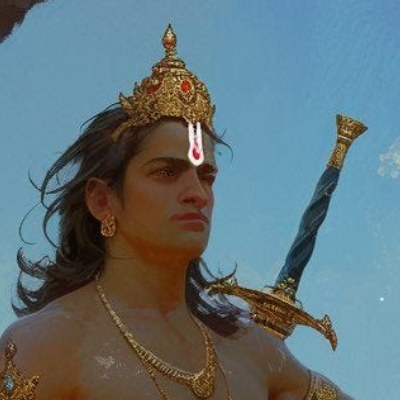
Chakshusa Manu — The Sixth Manu, Presider of the Chakshusa Manvantara
Chakshusa Manu · Cakshusha Manu · Chakshusa · Shashtho Manu
Chakshusa Manu is the sixth of the fourteen Manus who preside over the successive Manvantaras of a Kalpa — the full day of Brahma — in the Hindu Puranic cosmological system. He is named across the Bhagavata Purana, the Vishnu Purana, the Matsya Purana, the Brahmanda Purana, the Vayu Purana, the Agni Purana, the Markandeya Purana, and the Harivamsha, all of which record his position as the sixth Manu and give varying accounts of his parentage, his wife, his sons, and the divine figures who administered the cosmos during his Manvantara. His Manvantara — the Chakshusa Manvantara — immediately precedes the present seventh Manvantara governed by Vaivasvata Manu, making Chakshusa Manu the most recent of the six past Manus in the current Kalpa. His name derives from the Sanskrit chakshus meaning eye, and the Vishnu Purana records that in a prior existence he was born from the eye of Brahma — a cosmogonic act that gave him the name he carries. His parentage is disputed across the primary sources, with the Vishnu Purana tradition tracing him through the lineage of Dhruva via Shlishti and Ripu and his father Chakshusa, while the Bhagavata Purana traces a different line of descent from Dhruva through Vatsara, Pushparna, Vyushta, and Sarvatejas.
✦ The Name
The name Chakshusa is the adjectival or patronymic form of chakshus, meaning eye or organ of sight, yielding the meaning of the eye-born one or he who is of the eye. The Vishnu Purana gives a direct etymological explanation: in a prior existence, this being was born from the eye of Brahma — the creator deity — and it is from that ocular origin that the name derives. The Markandeya Purana gives an elaborated version of a prior existence as the sage Ananda, who was exchanged at birth by the demoness Jataharini, grew up as a prince, eventually revealed his true parentage, and performed tapas through which Brahma blessed him to be born as the sixth Manu. The name Chakshusa Manu is thus both a personal name and a Manvantara designation — the sixth Manvantara being called the Chakshusa Manvantara after him.
✦ Lineage
- Father (Vishnu Purana tradition): Chakshusa — son of Ripu and Brhati; himself descended from Dhruva through Shlishti and Ripu; the figure whose name Chakshusa Manu inherits as his own patronymic designation. This lineage is attested in the Vishnu Purana, Brahmanda Purana, Vayu Purana, Agni Purana, and Puranic Encyclopaedia.
- Mother (Vishnu Purana tradition): Pushkarini — daughter of the Prajapati Virana and of the lineage of Varuna; named in the Puranic Encyclopaedia and Saurapurana as the wife of Chakshusa and mother of Chakshusa Manu. The Brahmanda Purana and Vayu Purana use the name Varuni for this same figure, designating her as a daughter of Varuna.
- Father (Bhagavata Purana tradition): Sarvatejas — descended from Dhruva through Vatsara, Pushparna, and Vyushta; his wife Akuti bore Chakshusa Manu according to the Bhagavata Purana Canto 4, Chapter 13. This tradition names entirely different intermediate generations between Dhruva and the sixth Manu and does not mention Chakshusa the father at all.
- Wife: Nadvala — named in the Vishnu Purana as the daughter of Prajapati Vairaja; named Nadvala in the Puranic Encyclopaedia. The Matsya Purana uses the form Nadvala similarly.
- Sons (Vishnu Purana): Ten — Kuru, Puru, Shatadyumna, Tapasvi, Satyavan, Shuchi, Agnishtoma, Atiratra, Sudyumna, and Abhimanyu.
- Sons (Bhagavata Purana): Twelve — Puru, Kutsa, Trita, Dyumna, Satyavan, Rta, Vrata, Agnishtoma, Atiratra, Pradyumna, Shibi, and Ulmuka. The Bhagavata Purana further narrates that Ulmuka, the youngest, begot six sons — Anga, Sumana, Khyati, Kratu, Angira, and Gaya — through his wife Pushkarini, and that Anga's son Vena extended the dynasty further.
- Daughter (mentioned in one source): Jyotishmati — named in the Wikipedia article on Manu drawing on Puranic material as a daughter of Chakshusa Manu, who wished for the most powerful being as her husband. The narrative associated with her is that when she sought the strongest husband, the inquiry passed from Indra to Vayu to Bhumi to Shesha, and Shesha's answer eventually led to her rebirth as Revati to marry the avatar of Vishnu. This narrative is preserved in certain Puranic texts but is not universally attested across all the major sources consulted.
✦ The Prior-Existence Narrative
The Markandeya Purana preserves the most detailed narrative of Chakshusa Manu's prior existence, which accounts for his name and for his attainment of the Manu position. In that prior birth he was named Ananda, the son of a sage Anamitra. As a newborn he displayed extraordinary wisdom — the Markandeya Purana records that even as an infant he addressed his mother with philosophical observations about the nature of maternal attachment and the illusory character of all worldly bonds, observing that her love, like that of a female cat eyeing him hungrily, was at root a form of self-interested desire. In the course of this same episode, the demoness Jataharini — who specialises in exchanging newborns — took Ananda from his cradle and placed him in the bed of the infant son of King Vikranta, depositing Vikranta's son elsewhere. Ananda grew up in the royal palace as the king's apparent son.
When the time came for his sacred thread ceremony and the king asked the boy to prostrate before his mother, Ananda — still possessed of his prior-life memory and wisdom — declared the truth of his actual origins: he was not the king's son but the son of Anamitra. He then departed the palace to perform tapas in the forest. Brahma appeared before him and, pleased with his penance and his spiritual nature, blessed him with the promise that he would be born as the sixth Manu in his subsequent birth. This prior-existence story accounts both for the name Chakshusa — the eye-born one, from a still earlier existence in which he was born from Brahma's eye according to the Vishnu Purana — and for his attainment of the cosmic administrative role of Manu through accumulated merit and divine blessing.
✦ The Chakshusa Manvantara — Divine Administration
The sixth Manvantara presided over by Chakshusa Manu is described across the Bhagavata Purana, Vishnu Purana, and related texts in terms of its divine administrative personnel — the Indra, the gods, the seven sages, and the avatar of Vishnu who served during that cosmic epoch.
The Indra of the Chakshusa Manvantara is named Mantradruma in the Bhagavata Purana and the Brahmanda Purana; the Vishnu Purana uses the name Manojava for this same figure. The gods of the epoch are grouped as the Apyas — a divine class specific to this Manvantara — among others. The seven sages of the Chakshusa Manvantara are named differently across sources. The Bhagavata Purana Canto 8, Chapter 13 gives Sumedhas, Virajas, Havishmat, Uttama, Madhu, Abhinaman, and Sahishnu. The Vishnu Purana gives Sumedhas, Viraja, Havishmat, and others. Additional names including Bhavya and Savana appear in some recensions. The variation in the saptarishi list across the Puranas for this Manvantara reflects the general pattern of inconsistency in such lists across the primary sources.
The avatar of Vishnu who manifested during the Chakshusa Manvantara is named Ajita in the Bhagavata Purana, Canto 8, Chapter 13. The Bhagavata Purana records that Vishnu appeared as Ajita during this epoch and was involved in the churning of the Ocean of Milk — the Samudra Manthana — a cosmic event associated in some Puranic chronological schemes with the Chakshusa Manvantara. The Puranic Encyclopaedia also notes that during the Chakshusa Manvantara were born Nara and Narayana as the sons of Dharma, and that from Anasuya wife of the sage Atri were born Brahma as Chandra, Vishnu as Dattatreya, and Shiva as Durvasa — though this last detail appears in the Devi Bhagavata Purana's account of the fourth Skandha rather than in a single universally agreed statement across all sources.
✦ The Deluge During the Chakshusa Manvantara
The Puranic Index entry for Chakshusa Manu, drawing on the Bhagavata Purana and allied sources, records that there was a deluge during his Manvantara — a periodic dissolution of the manifested world by flood that marks certain transitions in the cosmic cycle. The specific narrative details of this deluge in the Chakshusa Manvantara are not as extensively developed in the primary sources as those of the great flood associated with Vaivasvata Manu — the present seventh Manu — which is the most celebrated flood narrative of the Hindu tradition, involving Manu Vaivasvata's boat, the Matsya avatar of Vishnu, and the preservation of the Vedas, the sages, and the seeds of all creatures. The deluge of the Chakshusa Manvantara is noted as a cosmological fact within the cycle but is not elaborated with the same narrative richness.
✦ Textual Variants and Inconsistencies
Parentage: As noted above, two irreconcilable genealogical traditions identify different parents and different intermediate generations between Dhruva and Chakshusa Manu. The Vishnu Purana tradition gives Chakshusa and Pushkarini as his parents, with the lineage running Dhruva — Shlishti — Ripu — Chakshusa — Chakshusa Manu. The Bhagavata Purana tradition gives Sarvatejas and Akuti as his parents, with the lineage running Dhruva — Vatsara — Pushparna — Vyushta — Sarvatejas — Chakshusa Manu. Neither tradition acknowledges the other, and they cannot be harmonised.
Sons: The Vishnu Purana lists ten sons while the Bhagavata Purana lists twelve, with differing names. Some names appear in both lists — Shatadyumna, Atiratra, Sudyumna — but others differ. The lists are not variants of the same enumeration but genuinely different accounts of Chakshusa Manu's progeny.
Name of the Manvantara Indra: The Bhagavata Purana and Brahmanda Purana name him Mantradruma; the Vishnu Purana names him Manojava. These are variant names for the same cosmological office in the same Manvantara, not two different figures.
The seven sages: Different Puranas give different lists of the seven sages for the Chakshusa Manvantara, a pattern consistent with the treatment of saptarishi lists throughout the Puranic tradition, which are among the most variable elements across texts.
✦ Theological Significance
Chakshusa Manu's position as the sixth Manu places him at the penultimate stage of the six past Manvantaras of the current Kalpa, immediately preceding the present epoch governed by Vaivasvata Manu. In the Puranic understanding of cosmic time, each Manu is a progenitor of humanity for his own epoch — his sons and their descendants populating the earth during that Manvantara — and also a cosmic administrator who presides over the righteous governance of the world in concert with the Indra, the gods, and the seven sages of his epoch. Chakshusa Manu's prior-existence narrative as Ananda — the newborn of exceptional wisdom who saw through the illusion of worldly attachment even in infancy and attained the Manu position through tapas and divine grace — establishes his personal spiritual credentials in a tradition that consistently presents the Manus not merely as administrative figures but as beings of high spiritual standing who have earned their cosmic role through accumulated merit across multiple existences.
✦ Connection to the Wider Genealogy
Through his parentage in the Vishnu Purana tradition, Chakshusa Manu descends from Dhruva, who descends from Uttanapada and Svayambhuva Manu — the first Manu and mind-born son of Brahma. Chakshusa Manu is thus genealogically the sixth Manu descended within a single family line from the first Manu, spanning six Manvantaras of cosmic time within one continuous genealogical chain. This is one of the most remarkable genealogical features of the Puranic system — the presentation of all six past Manus as connected by descent through the lineage of Svayambhuva Manu. Through his son Ulmuka and grandson Anga and great-grandson Vena in the Bhagavata Purana account, Chakshusa Manu's line continues into narratives of the Chakshusa epoch's royal dynasties. His wife Nadvala's identification as a daughter of Prajapati Vairaja connects him laterally to the Prajapati tradition of creative progenitors. The Chakshusa Manvantara itself connects to the great cosmic event of the Samudra Manthana and to the manifestation of Ajita as the avatar of Vishnu for that epoch, situating Chakshusa Manu's reign within the broader Vaishnava framework of avatara manifestation across the Manvantaras.
✦ References
- Bhagavata Purana, Canto 4, Chapter 13: Traces the descent from Dhruva through Vatsara, Pushparna, Vyushta, and Sarvatejas to Chakshusa Manu; names twelve sons including Puru, Kutsa, Trita, and Ulmuka, and continues the lineage through Ulmuka's sons including Anga.
- Bhagavata Purana, Canto 8, Chapter 13: Records the divine administrative personnel of the Chakshusa Manvantara — the Indra Mantradruma, the gods, the seven sages, and the avatar Ajita; notes the deluge during this Manvantara.
- Vishnu Purana, Book III, Chapter 1–2: The primary source for the Vishnu Purana tradition of Chakshusa Manu's parentage through Chakshusa son of Ripu; names ten sons and the wife Nadvala daughter of Vairaja; gives the Manvantara Indra as Manojava and records the five divine groups and seven sages of the epoch.
- Vishnu Purana, Book I, Chapter 13: Names Chakshusa as son of Ripu and Brhati and father of Chakshusa Manu in the genealogical descent from Dhruva.
- Matsya Purana: Corroborating source for Chakshusa Manu's identity as the sixth Manu, his wife Nadvala, and his sons.
- Brahmanda Purana, Book III, Chapter 74: Identifies Chakshusa as son of Ripu and Varuni as his wife and mother of Chakshusa Manu; provides the Manvantara Indra as Mantradruma.
- Agni Purana, Chapter 18: Traces the line from Shlishti through Ripu and Chakshusa to Chakshusa Manu.
- Markandeya Purana: The primary source for the prior-existence narrative of Chakshusa Manu as the sage Ananda — his exchange at birth by Jataharini, his upbringing as a prince, his revelation of his true origins, his tapas, and Brahma's blessing granting him the sixth Manu position.
- Harivamsha, Chapter 2: Corroborating source for the genealogical line from Ripu and Brhati through Chakshusa to Chakshusa Manu.
- Vettam Mani, Puranic Encyclopaedia (1975), Chakshusa Manu entry: The most comprehensive modern consolidation of Chakshusa Manu's genealogy, parentage, wife, sons, and the divine administration of his Manvantara across primary sources.