
About
Hamsi — Daughter of Bhagiratha, Wife of Sage Kautsa, and the Famous Princess Whose Marriage is Named Among Her Father's Meritorious Acts
Hamsi · Haṃsī · Bhagirathaputri · Kautsa-patni · Shruta-bhagini · Suryavanshi-rajkumari · Nabhaga-matamahi
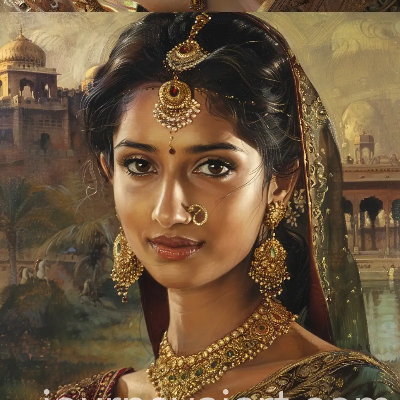
Hamsi is the daughter of King Bhagiratha — the most celebrated king of the Solar dynasty's intermediate period, the figure who brought the Ganga down from Svarga to the earth through decades of extraordinary austerity and is the eponym of Bhagirath prayatna — and the wife of the sage Kautsa, the student of Varatantu whose guru dakshina episode with King Raghu is the mythological foundation of the Vijayadashami apta-leaf tradition. She is the sister of Shruta — the son who succeeded Bhagiratha on the throne of Ayodhya. The Mahabharata's Anushasana Parva chapter 131 verse 25 records her marriage specifically: Bhagiratha "married his famous daughter Hamsi to Kautsa" — and the Wikipedia Bhagiratha article confirms the same wording: "He marries his famous daughter, Haṃsī, to the sage Kautsa." The word prasiddha — famous — applied to Hamsi in the Mahabharata's specific phrasing is unusual and significant: it designates her as a figure of established reputation in her own right rather than merely an unnamed daughter. The Glorious Hinduism Bhagiratha source confirms that after Bhagiratha's return from performing his ancestral mission — after the Ganga had been brought to the earth and the sixty thousand sons of Sagara had been liberated — he resumed his kingship, married, had two children including Hamsi, gave her to Kautsa, and then devoted himself to cow-gifting and eventually to renunciation. She appears in the Mahabharata's Anushasana Parva, the Yoga Vasishtha, and in the Kautsa narrative tradition. Her profile is given separately in the Kautsa entry in this series in the capacity of his wife; this profile addresses her specifically as Bhagiratha's daughter and Shruta's sister.
✦ The Name
The name Hamsi — also spelled Hansi in the Wikipedia Bhagiratha article's anglicisation — derives from the Sanskrit hamsa, meaning swan, goose, the sacred waterfowl of the Indian tradition. Hamsi as the feminine form means "the swan-woman" or "she who is a swan." The hamsa holds an extraordinary range of sacred associations in the tradition: it is the vehicle of Brahma and Sarasvati, the symbol of the liberated soul (paramahamsa), the metaphor for divine discernment in the tradition of the hamsa separating milk from water, and the soul itself in the Upanishadic identification of the individual breath as the hamsa-mantra (so-ham). As a royal name for a princess of Bhagiratha's lineage — the lineage of the greatest act of filial piety in the Solar dynasty's history — Hamsi encodes both the grace and the purity of the swan and the specific discernment that the hamsa symbolises in the tradition's philosophical vocabulary. The epithet Bhagirathaputri means "daughter of Bhagiratha." Kautsa-patni means "wife of Kautsa." Nabhaga-matamahi means "maternal grandmother of Nabhaga" — through her son or through the succession that the Bhagavanbhakthi source gives for the post-Bhagiratha Solar dynasty line.
✦ Lineage
- Father: Bhagiratha — the king of Ayodhya, the most celebrated of the Solar dynasty's intermediate kings, who performed extraordinary austerities to bring the Ganga to the earth and liberate the sixty thousand sons of Sagara. His name became synonymous in Sanskrit with monumental sustained effort against apparently impossible obstacles. The Mahabharata's framing of Hamsi's marriage — placing it in the same passage as Bhagiratha's other acts of cosmic merit including the Ganga's descent and his gifting of cows to Kohala — identifies the giving of Hamsi to Kautsa as itself a dharmic act of the highest quality, listed alongside his most celebrated achievements. Bhagiratha is placed in the Solar dynasty approximately eighteen generations before Rama, making Hamsi a figure of the intermediate Solar dynasty period well before the Ramayana's own narrative time.
- Mother: Bhagiratha's wife is not named in the primary sources consulted. The Glorious Hinduism source records simply that "he married and had two children" without specifying the queen's name. The primary tradition is silent on her identity.
- Brother: Shruta — the son who succeeded Bhagiratha on the throne of Ayodhya, profiled separately in this series.
- Husband: Kautsa — the student of Varatantu who mastered all fourteen shastras, who obtained fourteen crore gold coins from King Raghu for his guru dakshina in the celebrated episode narrated in Kalidasa's Raghuvamsha chapter 5, and whose marriage to Hamsi is confirmed by the Mahabharata's Anushasana Parva.
- Children of Hamsi and Kautsa: The primary sources do not specifically name children of the marriage of Hamsi and Kautsa.
✦ The Marriage as a Meritorious Act
The specific framing of Hamsi's marriage in the Mahabharata's Anushasana Parva is the most theologically significant fact of her biography beyond the genealogical relationship itself. The Wisdomlib Bhagiratha significance entry records: "This royal sage, by giving his famous daughter Hansi in marriage to Kautsa, went to the eternal regions." The phrase "went to the eternal regions" — indicating attainment of the highest spiritual goal — is attributed specifically to Bhagiratha's combination of acts: bringing the Ganga down, gifting cows to Kohala, and giving Hamsi in marriage to Kautsa. The kanya-daan — the gift of a daughter in marriage to a worthy recipient — was one of the most meritorious acts in the tradition's social and dharmic framework. That the tradition lists this specific marriage alongside Bhagiratha's most celebrated cosmic achievements suggests that the tradition regarded Hamsi's marriage to Kautsa as an act of exceptional dharmic quality — the daughter of the king whose Bhagirath prayatna had liberated sixty thousand ancestral souls being given to the brahmin scholar whose devotion to his teacher's education would eventually become the founding event of a living annual festival tradition. Two streams of extraordinary dharmic achievement met in this marriage — the ascetic-royal tradition of Bhagiratha and the scholarly-brahminical tradition of Kautsa.
✦ Source Character and Honest Assessment
Hamsi's attestation in the primary sources is compact — she appears in the Mahabharata's Anushasana Parva in the context of her father's biography.
✦ Connection to the Wider Genealogy
Through her father Bhagiratha and the Solar dynasty lineage, Hamsi descends from Vivasvat-Surya through Vaivasvata Manu, Ikshvaku, Sagara, Amshuman, Dilipa, and Bhagiratha — eighteen generations of the most celebrated royal lineage in the tradition. Through her brother Shruta and his successor Nabhaga, she is connected to the continuing Solar dynasty that eventually produced Dilipa II, Raghu, Aja, Dasharatha, and Rama. Through her husband Kautsa and the Kutsa brahminical lineage, she connects the Kshatriya Solar dynasty to a distinguished Vedic scholarly family through the most celebrated act of guru dakshina in the tradition's brahminical narrative. Through the Vijayadashami apta-leaf tradition that her husband's biography generated, she is — by the most indirect of biographical connections — associated with a living annual festival practice that continues to the present day across Maharashtra and Karnataka.
✦ References
- Mahabharata, Anushasana Parva, chapter 131, verse 25: "He married his famous daughter Hamsi to Kautsa" — the primary canonical statement of Hamsi's marriage and the specific characterisation of her as "famous."
- Mahabharata, Anushasana Parva, chapter 137, verse 26: The companion verse confirming the marriage from the Kautsa side — Bhagiratha identified as the one "whom sage Kautsa married." The combination of both verses gives the marriage bilateral canonical attestation.
- Yoga Vasishtha, Section 6 (attributed to Valmiki Rishi): The account of Bhagiratha's life including the marriage of Hamsi to Kautsa as one of his domestic biographical facts after the completion of the Ganga-descent mission.
- Vettam Mani, Puranic Encyclopaedia (1975): Entries on Hamsi and Bhagiratha confirming the relationship and the primary source references.