
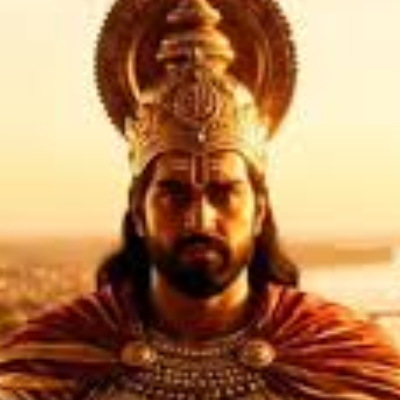
About
Sindhudvipa — King of Ayodhya, Son of Nabhaga IV, Father of Ayutashva
Sindhudvipa · Nabhagaputra · Ayutashvapita · Ikshvakuvamshaja
Sindhudvipa is a king of the Ikshvaku Solar dynasty of Ayodhya, named in the Vishnu Purana, the Bhagavata Purana, and the Vayu Purana as the father of Ayutashva, who is in turn the father of Rituparna — the king of Ayodhya celebrated in the Nalopakhyana of the Mahabharata for his mastery of the science of numbers and dice. In this genealogical series Sindhudvipa is the son of Nabhaga IV, who was himself the son of Shruta, son of Bhagiratha. Certain sources in the wider Puranic literature, however, place a king named Ambarisha between Nabhaga IV and Sindhudvipa, making Sindhudvipa the son of Ambarisha rather than the son of Nabhaga IV directly. This variant is noted and addressed honestly below. Sindhudvipa's individual treatment in the primary sources is confined largely to the genealogical register, and he receives no sustained narrative episode of his own in any primary text consulted beyond an association with high spiritual attainment recorded in certain Puranic passages.
✦ The Name
The name Sindhudvipa is a Sanskrit compound of sindhu, meaning river, ocean, or specifically the Indus river, and dvipa, meaning island, peninsula, or continent. The compound may be rendered as "island in the river" or "one who dwells on or rules over a land between the waters" — a name with geographical and cosmological resonance in the Sanskrit naming tradition. Dvipa as a cosmological term refers to the great landmasses or continents of the Puranic world-geography, giving the name an additional layer of grandeur appropriate to a Solar dynasty king. No etymological explanation specific to this figure is provided in the primary sources themselves. The patronymic Nabhagaputra means "son of Nabhaga." Ayutashvapita means "father of Ayutashva." Ikshvakuvamshaja means "born of the Ikshvaku lineage."
✦ Lineage
- Dynasty: Ikshvaku, the Solar dynasty of Ayodhya descended from the sun-god Surya through Vaivasvata Manu and Ikshvaku, the dynasty's founder and first king of the Kosala kingdom.
- Father in this series: Nabhaga IV, son of Shruta who was son of Bhagiratha — the most celebrated of the Solar dynasty's intermediate kings, whose extraordinary austerities brought the sacred river Ganga down from the heavens to the earth. Nabhaga IV's position in the succession is confirmed by the Garuda Purana, Vishnu Purana, and Bhagavata Purana as the direct link between Shruta and the next generation of Solar kings.
- Son: Ayutashva, the Solar dynasty king whose name encodes the possession of ten thousand horses, named in the Vishnu Purana and Bhagavata Purana as the father of Rituparna, king of Ayodhya.
- Grandson: Rituparna, king of Ayodhya, whose mastery of the science of numbers and dice — the aksha-hridaya — and his exchange of that knowledge with the exiled king Nala during a single day's chariot journey from Ayodhya to Vidarbha becomes the instrument of Nala's liberation from the demon Kali, as narrated in the Nalopakhyana of the Mahabharata.
✦ Spiritual Attainment
Certain Puranic passages associate the name Sindhudvipa with the attainment of a high spiritual state through austerity and devotion. Some accounts describe a Sindhudvipa who achieved the status of a brahmarshi — the highest rank of sage, ordinarily reserved for those of Brahmin birth but exceptionally attainable by kings of extraordinary tapas — through the power of his own ascetic practice. If this notice refers to the same Sindhudvipa who is the Solar dynasty king in this succession, it would make him an unusually accomplished figure for a king in this middle portion of the genealogical list, where most figures receive no individual characterisation at all. The identification of this spiritually accomplished Sindhudvipa with the dynastic Sindhudvipa is not made with unmistakable clarity across all the relevant passages, and the possibility that two distinct figures share the name cannot be entirely excluded. This ambiguity is recorded honestly rather than resolved arbitrarily in either direction.
✦ Textual Variants and Inconsistencies
On the parentage of Sindhudvipa: The Bhagavanbhakthi Solar dynasty genealogical source, drawing on the Bhagavata Purana and Valmiki Ramayana, places an intermediate king named Ambarisha between Nabhaga IV and Sindhudvipa in the succession. In this variant tradition Sindhudvipa would be the son of that Ambarisha rather than the direct son of Nabhaga IV. This intermediate Ambarisha is designated Ambarisha III in this genealogical series, being the third distinct figure bearing that name in the Solar dynasty tradition. Ambarisha I is the son of Nabhaga II — himself a grandson of Vaivasvata Manu — referenced in the Mahabharata's Vana Parva and the Wisdomlib entry on Naabhaaga. Ambarisha II is the son of Mandhata, the celebrated Solar dynasty king who conquered the entire world, and is the Ambarisha of the Durvasa episode — the supreme Vishnu devotee whose unwavering bhakti caused Vishnu's Sudarshana chakra to turn upon the sage Durvasa when he pronounced a curse against the king, as narrated extensively in the Bhagavata Purana's Ninth Canto and confirmed by the Wikipedia article on Ambarisha and the Grokipedia entry. Ambarisha III, by contrast, is a figure of purely genealogical attestation in the Bhagavanbhakthi source — he receives no narrative characterisation there — and no episode belonging to either Ambarisha I or Ambarisha II should be attributed to him. This genealogical series follows the direct Nabhaga IV — Sindhudvipa succession on the basis of the Garuda Purana and the primary Puranic dynastic lists consulted, treating the Ambarisha III insertion as a variant present in one identifiable secondary source rather than as a consistently attested primary-text position.
On the sequence below Sindhudvipa: Sindhudvipa's position relative to Ayutashva and Rituparna is consistent across the Vishnu Purana, Bhagavata Purana, and Vayu Purana. The variation in the broader Puranic lists concerns the generations above Sindhudvipa rather than those below him. The exact number of generations between Sindhudvipa and the later celebrated kings Dilipa II and Raghu cannot be stated with precision because the Puranic lists differ in the names inserted across this portion of the sequence, but Sindhudvipa's own position as father of Ayutashva and grandfather of Rituparna is stable across the major sources.
On the sequence below Sindhudvipa: Sindhudvipa's position relative to Ayutashva and Rituparna is consistent across the Vishnu Purana, Bhagavata Purana, and Vayu Purana. The variation in the broader Puranic lists concerns the generations above Sindhudvipa rather than those below him. The exact number of generations between Sindhudvipa and the later celebrated kings Dilipa II and Raghu cannot be stated with precision because the Puranic lists differ in the names inserted across this portion of the sequence, but Sindhudvipa's own position as father of Ayutashva and grandfather of Rituparna is stable across the major sources.
On the sequence below Sindhudvipa: Sindhudvipa's position relative to Ayutashva and Rituparna is consistent across the Vishnu Purana, Bhagavata Purana, and Vayu Purana. The variation in the broader Puranic lists concerns the generations above Sindhudvipa rather than those below him. The exact number of generations between Sindhudvipa and the later celebrated kings Dilipa II and Raghu cannot be stated with precision because the Puranic lists differ in the names inserted across this portion of the sequence, but Sindhudvipa's own position as father of Ayutashva and grandfather of Rituparna is stable.
✦ Connection to the Wider Genealogy
Sindhudvipa stands in the Solar dynasty's Ikshvaku line as the link between Nabhaga IV — son of Shruta, son of Bhagiratha — and the succession running through Ayutashva, Rituparna, and onward toward Sarvakama, Sudasa, Mitrasah, Animitra, Dulidha, Dilipa II, Raghu, Aja, Dasharatha, and Rama. His grandfather in this series was Shruta, whose own father Bhagiratha was the son of Dilipa I, son of Anshumana, son of Asamanjasa, son of Sagara. Through Rituparna his line is directly connected to the celebrated Nalopakhyana of the Mahabharata, giving Sindhudvipa a genealogical proximity to one of the epic's most celebrated subordinate narratives even though he himself does not appear in it.
✦ References
Primary Sources
- Vishnu Purana, Book 4, Solar Dynasty genealogy: Names Sindhudvipa in the Ikshvaku succession as the father of Ayutashva; also the source for the notice associating a Sindhudvipa with high spiritual attainment through austerity.
- Bhagavata Purana, Ninth Skandha, Solar Dynasty section: Includes Sindhudvipa in the genealogical register of the Solar line as father of Ayutashva; contains the most extensive account of Ambarisha's story, which is the context for the variant tradition placing Ambarisha between Nabhaga IV and Sindhudvipa.
- Vayu Purana, Solar Dynasty genealogical list: An independent Puranic register placing Sindhudvipa in the Solar succession between his father and Ayutashva, consistent with the Vishnu Purana and Bhagavata Purana on his position relative to Ayutashva.
- Garuda Purana, Chapter 138, Solar Dynasty genealogy (Wisdomlib edition): Provides the Bhagiratha — Shruta — Nabhaga sequence above Sindhudvipa, establishing the dynastic context within which this profile places him.
- Mahabharata, Aranyaka Parva, Nalopakhyana: The narrative context for Sindhudvipa's grandson Rituparna, king of Ayodhya, whose mastery of the aksha-hridaya and his encounter with the exiled Nala give the succession below Sindhudvipa its most celebrated narrative moment.
Secondary and Reference Sources
- Vettam Mani, Puranic Encyclopaedia (Motilal Banarsidass, 1975), entry on Sindhudvipa: Notes the figure's position in the Solar dynasty as father of Ayutashva; records the association with spiritual attainment found in certain Puranic passages; provides the context for evaluating the ambiguity of the brahmarshi identification.
- F. E. Pargiter, Ancient Indian Historical Tradition (Oxford University Press, 1922): Includes Sindhudvipa in the comparative Puranic Solar dynasty lists and addresses the variation in the genealogical sequence across the major Puranas for this portion of the lineage.
- Bhagavanbhakthi Solar Dynasty genealogy (citing Valmiki Ramayana and Bhagavata Purana): The source for the variant tradition placing Ambarisha between Nabhaga IV and Sindhudvipa; records the sequence Nabhaga — Ambarisha II — Sindhudvipa as drawn from the Bhagavata Purana and Valmiki Ramayana tradition.
- Wisdomlib, "Genealogy of the Solar Dynasty in the Puranas and the Ramayana": Provides the scholarly analysis of the Puranic versus Ramayana lists and confirms the relative reliability of the fuller Puranic dynastic registers for this portion of the succession.