
About
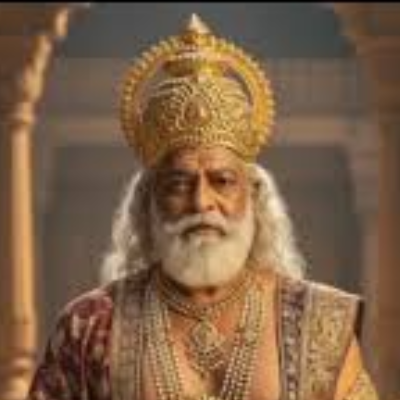
Sudasa — King of Ayodhya, Father of Kalmashapada, Solar Dynasty Monarch
Sudasa · Saudasa-pita · Ikshvaku-vamshaja · Sudas
Sudasa is a king of the Ikshvaku Solar dynasty of Ayodhya, named consistently in the Vishnu Purana, the Bhagavata Purana, and the Vayu Purana as the father of Kalmashapada — the cursed king also known as Mitrasaha and Soudasa, the latter patronymic being directly derived from Sudasa's own name. Sudasa thus occupies a significant genealogical position as the link between the earlier Solar succession and the dramatically narrated story of his son Kalmashapada, through whom the dynasty was nearly extinguished and then miraculously preserved. A figure named Sudas — with closely related spelling — appears in the Rigveda as a celebrated king of the Bharata tribe, the victor of the famous Battle of the Ten Kings described in the Rigvedic Dasharajna hymns. Whether the Rigvedic Sudas and the Puranic Sudasa are the same figure, or whether the Puranic tradition has absorbed and adapted the Rigvedic figure into its own genealogical framework, is a question that the sources themselves do not resolve and that modern scholarship has debated at length.
✦ The Name
The name Sudasa is a Sanskrit compound of su, meaning good, excellent, or auspicious, and dasa, which in the older Vedic usage carries the sense of servant, devotee, or gift — the compound thus meaning one who is an excellent gift, a good servant of the gods, or one whose service and devotion are of the highest quality. In the Rigvedic context the name Sudas — the slightly variant spelling used there — is associated with a generous and victorious king who is a devoted patron of the Vedic sages, particularly of Vasishtha, who serves as his family priest in the Rigvedic account. The patronymic Soudasa, borne by Kalmashapada throughout the Mahabharata and Puranic tradition, is the standard Sanskrit formation meaning son of Sudasa, and it is through this patronymic that the father's name is most frequently encountered in the texts.
✦ Lineage
- Dynasty: Ikshvaku, the Solar dynasty of Ayodhya descended from the sun-god Surya through Vaivasvata Manu and Ikshvaku.
- Father: Sarvakama, named in the Vishnu Purana and related Puranic lists as the father of Sudasa and the preceding king in the Solar succession; he receives no narrative elaboration in any primary source beyond this genealogical placement.
- Son: Kalmashapada, also known as Mitrasaha and Soudasa, the Solar dynasty king who was cursed by the sage Vasishtha's son Shakti, possessed by a Rakshasa for twelve years, eventually purified by Vasishtha, and whose son Ashmaka was born through a niyoga arrangement between Vasishtha and the queen Madayanti.
- Family priest: Vasishtha, the brahmarshi and royal preceptor of the Solar dynasty, who serves as the purohita of the Ayodhya royal house across multiple generations including that of Sudasa and his son Kalmashapada.
✦ The Rigvedic Sudas and the Question of Identity
The Rigveda preserves hymns — particularly in Mandala 7, associated with the sage Vasishtha — that celebrate a king named Sudas of the Bharata tribe as the victor of the Dasharajna, the Battle of the Ten Kings, in which Sudas defeats a confederation of ten rival kings on the banks of the Parushni and Yamuna rivers. This Rigvedic Sudas is described as a generous patron of Vasishtha, and Vasishtha's hymns on his behalf are among the most celebrated martial and laudatory compositions in the Rigveda. The association of Sudas with Vasishtha in the Rigveda is directly parallel to the association of the Puranic Sudasa's son Kalmashapada with Vasishtha — in both strata of the tradition, this royal lineage and this sage are closely bound.
Whether the Rigvedic Sudas and the Puranic Sudasa are one and the same figure is a question that cannot be definitively resolved from the texts themselves. The Puranic tradition characteristically absorbs and genealogises figures from the older Vedic tradition, assigning them positions in dynastic lists that were not originally part of the Vedic texts. It is therefore possible that the Puranic Sudasa is the Puranic tradition's genealogical placement of the celebrated Rigvedic Sudas within the Solar dynasty framework. However, it is also possible that the two are distinct figures who share a name and a priestly association with Vasishtha — the Rigvedic figure belonging to the Bharata tribe in a Vedic tribal context, and the Puranic figure being a separate Solar dynasty king to whom a similar name was assigned. Modern scholars including Pargiter have examined this question and reached different conclusions. The sources themselves do not provide a resolution, and this profile records both possibilities without arbitrarily choosing one.
✦ Puranic Characterisation
Within the Puranic genealogical lists, Sudasa is presented as a righteous Solar dynasty king without individual narrative elaboration. The Vishnu Purana, Bhagavata Purana, and Vayu Purana name him as the father of Kalmashapada in their respective Solar succession lists but do not provide him with a narrative episode of his own in the manner that Kalmashapada receives. His significance in the Puranic tradition is primarily genealogical — he is the father of one of the most dramatically narrated kings in the entire Solar lineage, and it is from his name that Kalmashapada's most frequently used designation, Soudasa, is formed. The shadow of Kalmashapada's story thus retrospectively gives Sudasa's position in the dynasty a weight that the texts do not supply through direct narration of his own deeds.
✦ Connection to the Wider Genealogy
Sudasa stands between Sarvakama above him and Kalmashapada below him in the Solar succession. Through Kalmashapada and the son Ashmaka born through the niyoga of Vasishtha, the dynasty continues through several further generations toward Dilipa, the father of Raghu, and ultimately to Dasharatha and Rama. As with the intervening kings between Ashmaka and Dilipa, the exact names and number of kings between Sudasa and those later figures vary across the Puranic lists and cannot be resolved into a single authoritative sequence.
✦ References
Primary Sources
- Rigveda, Mandala 7, hymns associated with Vasishtha: Celebrates a king named Sudas of the Bharata tribe as the victor of the Battle of the Ten Kings; the question of this figure's relationship to the Puranic Sudasa is discussed in the body of the profile.
- Vishnu Purana, Book 4, Solar Dynasty genealogy: Names Sudasa as the son of Sarvakama and the father of Kalmashapada in the Ikshvaku succession.
- Bhagavata Purana, Skandha 9, Solar Dynasty section: Includes Sudasa in the genealogical register of the Solar line in the same position.
- Vayu Purana, Solar Dynasty genealogical list: An independent Puranic register placing Sudasa in the Solar succession between Sarvakama and Kalmashapada.
- Mahabharata, Adi Parva: Uses the patronymic Soudasa throughout its account of Kalmashapada, thereby attesting Sudasa as the father of that king even without narrating Sudasa's own story.
Modern Reference Works
- Vettam Mani, Puranic Encyclopaedia (Motilal Banarsidass, 1975), entry on Sudasa: Notes the figure's position in the Solar dynasty and addresses the relationship between the Puranic Sudasa and the Rigvedic Sudas.
- F. E. Pargiter, Ancient Indian Historical Tradition (Oxford University Press, 1922): Examines the Puranic Solar genealogy comparatively and discusses the question of the Rigvedic Sudas and his possible identification with the Puranic figure at length.
- A. A. Macdonell and A. B. Keith, Vedic Index of Names and Subjects (1912), entry on Sudas: Provides the Rigvedic evidence for the figure of Sudas and his association with Vasishtha and the Battle of the Ten Kings.