
About
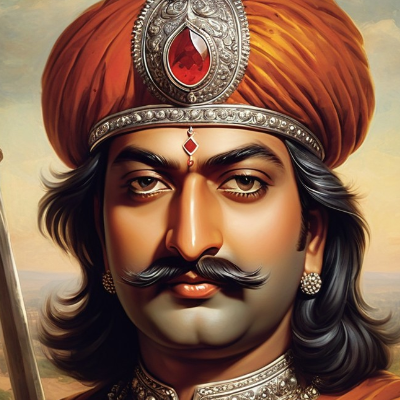
Devarata — King of the Videha Line and Son of Suketu
Devarata · Vaideha · Maithila
Devarata is a king of the Videha royal line, recorded in the Puranic genealogical tradition as the son of Suketu and a descendant of Mithi, the founder of the city of Mithila and the progenitor of the Videha branch of the Ikshvaku solar dynasty. Suketu was himself the son of Nandivardhana, who was the son of Udavasu, who was the son of Mithi. Devarata appears in the genealogical lists of the Vishnu Purana and the Bhagavata Purana as the successor to Suketu in the Videha royal succession. His principal significance is genealogical — he represents the fifth generation of the Mithila kingship and serves as a generational link in the line that descended through multiple kings, some bearing the dynastic title Janaka, culminating eventually in Siradhvaja Janaka, the father of Sita in the Ramayana tradition. Devarata is also notable as the king in whose lineage the celebrated divine bow of Shiva — the great weapon later associated with the svayamvara of Sita — is said in some accounts to have been held in custody.
✦ The Name
The name Devarata is a compound Sanskrit name. Deva means god or divine being, while rata means given, dedicated, or delighted in. The compound thus carries the sense of one given by the gods or one dedicated to the divine. The name has a devotional and auspicious character consistent with the naming conventions of the solar royal lines. The dynastic epithets Vaideha, meaning one of the Videha country, and Maithila, meaning one of Mithila, apply to all kings of this line by virtue of their descent from Nimi and Mithi. Devarata is identified in the primary genealogical sources by his personal name rather than by the hereditary throne name Janaka, which was borne by certain later kings of the dynasty as a dynastic designation rather than a personal one.
✦ Lineage
- Father: Suketu — son of Nandivardhana and great-great-grandson of Mithi, king of the Videha line and the immediate predecessor of Devarata in the Mithila royal succession.
- Paternal grandfather: Nandivardhana — son of Udavasu and grandson of Mithi, the third king of the Mithila line following the founding of the city.
- Paternal great-grandfather: Udavasu — son of Mithi and grandson of Nimi, the second king of the Mithila line.
- Son: Brihadrata — recorded in the Vishnu Purana and the Bhagavata Purana as the son of Devarata and his successor in the Videha royal line.
✦ The Bow of Shiva and Its Association with the Videha Line
The Valmiki Ramayana records that the great bow of Shiva, an extraordinary divine weapon of immense weight and power, was entrusted by the gods to the ancestors of the Videha kings for safekeeping. The account given in the Bala Kanda of the Ramayana specifies that this bow was kept by the Videha royal family across generations and was housed at Mithila. The name of Devarata is mentioned in this context in certain accounts as the king in whose custody or lineage the bow was held, associating the Videha royal line with the sacred weapon that would later become the instrument of Sita's svayamvara — the assembly at which a suitor was required to string the bow in order to win her hand. This association lends Devarata a significance beyond the purely genealogical, connecting his name to one of the most celebrated episodes in the Ramayana narrative.
✦ Textual Variants and Inconsistencies
The name Devarata appears in more than one context across the broader corpus of Sanskrit literature. Most notably, Devarata is also a name associated with the sage Shatananda's lineage and appears in certain Puranic passages in contexts unrelated to the Videha royal succession. Within the Videha genealogical lists themselves, the Vishnu Purana and Bhagavata Purana are consistent in placing Devarata as the son of Suketu and the father of Brihadrata, and there is no significant internal contradiction between these two primary Puranic sources on this point. The association of Devarata's name with the custody of Shiva's bow derives from the Ramayana tradition and is not elaborated upon in the Puranic genealogical lists themselves, which confine themselves to the succession record.
✦ Connection to the Wider Genealogy
Devarata belongs to the Ikshvaku branch of the solar dynasty, tracing his descent from Vaivasvata Manu, the progenitor of the current human race, through Ikshvaku, the founding king of the solar line, and then through the Videha sub-branch established by Nimi and consolidated by Mithi. Through his son Brihadrata the line continued through multiple further generations of Videha kings, a number of whom bore the throne name Janaka as a dynastic designation rather than a personal name. This succession ultimately reached Siradhvaja Janaka, who discovered Sita while ploughing a consecrated field and gave her in marriage to Rama, the solar prince of Ayodhya, and Siradhvaja's brother Kushadhvaja. Devarata thus forms an integral generational link in one of the most significant royal lineages in the Puranic and Itihasa traditions, and his name carries the additional distinction of its connection to the tradition of the divine bow held in trust by the Videha kings.
✦ References
- Vishnu Purana, Book IV (Vamsha Anucharita): Primary source for the Videha genealogical sequence; records Devarata as the son of Suketu and father of Brihadrata within the Ikshvaku solar succession.
- Bhagavata Purana, Skandha IX, Chapter 13: Parallel Puranic genealogical account confirming Devarata's position in the Videha line between Suketu and Brihadrata.
- Valmiki Ramayana, Bala Kanda: Source for the tradition of the divine bow of Shiva being held in the custody of the Videha royal line and for the context in which Devarata's name is associated with that tradition.
- Vettam Mani, Puranic Encyclopaedia: Secondary reference compiling Puranic entries relevant to the Videha lineage and the figures bearing the name Devarata, with citations useful for contextualisation and disambiguation.
- V. S. Agrawala, Matsya Purana — A Study: Modern secondary work analysing solar dynasty genealogies across Puranic sources; useful for contextualising Devarata's position within the broader Ikshvaku line.