
About
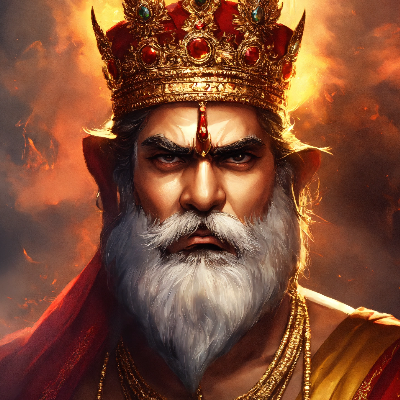
Janaka — Siradhvaja Janaka, King of Videha and Mithila, Philosopher-King, Foster Father of Sita, and the Rajarshi Who Embodied Karma Yoga
Janaka · Siradhvaja · Seeradhwaja · Videha · Vaideha · Maithila · Janakeshvara · Sita-pita · Rajarshi · Brahma-vid · Videha-mukta · Yajnavalkya-shishya · Bhagavad-Gita-stuta
Janaka — whose birth name was Siradhvaja — is the king of the Videha kingdom ruling from Mithila, the foster father of Sita, the father-in-law of Rama, and one of the tradition's most celebrated philosopher-kings — a figure who is simultaneously an ideal ruler, a profound Vedantic sage, a loving parent, and a figure of complete non-attachment who performed every duty of kingship while remaining inwardly free from all its conditions. He is cited by name in the Bhagavad Gita chapter 3 verse 20 — the only Ramayana-era king named in the Gita — as an example of a person who attained perfection solely through the performance of prescribed duties, making him the primary human exemplar of karma yoga in the tradition. He is the twenty-seventh descendent of Nimi — the Ikshvaku son who founded the Videha dynasty — whose own curse-death produced the founding Janaka-Mithi by the churning of his corpse, giving the entire Videha royal line the dynastic name Janaka. The specific Janaka who was Sita's father bore the birth name Siradhvaja — meaning "he whose banner is the ploughshare" — a name that directly encoded the manner in which his most consequential act of fatherhood occurred: finding Sita in the furrow of his ceremonial ploughing. He appears in the Valmiki Ramayana's Bala Kanda and Uttara Kanda, in the Mahabharata's Shanti Parva extensively, in the Brihadaranyaka Upanishad, in the Ashtavakra Gita, and in the Bhagavata Purana and other Puranic genealogical texts.
✦ The Names
Janaka is the dynastic title borne by all kings of the Videha line rather than a personal name — it derives from the founding Janaka-Mithi who was produced by the churning of his father Nimi's corpse, the name itself meaning "progenitor," "father," or "the one who generates." As a title it gave every subsequent king of Mithila the identity of a progenitor — a father of the nation, a generative royal presence. The personal birth name Siradhvaja means "he whose flag or emblem is the sira — the ploughshare" — encoding the agricultural and ritual dimensions of his kingly identity. The alternative title Videha means "without body" or "the bodiless one" — a designation given to the king whose consciousness had transcended identification with the physical body while still inhabiting and administering one. This title — which gives both the kingdom its name Videha and Sita her epithet Vaidehi — is a theological characterisation as much as a dynastic designation: the King of Videha is specifically the king who has achieved videha-mukti — liberation while still in the body.
✦ Lineage
- Dynasty: The Videha dynasty — a branch of the Solar dynasty, descended from Vishnu through Brahma, Marichi, Kashyapa, Vivasvat, Vaivasvata Manu, Ikshvaku, and then the specific Nimi branch rather than the Vikukshi branch from which Rama descended. The complete chain is: Brahma — Marichi — Kashyapa — Vivasvat — Vaivasvata Manu — Ikshvaku — Nimi — Mithi — Udavasu — Nandivardhana — Suketu — Devarata — Brihadratha — Mahavira — Sudhriti — Dhrishtaketu — Haryashva — Maru — Pratvantaka — Kirti ratha — Devamidha — Vibudha — Mahidhraka — Kirti rata — Maharoman — Svarnaroman — Hrasvaroman — Siradhvaja (Janaka).
- Father: Hrasvaroman — the king who preceded Siradhvaja on Mithila's throne and who had two sons: the elder Siradhvaja who inherited Mithila and the younger Kushadhvaja.
- Younger brother: Kushadhvaja — whose name means "he whose banner is the kusha grass." After Siradhvaja defeated and killed Sudhanvan the king of Samkashya who attacked Mithila, he appointed his younger brother Kushadhvaja as the new king of Samkashya. Kushadhvaja's three daughters — Urmila, Mandavi, and Shrutakirti — married the four princes of Ayodhya at the Mithila wedding ceremony (Urmila to Lakshmana, Mandavi to Bharata, Shrutakirti to Shatrughna).
- Wife: Sunayana — the queen of Mithila who participated in Sita's upbringing and who was Janaka's devoted partner in the Vedic household's life of sacred duty.
- Daughter — Sita: Found in a furrow during a ceremonial ploughing yajna, declared by a celestial voice to be Janaka's own daughter, and raised with complete parental love as the princess of Mithila. Her profile is given separately in this series.
- Daughter — Urmila: The biological daughter of Janaka and Sunayana, married to Lakshmana at the Mithila ceremony. The tradition is consistent that Urmila was born biologically while Sita was discovered — Janaka had both a found daughter and a born daughter.
- Spiritual teacher — Yajnavalkya: The Brihadaranyaka Upanishad identifies Yajnavalkya as the sage whose teaching shaped Janaka's philosophical development most decisively. The dialogues between Janaka and Yajnavalkya on the nature of the self, the sleep-state, death, and liberation — some of the Upanishad's most celebrated passages — give Janaka the philosophical depth that makes him simultaneously a king and a jnani. The Scribd Janaka source identifies Parashara Muni as also being Janaka's spiritual master.
- Son-in-law: Rama — the seventh avatar of Vishnu. The Valmiki Ramayana records Janaka's boundless affection for Rama as his son-in-law, an affection that never diminished across all the subsequent events including Sita's exiles.
✦ The Origin of the Videha Dynasty — Nimi and the First Janaka
The Videha dynasty's origin is one of the tradition's most unusual founding narratives. Nimi — the son of Ikshvaku and the younger brother of Vikukshi from whom Rama descended — decided to perform a great yajna and asked Vasistha to be the chief priest. Vasistha told him he was already committed to Indra's yajna and asked Nimi to postpone. Nimi made no reply. Vasistha assumed his silence was assent and went to conduct Indra's yajna. In his absence Nimi began his own yajna, appointing Gautama (Shatananda's father) as the officiating priest. When Vasistha returned five hundred years later and found his services had not been waited for, he cursed Nimi to lose his body and become videha — bodiless. Nimi died. Since he had no sons the sages churned his body — mathana — and from the churning a child was born. He was named Mithi for the churning, and Mithila the city was named after him. He was also called Janaka — the progenitor — and all subsequent kings of his dynasty took this title. The first Janaka-Mithi's son was Ahorat, who was entrusted with the care of Shiva's bow after Shiva destroyed Tripurasura with it. This bow — the Pinaka — passed down through the Janaka lineage until Siradhvaja made it the test for Sita's svayamvara.
✦ Finding Sita — the Ploughing Yajna
The Valmiki Ramayana's Bala Kanda gives Janaka's discovery of Sita in its canonical form. Siradhvaja was performing a yajna — a ritual that required the king to personally plough a portion of the sacrificial ground — during a period when Mithila was suffering from drought or some other cosmic distress. In the furrow of the ploughed earth the ploughshare struck something, the earth was cleared, and there was a golden casket containing a radiant infant girl. A celestial voice told Siradhvaja that this girl was his own daughter. He named her Sita — the furrow. The Sagarworld source adds a crucial detail that explains the svayamvara arrangement: as a young girl Sita playfully lifted Shiva's Pinaka bow — the bow that no god, demon, or king had ever been able to move — with one hand. Janaka, witnessing this, understood immediately that his earth-born daughter was a divine being of extraordinary power and that only an extraordinary being could be worthy of her. He decided then that Shiva's bow would be the test: the man who could string it would win Sita. This backstory gives the svayamvara its specific logic — not an arbitrary test of strength but a test calibrated to the specific divine quality that Janaka had glimpsed in his daughter as a child.
✦ The War with Sudhanvan and the Appointment of Kushadhvaja
The Valmiki Ramayana's Bala Kanda sarga 71 records that while Siradhvaja was king of Mithila the king of Samkashya named Sudhanvan attacked. He had demanded Shiva's bow and the infant Sita and been refused. The war was fought and Siradhvaja killed Sudhanvan. He then appointed his younger brother Kushadhvaja as the new king of Samkashya — both demonstrating his own military capability and establishing the fraternal alliance that eventually connected the three daughters of Kushadhvaja to three of Rama's brothers.
✦ The Svayamvara, the Marriages, and the Alliance with Ayodhya
The Bala Kanda narrates that kings from across the world came to Mithila and failed the bow test — generation after generation of failed attempts had caused Janaka to despair that Sita's husband would ever be found. When Vishvamitra arrived with Rama and Lakshmana and proposed that Rama attempt the test, Janaka agreed. Rama strung, drew, and broke the bow. Sita came forward and garlanded him. Janaka's joy was overwhelming — his daughter would be married to a being whose divine quality had revealed itself in exactly the test he had designed. He immediately arranged for all four marriages — connecting Kosala and Videha in the most comprehensive possible alliance. The Bala Kanda records Janaka's speech at the marriage ceremony with great emotion — a father's complete happiness at his daughter's union with a worthy husband. Janaka accompanied Bharata's party to Chitrakuta when Bharata came to find Rama and beg his return. His presence at Chitrakuta is recorded in the Valmiki Ramayana — he went as both a well-wisher of Rama's return and as a father whose daughter would benefit from that return. After Rama's return from exile and coronation, Janaka became an important figure at Ayodhya's court.
✦ Janaka in the Philosophical Tradition — the Brihadaranyaka Upanishad
Janaka's most significant presence outside the Ramayana is in the Brihadaranyaka Upanishad — one of the oldest and most philosophically important of the Upanishads — where he appears as a devoted seeker of ultimate truth engaging in deep dialogues with the sage Yajnavalkya. The Upanishad records that Janaka offered Yajnavalkya the choice of a thousand cows with their horns tipped in gold as the reward for answers about ultimate reality. The sage accepted, saying that his father had told him not to accept gifts from a man without first instructing him. The dialogues that followed — ranging across the nature of the self in the dream state and the deep sleep state, the nature of consciousness at death, the ultimate identity of Atman and Brahman — are among the Upanishadic tradition's most celebrated philosophical exchanges. In one celebrated episode Janaka asked Yajnavalkya what light illuminated the world when the sun had set and the moon had set and the fire had gone out and all voices were silent. Each time Yajnavalkya gave an answer Janaka asked the same question again — what remains when that source of light is removed? The final answer — that the self itself is the light, that consciousness is the last remaining illumination — is one of the Upanishads' most elegant philosophical demonstrations, and Janaka as the questioner who pursued it to its conclusion embodies the specific quality of philosophical persistence that characterises the genuine seeker.
✦ The Ashtavakra Gita — Janaka and the Deformed Sage
The Ashtavakra Gita — one of the most concentrated and uncompromising texts of Advaita Vedanta — is framed as a dialogue between Janaka and the sage Ashtavakra, the physically deformed sage of extraordinary wisdom. The story of Ashtavakra's arrival at Janaka's court is narrated in the Mahabharata's Vana Parva: Ashtavakra came to Janaka's assembly where the most learned scholars were gathered and was laughed at for his deformed appearance — eight joints twisted. Ashtavakra laughed in return, saying he had expected more from a king's assembly and had instead found a gathering of cobblers who knew only the quality of skin. Janaka, recognising the quality of the response, asked Ashtavakra to teach him. The Ashtavakra Gita — eighteen chapters of dialogue on the nature of non-dual consciousness — is the record of that teaching. Janaka's responses in the Gita show a student whose understanding kept pace with the teacher's most demanding instruction — the Gita ends with Janaka describing his own state of liberation in terms that match Ashtavakra's own highest teaching.
✦ The Mahabharata's Shanti Parva — Janaka's Philosophical Conversations
The Mahabharata's Shanti Parva contains an extended series of philosophical narratives and dialogues involving figures named Janaka — reflecting the dynastic title's use for multiple kings of the Videha line rather than a single individual. The Wisdomlib Janaka source and the Manuscrypts source enumerate these: the sage Ashmaka advised Janaka; Janaka had a discussion with Parashara on prosperity; Janaka showed his army sights of heaven and hell to motivate them before battle; King Kshemadarshi fought Janaka and was pacified through the gift of a daughter; the sage Mandavya asked Janaka questions on mirages; Dharma took the form of a brahmin and advised Janaka; Shuka son of Vyasa came to Janaka to resolve doubts that Vyasa himself could not resolve; and the woman sage Sulabha tested Janaka's enlightenment by entering his body with her consciousness through yogic power and he resisted. These episodes — distributed across the Shanti Parva's extensive philosophical content — give the Videha-Janaka tradition a breadth of philosophical engagement that goes far beyond the Ramayana's narrative account of Sita's father.
✦ Janaka in the Bhagavad Gita
The most theologically significant appearance of Janaka beyond the Upanishadic tradition is in the Bhagavad Gita chapter 3 verse 20 where Krishna tells Arjuna: "Kings such as Janaka attained perfection solely by the performance of prescribed duties. Therefore, just for the sake of educating the people in general, you should perform your work." This citation — in the Gita's most important philosophical teaching section on karma yoga — names Janaka as the primary human exemplar of a being who achieved the highest spiritual realisation not through renunciation but through the complete and selfless performance of worldly duties. This is the specific distinction that makes Janaka theologically significant to the entire post-Ramayana tradition: he demonstrated that the path of action and the path of wisdom are not opposed, that a king who rules with complete non-attachment realises the same truth as the sage who meditates in the forest.
✦ Renunciation in Old Age
The Manuscrypts source citing the Mahabharata's Shanti Parva chapter 18 verse 4 records that Janaka gave up the kingdom and became a sanyasi in old age — completing the traditional four-stage arc of the human life with the final stage of complete renunciation after the householder's and retired-householder's stages were complete. This act of renunciation was entirely consistent with the philosophical tradition that had always characterised him: the king who had been inwardly free from the kingdom while administering it was simply making external what had always been internal. The tradition also records that Lord Balarama stayed in Mithila for several years, honoured by Janaka's affectionate devotion — giving Janaka a connection to the Dvapara Yuga's divine personalities that extends his biographical presence beyond the Ramayana period.
✦ Textual Variants and Inconsistencies
The name Janaka as a dynastic title rather than a personal name means that different episodes in the tradition may refer to different kings of the Videha line rather than a single individual. The Mahabharata's Vyasa uses multiple names for Janaka-kings — Aindradyumni, Daivarati, Dharmadhvaja, Karala, Karalajanaka, Maithila, Mithiladhipa, Mithileshvara, Vaideha — reflecting this dynastic breadth. The specific identification of the Janaka who was Sita's father with the Janaka who engaged Yajnavalkya in the Brihadaranyaka Upanishad's dialogues is maintained in the popular tradition but is questioned by scholars who note significant temporal differences between the Ramayana's period and the Upanishadic Janaka's period. The tradition itself does not resolve this and allows both Janakas to be the same royal sage-figure.
✦ Theological Significance
Janaka's theological significance is concentrated in the specific quality of his non-attachment — not the renunciant's non-attachment which withdraws from the world, but the engaged non-attachment of the karma yogi who acts fully in the world without being defined or bound by what those actions produce. The Bhagavad Gita's citation of him as the primary human exemplar of this path is the tradition's most authoritative single statement of his theological standing. As a father he demonstrates the same quality — his love for Sita was complete and genuine, but his relationship to her marriage, her exiles, and her eventual return to the earth was characterised by the same non-possessive acceptance that characterised his relationship to his kingdom. He loved her without needing to own her story's outcome.
✦ References
- Valmiki Ramayana, Bala Kanda, sargas 66–73: The Videha dynasty's history, Janaka's ploughing yajna and discovery of Sita, the svayamvara, the marriage ceremony, and the lineage account given to Dasharatha.
- Bhagavad Gita, chapter 3, verse 20: Krishna's citation of Janaka as the primary human exemplar of karma yoga.
- Brihadaranyaka Upanishad, chapters 3–4: The dialogues between Janaka and Yajnavalkya on the nature of the self, sleep, death, and liberation — the primary Upanishadic source for Janaka's philosophical identity.
- Ashtavakra Gita: The eighteen-chapter Advaita Vedanta dialogue between Janaka and Ashtavakra; framed as the record of Janaka's attainment of liberation through Ashtavakra's direct teaching.
- Mahabharata, Vana Parva (Ashtavakra episode); Shanti Parva, chapters 18, 99, 106, 296, 302–319 (philosophical dialogues with various sages): The Mahabharata sources for the Videha-Janaka philosophical tradition.
- Vishnu Purana and Bhagavata Purana: The complete genealogical chain from Vishnu through Ikshvaku, Nimi, Mithi-Janaka to Siradhvaja Janaka.
- Vettam Mani, Puranic Encyclopaedia (1975): Entry on Janaka — comprehensive collation of all primary references across the Ramayana, Mahabharata, Upanishads, and Puranas.
- Robert P. Goldman (translator), The Ramayana of Valmiki — Bala Kanda (1984): Critical translation with scholarly notes on the Videha dynasty, the bow svayamvara, and the marriage ceremony.