
About
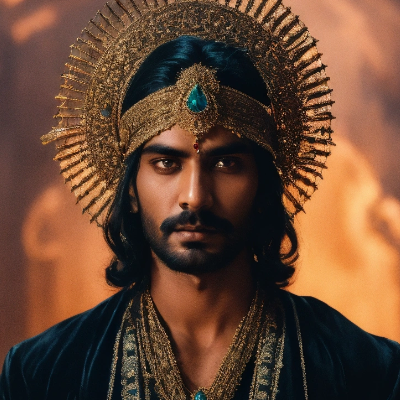
Kushadhvaja — Prince of Mithila and King of Sankasya, Son of Hrasvaroma
Kushadhvaja · Kushadhwaja · Kusadhvaja
Kushadhvaja is a prince of the Videha royal dynasty and king of Sankasya, recorded in the Valmiki Ramayana as the younger son of Hrasvaroma, king of Mithila, and the younger brother of Siradhvaja Janaka, the celebrated philosopher-king of Mithila and father of Sita. The Videha dynasty is a branch of the Solar dynasty descending from Ikshvaku through Nimi, the legendary founder of the Videha kingdom at Mithila. Kushadhvaja did not inherit the ancestral throne of Mithila, which passed to his elder brother Siradhvaja, but came to rule Sankasya following Siradhvaja's defeat of its former king Sudhanvan. He is the father of Mandavi and Shrutakirti, who were given in marriage to Bharata and Shatrughna of Ayodhya respectively at the celebrated joint wedding arranged by the sage Vishvamitra, thereby consolidating the dynastic alliance between the houses of Mithila and Ayodhya.
✦ The Name
The name Kushadhvaja is a Sanskrit compound formed from kusha, meaning the sacred grass used in Vedic ritual, and dhvaja, meaning banner, flag, or standard. The compound thus carries the sense of one whose banner is the sacred kusha grass, or one who bears the standard of ritual purity and Vedic observance — a name evoking both the sacrificial and the martial dimensions of ideal kingship in the Sanskrit tradition. The kusha grass holds a position of particular sanctity in Vedic ritual, being used in the preparation of sacrificial implements and the purification of sacred space, and a name invoking it as a royal standard suggests a figure associated with both warrior honour and ritual propriety. The name is not widely shared by other prominent figures in the principal primary sources and is effectively distinctive to this prince and king within the textual record.
✦ Lineage
- Dynasty: Videha branch of the Solar dynasty (Suryavamsha), descending from Ikshvaku through Nimi, founder of the Videha kingdom at Mithila
- Father: Hrasvaroma, king of Mithila, son of Swarnaroma
- Elder brother: Siradhvaja Janaka, king of Mithila, father of Sita and Urmila, celebrated philosopher-king of the Videha line
- Wife: Chandrabhaga, queen of Sankasya
- Elder daughter: Mandavi, given in marriage to Bharata, second son of King Dasharatha of Ayodhya
- Younger daughter: Shrutakirti, given in marriage to Shatrughna, fourth son of King Dasharatha of Ayodhya
✦ Guardianship and Early Life
The Valmiki Ramayana records in the Bala Kanda that when Hrasvaroma retired to the forest to practise asceticism in his later years, he placed Siradhvaja on the throne of Mithila and entrusted the guardianship and care of the younger Kushadhvaja to his elder son. Kushadhvaja thus grew up under the protection and authority of Siradhvaja, and the bond between the two brothers remained close throughout their lives, as evidenced by Siradhvaja's subsequent installation of Kushadhvaja as king of Sankasya and his presence alongside Siradhvaja at the joint wedding ceremonies at Mithila.
✦ The War with Sudhanvan and Installation at Sankasya
The Valmiki Ramayana records that Sudhanvan, the king of Sankasya, marched against Mithila with hostile intent, demanding the divine bow of Shiva, which was held in Janaka's treasury, and also demanding the hand of Sita. Siradhvaja Janaka met Sudhanvan in battle and killed him. Following this victory, Siradhvaja installed his younger brother Kushadhvaja as the new king of Sankasya, thereby extending the reach of the Videha royal family beyond its ancestral seat at Mithila and rewarding his brother with a kingdom of his own. This episode marks the only recorded military and political narrative directly involving Kushadhvaja's accession to royal power.
✦ Role in the Ayodhya Alliance
When the sage Vishvamitra arranged the marriage of Rama to Sita and King Dasharatha of Ayodhya expressed the wish that the dynastic bond between the two houses be extended to all four of his sons, Siradhvaja sent word to Kushadhvaja at Sankasya to attend the wedding ceremonies at Mithila. Kushadhvaja travelled to Mithila and participated in the joint wedding alongside his elder brother. At these ceremonies, Kushadhvaja gave his elder daughter Mandavi in marriage to Bharata, the second son of Dasharatha, and his younger daughter Shrutakirti in marriage to Shatrughna, the fourth son of Dasharatha. Through these two marriages, Kushadhvaja became the father-in-law of two of Ayodhya's four princes, binding the Videha and Ikshvaku royal houses together across both branches of the Mithila family.
✦ Textual Variants and Inconsistencies
The Valmiki Ramayana, Bala Kanda, Sarga 71, is the principal and most explicit source for Kushadhvaja as the younger son of Hrasvaroma and younger brother of Siradhvaja Janaka, with Siradhvaja himself reciting this genealogy before the assembled court. In certain Puranic recensions, however, the name Kushadhvaja appears in the Videha succession list as a successor of Siradhvaja rather than as his brother and contemporary. This discrepancy reflects the difference in purpose between the Puranic king-lists, which record throne-succession in a linear sequence, and the Ramayana narrative, which preserves the fuller familial structure. The Ramayana's account, given as direct speech by Siradhvaja himself in the context of a formal genealogical recitation, is the most direct and explicit testimony available on this question and is treated in the scholarly tradition as the authoritative narrative source for the relationship between the two brothers.
✦ Connection to the Wider Genealogy
Kushadhvaja belongs to the Videha branch of the Solar dynasty. His father Hrasvaroma was the son of Swarnaroma, who was the son of Mahiroma, who was the son of Kirtirata, who was the son of Mahidhraka, who was the son of Vibudha, who was the son of Devamidha, who was the son of Kritaratha, who was the son of Pratibandhaka, who was the son of Maru, who was the son of Haryasva, who was the son of Dhrshtaketu, who was the son of Sudhriti, who was the son of Mahavira, who was himself the son of Brihadrata. Through his daughters Mandavi and Shrutakirti, Kushadhvaja is the paternal grandfather of the children of Bharata and Shatrughna of Ayodhya. His elder brother Siradhvaja Janaka is the father of Sita, consort of Rama, making Kushadhvaja the paternal uncle of Sita within the Videha royal family.
✦ References
- Primary Sources
- Valmiki Ramayana, Bala Kanda, Sarga 71 (verses 13–15): The principal source for Kushadhvaja's parentage, his relationship to Siradhvaja as younger brother, Hrasvaroma's retirement and entrustment of Kushadhvaja to Siradhvaja's care, and the formal genealogical recitation by Siradhvaja before the assembled court.
- Valmiki Ramayana, Bala Kanda, Sarga 71: Records the episode of Sudhanvan's invasion of Mithila, his defeat and death at Siradhvaja's hands, and the subsequent installation of Kushadhvaja as king of Sankasya.
- Valmiki Ramayana, Bala Kanda (wedding cantos): Records Kushadhvaja's attendance at the joint wedding at Mithila and the marriages of Mandavi to Bharata and Shrutakirti to Shatrughna.
- Vishnu Purana, Book IV (Vamsanucharita): Records the Videha succession list in which the name Kushadhvaja appears, in certain recensions, as a successor of Siradhvaja rather than as his brother, reflecting the Puranic convention of linear throne-succession enumeration.
- Bhagavata Purana, Skandha IX (Navama Skandha): Provides the Videha royal succession list with similar conventions to the Vishnu Purana regarding the placement of Kushadhvaja within the linear sequence.
- Secondary Sources
- Puranic Encyclopaedia, Vettam Mani (1975): Provides reference entries for Kushadhvaja, Mandavi, and Shrutakirti, summarising their roles in the Ramayana narrative and their genealogical positions within the Videha royal family.
- F. E. Pargiter, Ancient Indian Historical Tradition (1922): Analyses the Videha dynastic lists across Puranic recensions and is useful for understanding the discrepancy between the Puranic succession placement of Kushadhvaja and his position as recorded in the Valmiki Ramayana.
- V. S. Agrawala, Matsya Purana — A Study (1963): Provides comparative context for Puranic genealogical conventions relevant to the Videha succession.