
About
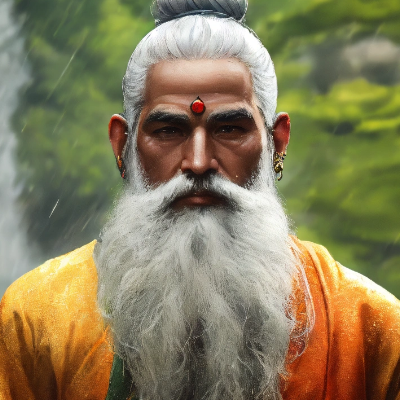
Kanva — Rigvedic Seer of the Angirasa Lineage and Progenitor of the Kanva Family
Kanva · Kanwa · Kanya · Angirasa Kanva · Ghoreya
Kanva is an ancient Vedic rishi of the Angirasa lineage, identified in the Anukramanis — the traditional indices of the Rigveda — as the son of Ghora Angirasa, himself a sage of the Angirasa clan and the teacher who imparted a celebrated Upanishadic instruction to Krishna Devakiputra as recorded in the Chandogya Upanishad. Kanva is the founding figure of the Kanva family of seers, known collectively as the Kanvas or Kanva kula, a prominent sub-lineage of the Angirasas to whom a substantial body of Rigvedic hymns is attributed — principally the eighth mandala in its entirety and a portion of the first mandala (hymns 1.36 to 1.50). His significance in the Vedic tradition rests on this dual role: as a seer in his own right and as the ancestral progenitor of one of the most prolific rishi families in the Rigveda. The Kanva family's hymns are among the best attested in the Rigvedic corpus, and Kanva's name remains the designating term for the entire lineage across Vedic, Puranic, and epic sources. He appears, with varying degrees of textual clarity, in the Rigveda and its Anukramanis, the Mahabharata, and several Puranas, though these sources do not always agree on the details of his parentage, his descendants, or his identity.
✦ The Name
The name Kanva derives from a Sanskrit root and carries associations with brightness or brilliance in some traditional etymological analyses, though the precise derivation is not uniformly agreed upon across commentarial sources. In the Rigvedic and Anukramani tradition, Kanva functions both as a personal name and as a clan designation: the family of seers descended from or associated with this founding figure is referred to collectively as the Kanvas, and individual members of the family bear the designation Kanva or Kanya as a marker of lineage affiliation. The patronymic Ghoreya — son of Ghora — is implied by the Anukramani identification of his father as Ghora Angirasa, though this form is not universally attested. As an Angirasa, Kanva belongs to the broader clan of seers tracing their origins to the primordial rishi Angiras, one of the saptarshis and a founding figure of Vedic priestly tradition.
✦ Lineage
- Clan ancestor: Angiras — the primordial rishi regarded in Vedic and Puranic tradition as one of the saptarshis and a mind-born son of Brahma the creator; the founding figure of the Angirasa clan of seers, closely associated with fire ritual, the priestly office, and the Atharvaveda.
- Father: Ghora Angirasa — a sage of the Angirasa lineage, identified in the Rigveda Anukramanis as Kanva's father; the same figure recorded in the Chandogya Upanishad (3.17) as the teacher who instructed Krishna, son of Devaki, on the equivalence of virtuous human life with the Vedic sacrifice.
- Primary son (Vedic tradition): Medhatithi — identified consistently in the Rigveda and its Anukramanis as a son of Kanva and a seer in his own right; associated with Rigvedic hymns including those of the first mandala (e.g., 1.12); one of the most prominent individual members of the Kanva family.
- Principal seers of the Kanva lineage: The following figures are listed in the Anukramanis as belonging to the Kanva family. The term putra (son) in the Anukramani tradition is used interchangeably with vamsa (lineage), and these figures are more accurately described as clan descendants and seers of the Kanva kula than as biological sons in every case:
- Praskanva — a prominent seer credited with composing hymns in both the first and eighth mandalas of the Rigveda; frequently called a son of Kanva in the Anukramanis.
- Irimbitthi — credited in the Anukramanis with the authorship of hymns in the eighth mandala (8.16 to 8.18).
- Vatsa — a significant member of the Kanva family credited with several Rigvedic suktas.
- Devatithi — listed among the seers of the Kanva kula in the Anukramani tradition.
- Brahmatithi — listed among the seers of the Kanva kula in the Anukramani tradition.
- Punervatsa — listed among the seers of the Kanva kula in the Anukramani tradition.
- Nipatithi — listed among the seers of the Kanva kula in the Anukramani tradition.
- Foster daughter (Epic tradition): Shakuntala — see the section on Textual Variants and Inconsistencies below.
✦ Kanva as Rigvedic Seer and Clan Progenitor
The Anukramanis of the Rigveda identify Kanva as an Angirasa seer and as the ancestral figure of the Kanva family, the collective authorship of whose hymns constitutes the eighth mandala of the Rigveda in its entirety and a sequence of hymns in the first mandala running from 1.36 to 1.50. The eighth mandala is among the most substantial and internally coherent of the Rigvedic collections, and its attribution to the Kanva family represents one of the clearest examples of a unified rishi lineage associated with a defined portion of the Rigvedic canon. The hymns of the Kanva family address primarily Indra, Agni, and the Ashvins, and they reflect the priestly and poetic concerns characteristic of the Angirasa tradition. Kanva's own individual hymns are not always distinguished from those of the family as a whole in the Anukramani attributions, which tend to treat the family corpus as a collective inheritance.
✦ Textual Variants and Inconsistencies
Three significant areas of textual inconsistency surround the figure of Kanva, each bearing on different aspects of his identity.
The first concerns the reversal of the Kanva–Medhatithi relationship across traditions. In the Rigveda and its Anukramanis, Medhatithi is identified as a son or descendant of Kanva — a Kanva by lineage — and hymns such as Rigveda 1.12 are attributed to Medhatithi Kanva. However, the Mahabharata in its Shanti Parva (chapter 208, verse 27) refers to a Kanva as Medhatithisuta, meaning the son of Medhatithi, which directly inverts the parent-child hierarchy found in the Vedic tradition. This reversal is a recognised pattern in Puranic genealogical literature, where the relative positions of ancestor and descendant within a lineage can shift across textual traditions. The Rigvedic and Anukramani account, which identifies Medhatithi as a member of the Kanva family bearing Kanva as his ancestral name, is the older and more directly attested record.
The second inconsistency concerns Kanva's own parentage. While the Rigveda Anukramanis identify Kanva as the son of Ghora Angirasa, placing him firmly within the Angirasa lineage, certain Puranic sources — including the Agni Purana and the Bhagavata Purana — associate a figure named Kanva with the Puru dynasty, identifying him as the son of Apratiratha or of Ajamidha, making him a royal figure of the Paurava lineage rather than an Angirasa rishi. The Matsya Purana similarly identifies the Kanva associated with Shakuntala's foster care as a Kashyapa or Paurava figure. Scholars have generally treated these as evidence of more than one figure named Kanva in the tradition, with the Rigvedic Angirasa Kanva — son of Ghora — being distinct from the Puranic Paurava Kanva of the royal lineage.
The third area of inconsistency concerns Shakuntala. The Mahabharata (Adi Parva) and Kalidasa's dramatic work Abhijnanasakuntalam record that a sage named Kanva, residing at a hermitage on the Malini River, served as the foster father of Shakuntala — the daughter of the apsara Menaka and the rishi Vishvamitra — after her mother abandoned her at birth. This Kanva raised Shakuntala and later gave her in marriage to King Dushyanta of the Puru lineage, from whom she bore Bharata, the ancestor of both the Pandavas and Kauravas. The Matsya Purana and the weight of scholarly analysis identify this hermit Kanva as a figure of the Paurava or Kashyapa tradition rather than the Angirasa Rigvedic Kanva who is the son of Ghora. The two figures share only the name. The foster-father of Shakuntala is thus most accurately understood as a distinct Kanva, and Shakuntala's connection to the Angirasa Kanva of the Rigveda rests on no secure primary textual basis.
A further figure sometimes associated with the Kanva lineage is Saubhari, a rishi prominent in the Vayu Purana and the Bhagavata Purana, known for the narrative of his prolonged underwater penance in the Yamuna River and his subsequent marriage to fifty wives. Saubhari is sometimes designated Saubhari Kanva in later medieval lineage compilations, suggesting affiliation with the Kanva gotra. However, no primary verse in the Bhagavata Purana, the Vishnu Purana, or the Vayu Purana explicitly identifies Saubhari as a biological son of the Rigvedic Kanva. His association with the Kanva name is most reliably understood as a gotra affiliation — membership of the Kanva clan — rather than as evidence of direct biological descent from Kanva son of Ghora Angirasa.
✦ Connection to the Wider Genealogy
Kanva occupies a pivotal generational position within the Angirasa lineage. He stands between Ghora Angirasa — a sage of the Angirasa clan who is himself connected, whether as direct son or descendant, to the primordial rishi Angiras — and the extended Kanva family of seers whose collective hymns form a defined and substantial portion of the Rigvedic canon. Angiras, the ultimate ancestor of this lineage, is regarded in Vedic and Puranic tradition as one of the saptarshis and as the progenitor of an extensive priestly and poetic clan that includes among its members Brihaspati, the preceptor of the gods. Through Kanva, this lineage branches into the Kanva kula, whose members — Medhatithi, Praskanva, Irimbitthi, Vatsa, and others — are among the named seer-authors of the Rigveda. The Kanva gotra, deriving its name from this founding figure, continued as a living Brahminical lineage designation well beyond the Vedic period and into the later tradition.
✦ References
- Primary Sources:
- Rigveda, Mandala 1 (hymns 1.36–1.50) and Mandala 8: The principal body of hymns attributed to the Kanva family of seers; the Anukramanis of these mandalas identify Kanva and his descendants as their authors.
- Rigveda Anukramanis: The ancient indices of the Rigveda; identify Kanva as the son of Ghora Angirasa, classify him and his family within the Angirasa lineage, and list the principal seers of the Kanva kula as authors of the eighth mandala and portions of the first.
- Mahabharata, Adi Parva: Records the narrative of the hermit Kanva as the foster father of Shakuntala on the Malini River; identifies the Kanva of this episode as a sage of the forest hermitage tradition.
- Mahabharata, Shanti Parva, chapter 208, verse 27: Refers to a Kanva as Medhatithisuta — son of Medhatithi — inverting the parent-child relationship found in the Rigvedic Anukramani tradition.
- Agni Purana and Bhagavata Purana: Associate a figure named Kanva with the Puru dynasty, identifying him as the son of Apratiratha or Ajamidha, a lineage distinct from the Angirasa rishi tradition.
- Matsya Purana: Identifies the Kanva associated with the Shakuntala narrative as a figure of the Paurava or Kashyapa tradition, distinct from the Angirasa Rigvedic Kanva.
- Vayu Purana and Bhagavata Purana: Record the narrative of Saubhari and his association with the Kanva name; do not explicitly identify Saubhari as a biological son of the Rigvedic Kanva.
- Kalidasa, Abhijnanasakuntalam: The celebrated Sanskrit drama recording the story of Shakuntala and her foster father Kanva of the Malini hermitage.
- Secondary Sources:
- Vettam Mani, Puranic Encyclopaedia (1975): Provides entries on Kanva, Medhatithi, Praskanva, and Shakuntala, noting the principal textual references and variant accounts.
- A. A. Macdonell and A. B. Keith, Vedic Index of Names and Subjects (1912): Contains detailed entries on Kanva and the Kanva family, the Anukramani attributions, and the genealogical relationships within the Angirasa lineage.
- Wikipedia, Kanva: Provides a summary of the principal traditions surrounding Kanva, including the Anukramani identification of Ghora as his father, the Puranic royal lineage account, and the Shakuntala association; useful as a secondary orientation to the range of sources.
- Wisdom Library, Kanva — multiple entries: Aggregates Puranic, epic, and Vedic references to figures named Kanva, distinguishing where possible between the Rigvedic rishi and the Puranic royal figure.