
About
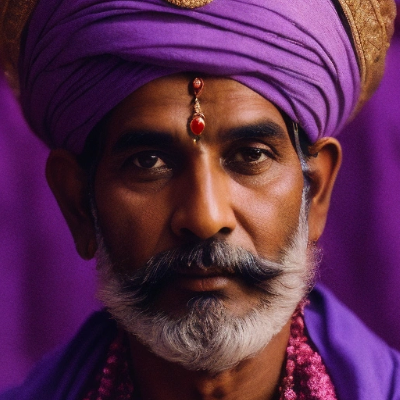
Rishabha Vaishvamitra — Son of Vishvamitra, Vedic Hymn Composer
Rishabha · Rishabha Vaishvamitra · Vrishabhha
Rishabha Vaishvamitra is a son of the Brahmarishi Vishvamitra — the great sage who began as the Kshatriya king Kaushika, renounced his kingdom, and through sustained austerity attained the highest grade of sagehood. Rishabha is attested in two distinct and mutually reinforcing textual layers: the Aitareya Brahmana names him alongside his brother Madhuchhanda as one of the prominent younger sons of Vishvamitra who accepted the adoption of Shunahshepa as Devarata, their eldest brother; and the Rigvedic Anukramani tradition records him as the composer of hymns in the tenth Mandala of the Rigveda, addressing him by the patronymic Vaishvamitra. He is additionally noted in secondary sources as a figure regarded to have possessed mastery over Vedic literature and to have been distinguished as a singer. His paternal lineage is thus anchored in primary Vedic and Brahmana sources of the oldest stratum. His mother is identified in secondary genealogical compilations as Haimavati, a wife of Vishvamitra associated with his periods of austerity in the Himalayan regions; the major primary texts do not confirm this attribution by name, and it is preserved as a post-classical tradition in secondary sources.
✦ The Name
The name Rishabha derives from the Sanskrit root conveying the sense of the bull — rishabha being the standard classical Sanskrit term for a bull, and by extension a term of honour applied to the foremost or most excellent of any group, in the same way that the bull connotes strength, pre-eminence, and leadership in the Vedic and Puranic traditions. The name thus carries the connotation of the foremost among men or the most excellent of his lineage. The patronymic Vaishvamitra — son of Vishvamitra, or belonging to Vishvamitra's lineage — is attached to his name consistently in the Vedic attribution tradition to distinguish him from the several other figures named Rishabha in the broader Puranic corpus.
✦ Lineage
- Father: Vishvamitra — the Brahmarishi, originally King Kaushika of the Puru-Chandravamsha line, son of Gadhi and great-grandson of King Kusha. He is the author of most of the Rigveda's third Mandala, the teacher of Rama and Lakshmana in the Valmiki Ramayana, and one of the most extensively attested figures in the Sanskrit literary corpus. Among his other sons are Madhuchhanda, a composer of Rigveda Mandala I hymns; Ashtaka, born of Madhavi daughter of King Yayati; Shakuntala's half-siblings through Menaka; and the hundred sons among whom the Shunahshepa episode created a permanent division.
- Mother: Identified in secondary genealogical compilations as Haimavati, described as a wife of Vishvamitra associated with his long phases of Himalayan austerity. The Valmiki Ramayana, the Mahabharata, and the principal Mahapuranas do not name this wife in the passages concerning Vishvamitra's sons, and the attribution of the name Haimavati to this role is a post-classical tradition found in secondary compilations rather than a confirmed primary text attribution.
- Brother: Madhuchhanda Vaishvamitra — a son of Vishvamitra, named alongside Rishabha in the Aitareya Brahmana as one of the younger fifty sons who accepted the adoption of Devarata, and credited in the Rigvedic Anukramani as the composer of the opening hymns of Mandala I.
- Adopted elder brother: Devarata — the sage Shunahshepa, son of Ajigarta, adopted by Vishvamitra and installed as his eldest son and heir after being rescued from sacrifice at the court of King Harishchandra. Rishabha was among the fifty younger sons who accepted this adoption and received their father's blessing as a consequence.
✦ The Shunahshepa Episode and Acceptance of Devarata
The Aitareya Brahmana records the episode in which Vishvamitra, having rescued the young Brahmin Shunahshepa from death at a royal sacrifice performed for King Harishchandra, adopted him and renamed him Devarata. Vishvamitra then called upon his hundred biological sons to accept Devarata as the eldest among them and to defer to him accordingly. The elder fifty refused, maintaining that a man not born of their blood could not be placed above them. Vishvamitra cursed these fifty and their descendants, condemning them to degraded social positions. The text identifies the peoples known as the Andhras, Pundras, Shabaras, Pulindas, and Mutibas as descended from these cursed sons.
The younger fifty sons accepted Vishvamitra's decree without resistance. The Aitareya Brahmana specifically names Madhuchhanda and Rishabha as prominent among this group — figures who assented to their father's will and acknowledged Devarata as their elder. Vishvamitra received their acceptance with approval and blessed them. Rishabha's position in this account is thus that of a son who placed filial obedience and dharmic acceptance of his father's authority above the claims of birth-precedence — a posture the tradition treats as meritorious.
✦ Vedic Hymn Authorship
Rishabha Vaishvamitra is credited in the Rigvedic Anukramani — the ancient attributed index of composers and metres — as the author of hymns in the tenth Mandala of the Rigveda, specifically hymns 13 and 14 of that Mandala. These hymns occupy a significant position within the tenth Mandala, which contains some of the Rigveda's most philosophically and eschatologically charged compositions. Hymn 14 of the tenth Mandala is addressed to Yama, the lord of the dead, and belongs to the body of Vedic funeral liturgy; its attribution to Rishabha Vaishvamitra anchors him in the tradition of composers who engaged with the deepest questions of death, passage, and the afterlife in the Rigvedic world.
Secondary sources additionally note that Rishabha was regarded in the tradition as possessing exceptional mastery over Vedic literature and as being distinguished as a singer — attributes consistent with the role of a Vedic hymn composer in the context of ritual performance, where the correct musical rendering of hymns was inseparable from their liturgical efficacy.
✦ Distinction from Other Figures Named Rishabha
The name Rishabha is shared by several figures in the Hindu canonical tradition and must be carefully distinguished. The most prominent among these other figures is Rishabhadeva — the first Tirthankara of the Jain tradition who also appears in the Bhagavata Purana as a royal sage and renunciant, son of the Manu Nabhi, who is treated there as an avatar of Vishnu. A second figure named Rishabha appears in the Mahabharata as a son of the Pandu prince Nakula, born at the Svayamvara. Neither of these figures has any connection to Rishabha Vaishvamitra, son of Vishvamitra; they are entirely distinct individuals whose shared name reflects the common Sanskritic practice of using bull-epithets as honorific personal names across different lineages and traditions.
✦ Connection to the Wider Genealogy
Rishabha Vaishvamitra belongs to the Kaushika gotra — the Brahmin lineage descending from Vishvamitra, whose clan name derives from his earlier name Kaushika as king. As one of the fifty younger sons who accepted Devarata and received Vishvamitra's blessing, Rishabha's descendants would have been counted among the favoured branches of the Kaushika lineage rather than among the cursed elder line. His authorship of Rigveda tenth Mandala hymns 13 and 14 establishes him as a contributing figure in the living transmission of the Rigvedic canon, and his joint naming with Madhuchhanda in the Aitareya Brahmana's account of the Shunahshepa episode links the two brothers as the most textually prominent among the accepting sons.
✦ References
Primary Sources
- Aitareya Brahmana, 7.3.5 / 7.18: The definitive primary source naming Rishabha as a son of Vishvamitra; records the Shunahshepa episode and identifies Rishabha and Madhuchhanda as prominent among the younger fifty sons who accepted the adoption of Devarata.
- Rigveda, Mandala X, Hymns 13 and 14 (Anukramani attribution): Attributes the authorship of these two hymns to Rishabha Vaishvamitra; Hymn 14 is addressed to Yama and belongs to the Vedic funeral liturgy; the foundational source for his identity as a Vedic composer.
- Valmiki Ramayana, Balakanda, Chapter 57: Narrates the Shunahshepa episode and the division of Vishvamitra's sons; provides the epic-tradition context corroborating the Aitareya Brahmana account, though Rishabha is not individually named by this name in all recensions of this passage.
- Mahabharata, Anushashana Parva, Chapter 4: States that Vishvamitra's sons became progenitors of many Brahmin races; provides broader genealogical context for the Kaushika gotra lineage of which Rishabha is a part.
Secondary Sources
- Gujarati Vishwakosh, entry on Rishabha Vaishvamitra: Identifies Rishabha as a son of Vishvamitra attested in the Aitareya Brahmana and as the composer of Rigveda tenth Mandala hymns 13 and 14; notes the tradition of his mastery over Vedic literature and his distinction as a singer.
- Vettam Mani, Puranic Encyclopaedia (Motilal Banarsidass, 1975): Consulted for Vishvamitra's family and the Kaushika gotra lineage; provides context for distinguishing Rishabha Vaishvamitra from other figures of the same name.
- A. A. Macdonell and A. B. Keith, Vedic Index of Names and Subjects (1912): Documents Rigvedic Anukramani attributions relevant to the sons of Vishvamitra as composers; essential reference for Vedic authorship traditions of the Kaushika lineage.
- Monier-Williams Sanskrit-English Dictionary: Documents the etymology of rishabha as the Sanskrit term for bull and its extension as an honorific denoting the foremost or most excellent of a group.