
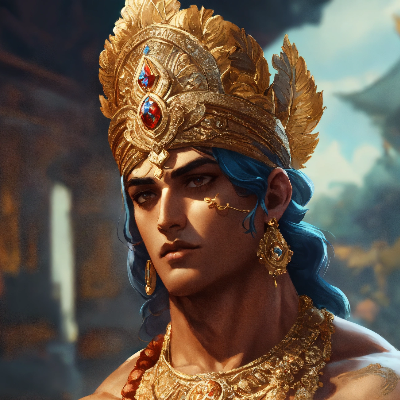
About
Subahu — Son of Shatrughna and Shrutakirti, King of Mathura
Subahu · Shatrughna-putra · Mathura-pati
Subahu is a prince of Ayodhya, named in the Uttara Kanda of the Valmiki Ramayana as the son of Shatrughna — the fourth son of King Dasharatha of Ayodhya by his queen Sumitra — and of Shrutakirti, the younger daughter of Kushadhvaja, the brother of King Janaka of Mithila. He is one of two sons of Shatrughna named in that text, the other being Shatrughati. Rama installs Subahu as king of Mathura — the city established by Shatrughna after his defeat of the demon Lavanasura on the banks of the Yamuna — at the close of the events narrated in the Uttara Kanda. The Valmiki Ramayana provides no further narrative about Subahu's reign or character. The name Subahu is shared by several other figures in the Ramayana and Puranic tradition and must be carefully distinguished from them — most notably from Subahu the demon-son of Tataka, slain by Rama in the Bala Kanda at the request of the sage Vishvamitra, who is an entirely separate figure.
✦ The Name
The name Subahu is a Sanskrit compound of su, meaning good, excellent, or auspicious, and bahu, meaning arm. The compound denotes one with excellent arms or one whose arms are mighty and well-formed — a name encoding the martial virtue appropriate to a prince of the Solar dynasty. The name is common enough in Sanskrit literature to be borne by multiple distinct figures, and its presence across the Ramayana, Mahabharata, and Puranic literature at different points and in different roles requires careful differentiation in any genealogical or textual context.
✦ Lineage
- Father: Shatrughna, fourth son of King Dasharatha of Ayodhya by his queen Sumitra, devoted companion of Bharata within the Ayodhya household, and the slayer of the demon Lavanasura who founded the city of Mathura.
- Mother: Shrutakirti, younger daughter of Kushadhvaja — the brother of King Janaka of Mithila — wed to Shatrughna at the fourfold marriage ceremony at Mithila.
- Paternal uncle: Rama, eldest son of Dasharatha, hero of the Ramayana and seventh avatara of Vishnu, who installs Subahu as king of Mathura.
- Brother: Shatrughati, also a son of Shatrughna and Shrutakirti, installed by Rama as king of Vidisha at the same time.
- Paternal grandmother: Sumitra, second queen of Dasharatha and mother of both Lakshmana and Shatrughna.
- Maternal grandfather: Kushadhvaja, king within the Videha royal house and brother of Janaka of Mithila.
✦ Installation as King of Mathura
The Uttara Kanda records that Shatrughna, after defeating Lavanasura and establishing the city of Mathura in the region of Madhuvana on the Yamuna, governs that city for twelve years before returning to Ayodhya. When Rama makes his comprehensive territorial settlement for the next generation of the Ayodhya royal house, Subahu is installed as king of Mathura, effectively inheriting the city his father founded. This makes Subahu's kingship a direct continuation of Shatrughna's establishment in that region. The text provides no further account of Subahu's reign, and no primary Puranic source adds substantive information about him beyond this installation notice.
✦ References
Primary Sources
- Valmiki Ramayana, Uttara Kanda: The sole primary source naming Subahu as the son of Shatrughna and recording his installation as king of Mathura; also narrates Shatrughna's founding of Mathura after the defeat of Lavanasura, providing the context for Subahu's inheritance of that kingdom.
Modern Reference Works
- Vettam Mani, Puranic Encyclopaedia (Motilal Banarsidass, 1975), entry on Subahu: Distinguishes between the several figures named Subahu in the epic and Puranic tradition and identifies this Subahu specifically as the son of Shatrughna installed at Mathura.