
About
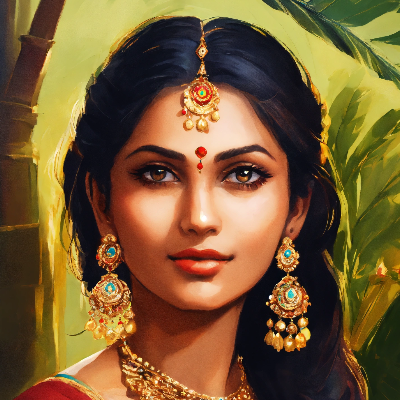
Mandavi — Princess of Mithila, Wife of Bharata, and Queen of Ayodhya
Mandavi · Mandavi-devi · Bharata-patni · Kushadhvaja-putri · Videha-kanya
Mandavi is a princess of Mithila, the elder daughter of Kushadhvaja — the brother of King Janaka of the Videha kingdom — and the wife of Bharata, the second son of King Dasharatha of Ayodhya by his queen Kaikeyi. She is named in the Bala Kanda of the Valmiki Ramayana as one of the four brides given in marriage at the great ceremony at Mithila in which Sita is wed to Rama, Urmila to Lakshmana, and Shrutakirti to Shatrughna. Mandavi is the mother of two sons, Taksha and Pushkala, both named in the Uttara Kanda of the Valmiki Ramayana and each installed as a king by Rama. Her treatment in the Valmiki Ramayana is brief — she is named and placed in the genealogical and ceremonial record but is not given sustained narrative, speech, or individual episode. Later regional traditions and vernacular retellings of the Ramayana give her somewhat more presence, particularly in accounts of Bharata's grief and conduct during Rama's exile, but these elaborations are not attested in the Valmiki text itself.
✦ The Name
The name Mandavi is Sanskrit in origin. It is connected in classical usage to the root manda, which can carry the meaning of slow, gentle, pleasing, or mild, and the feminine suffix vi or the nominative formation from a related root. Some lexicographers associate the name with the sense of one who is gracious or one who moves gently, conveying qualities of composed and measured conduct. The name is also sometimes connected to a regional or place-name tradition, though no firm etymological consensus beyond the general sense of gentleness or graciousness is established in the commentarial literature. She is identified in the tradition through her patronymic as the daughter of Kushadhvaja and through her marital identity as the wife of Bharata.
✦ Lineage
- Father: Kushadhvaja, the brother of King Janaka of Mithila, himself a king within the Videha royal house; the Valmiki Ramayana names him as the father of both Mandavi and Shrutakirti.
- Sister: Shrutakirti, the younger daughter of Kushadhvaja, given in marriage to Shatrughna — the fourth son of Dasharatha — at the same ceremony at Mithila.
- Paternal uncle: Janaka, the philosopher-king of Mithila, foster-father of Sita, celebrated in the Upanishadic tradition as a royal sage of the highest learning.
- Cousins (treated as sisters at marriage): Sita, the elder daughter of Janaka, wed to Rama; and Urmila, the younger daughter of Janaka, wed to Lakshmana.
- Husband: Bharata, second son of King Dasharatha of Ayodhya by his queen Kaikeyi, celebrated in the Ramayana tradition for his absolute devotion to Rama and his refusal to accept the throne of Ayodhya in Rama's absence, governing instead as Rama's regent with Rama's sandals placed on the throne as symbolic sovereign.
- Sons: Taksha and Pushkala, both named in the Uttara Kanda of the Valmiki Ramayana and installed as kings by Rama at the close of the epic period.
- Mother-in-law: Kaikeyi, the third and most politically consequential queen of Dasharatha, whose demand for two boons from Dasharatha results in Rama's exile and Bharata's unwanted elevation — the central crisis of the Ayodhya Kanda.
✦ The Marriage at Mithila
The marriage of Mandavi to Bharata is narrated in the Bala Kanda of the Valmiki Ramayana as part of the fourfold marriage ceremony at Mithila. After Rama breaks the great bow of Shiva and wins the right to Sita's hand, King Janaka proposes the arrangement by which the four princes of Ayodhya will each receive a bride from the Videha royal house. Janaka offers his own two daughters — Sita and Urmila — to Rama and Lakshmana, and proposes that his brother Kushadhvaja offer his two daughters — Mandavi and Shrutakirti — to Bharata and Shatrughna. The sage Vasishtha, the royal preceptor of the Ayodhya house, and Dasharatha both assent to this arrangement. The marriages are performed together in a single ceremony with full Vedic ritual. The text names Mandavi as Bharata's bride and Shrutakirti as Shatrughna's bride, and both Kushadhvaja and Janaka are present to give the brides away. Mandavi is not given individual speech or described in personal detail in the wedding narration — the ceremony is described as a collective and ritual event, with the focus remaining on the primary union of Rama and Sita.
✦ During Rama's Exile
The Valmiki Ramayana does not narrate Mandavi's experience during the fourteen years of Rama's forest exile from her perspective. Bharata, her husband, refuses to occupy the throne and instead installs Rama's sandals as the symbolic sovereign of Ayodhya, residing himself at the village of Nandigrama in an ascetic manner, wearing bark garments and waiting for Rama's return. The text does not specify whether Mandavi accompanies Bharata to Nandigrama or remains at the palace, nor does it describe her conduct or state during this period. She is not a speaking character in the sections of the Valmiki Ramayana devoted to Bharata's regency.
✦ Textual Variants and Later Traditions
Some later regional retellings of the Ramayana and devotional texts give Mandavi a more active role, particularly in narratives surrounding Bharata's grief at Rama's exile and his journey to the forest to beg Rama's return. In certain vernacular traditions she is portrayed as a devoted and patient queen who shares in Bharata's austerities during the period of exile. These elaborations are consistent with her character as implied by the Valmiki text but are not attested in it explicitly. The Adhyatma Ramayana and several regional Ramayanas in languages including Odia and Bengali include her in broader treatments of the four queens of the Ayodhya princes, but the detail provided remains thin relative to the treatment given to Sita and, to a lesser degree, Urmila.
✦ Connection to the Wider Genealogy
Mandavi, like her cousin Urmila, connects the Videha royal house of Mithila with the Ikshvaku Solar dynasty of Ayodhya. Through her sons Taksha and Pushkala, she is the maternal ancestor of the kingdoms of Takshashila and Pushkalavata — territories that the Uttara Kanda places in the northwest of the epic's geographical world, corresponding broadly to regions later associated with the Gandhara cultural zone. Takshashila in particular is a name associated in later Indian history and Buddhist literature with one of the most celebrated ancient centres of learning, though the Uttara Kanda's identification of it as Taksha's kingdom belongs to the epic's own geographic imagination rather than to historical record.
✦ References
Primary Sources
- Valmiki Ramayana, Bala Kanda, Sargas 70–73: Names Mandavi as the daughter of Kushadhvaja and records her marriage to Bharata at the fourfold ceremony at Mithila; identifies Kushadhvaja as Janaka's brother.
- Valmiki Ramayana, Uttara Kanda: Names Taksha and Pushkala as the sons of Bharata and records their installation as kings of Takshashila and Pushkalavata respectively; establishes Mandavi's role as their mother by implication of the marital pairing recorded in the Bala Kanda.
- Adhyatma Ramayana (embedded in the Brahmanda Purana): A later Sanskrit devotional retelling that includes Mandavi among the four queens of the Ayodhya princes; provides modest elaboration beyond the Valmiki account.
Modern Reference Works
- Vettam Mani, Puranic Encyclopaedia (Motilal Banarsidass, 1975), entry on Mandavi: Notes her identification as the daughter of Kushadhvaja and wife of Bharata and summarises the primary textual references.
- Robert P. Goldman (trans.), Valmiki Ramayana, Vol. 1: Balakanda (Princeton University Press, 1984): Critical translation with annotation covering the marriage ceremony sargas in which Mandavi is named.