
About
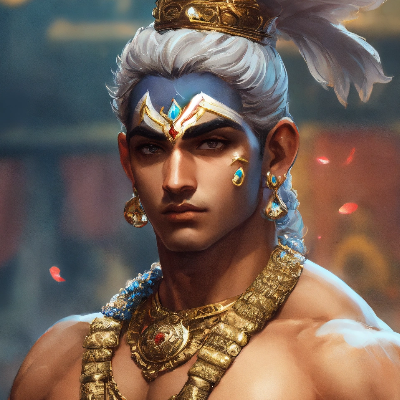
Taksha — Son of Bharata and Mandavi, King of Takshashila
Taksha · Bharata-putra · Takshashila-pati
Taksha is a prince of Ayodhya, named in the Uttara Kanda of the Valmiki Ramayana as the son of Bharata — the second son of King Dasharatha of Ayodhya — and of Mandavi, the daughter of Kushadhvaja, the brother of King Janaka of Mithila. He is one of two sons of Bharata named in that text, the other being Pushkala. At the close of the events narrated in the Uttara Kanda, Rama installs Taksha as king of Takshashila, a territory placed by the epic in the northwestern reaches of its geographical world. The Valmiki Ramayana provides no further narrative concerning Taksha's life, character, or reign. The name Takshashila corresponds to the site known in later Indian history and Buddhist literature as Taxila, a renowned ancient centre of learning, though the epic's association of that name with Taksha's kingdom belongs to the text's own aetiological geography rather than constituting a historical claim.
✦ The Name
The name Taksha is Sanskrit, derived from the root taksh, meaning to cut, to carve, or to fashion — the same root that gives the Sanskrit word for carpenter or craftsman. The name may carry the sense of one who shapes or fashions, though in the royal context it is more likely understood simply as a proper name with an auspicious valence. The Uttara Kanda's naming of the city Takshashila after this prince presents the place-name as derived from the personal name, functioning as an aetiological explanation for the city's identity within the epic's narrative world.
✦ Lineage
- Father: Bharata, second son of King Dasharatha of Ayodhya by his queen Kaikeyi, celebrated in the Ramayana tradition for his absolute devotion to Rama and his refusal to accept the throne during Rama's exile.
- Mother: Mandavi, daughter of Kushadhvaja — the brother of King Janaka of Mithila — wed to Bharata at the fourfold marriage ceremony at Mithila.
- Paternal uncle: Rama, eldest son of Dasharatha, hero of the Ramayana and seventh avatara of Vishnu, who installs Taksha as king of Takshashila.
- Brother: Pushkala, also a son of Bharata and Mandavi, installed by Rama as king of Pushkalavata at the same time.
- Paternal grandmother: Kaikeyi, third queen of Dasharatha.
- Maternal grandfather: Kushadhvaja, king within the Videha royal house and brother of Janaka of Mithila.
✦ Installation as King
The Uttara Kanda records that Rama, in making territorial provisions for the sons of his brothers, installs Taksha as king of Takshashila. The epic presents this installation as one of several parallel acts by which the next generation of the Ayodhya royal house is established in sovereignty across different regions. No detail of Taksha's subsequent reign, alliances, wars, or descendants is provided in the Valmiki text, and no other primary Puranic or epic source adds substantive information about him beyond this notice.
✦ References
Primary Sources
- Valmiki Ramayana, Uttara Kanda: The sole primary source naming Taksha as the son of Bharata and recording his installation as king of Takshashila; no further narrative is provided.
Modern Reference Works
- Vettam Mani, Puranic Encyclopaedia (Motilal Banarsidass, 1975), entry on Taksha: Notes the figure as the son of Bharata installed at Takshashila and briefly addresses the aetiological connection between the personal name and the city name.