
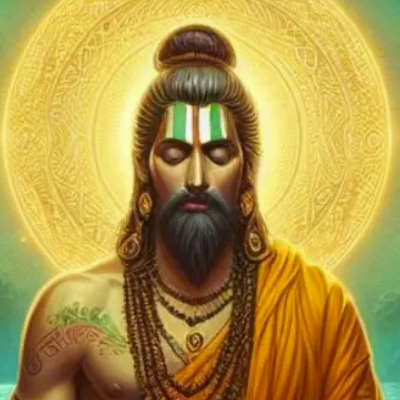
About
Mrikandu — Sage of the Bhrigu Lineage, Father of Markandeya
Mrikandu · Mrikanda · Mrukandu · Mrikandu Maharshi
Mrikandu is a Brahmarshi of the Bhrigu lineage, revered in the Puranic tradition principally as the father of Markandeya — the immortal sage who conquered death through absolute devotion to Shiva and who is counted among the Chiranjeevis, the seven immortal beings of Hindu tradition. Mrikandu is the son of Vidhata, himself a son of the primordial sage Bhrigu and his wife Khyati. Mrikandu appears across several Puranic texts, including the Vishnu Purana, the Siva Purana, the Skanda Purana, the Saura Purana, and the Markandeya Purana — the last of which bears his son's name and draws heavily on the legacy of their family. His own narrative centres on a celebrated episode of childlessness, austere devotion to Shiva, and the divine boon through which Markandeya was born.
✦ The Name
The name Mrikandu does not carry a single settled etymological interpretation in the primary sources, and classical Puranic texts do not typically pause to gloss his name. The spelling varies across manuscripts and regional traditions — Mrikandu, Mrikanda, and Mrukandu are all attested — reflecting the natural variation in Puranic transmission rather than distinct etymological traditions. He is identified in several texts by his lineage epithet, marking him as a descendant of Bhrigu, one of the seven great mind-born sons of Brahma and the progenitor of one of the most celebrated sage-clans in the tradition.
✦ Lineage
- Paternal grandfather: Bhrigu, one of the Saptarishis and among the most eminent of the mind-born sons of Brahma; progenitor of the Bhrigu gotra and the ancestral patriarch of this line.
- Paternal grandmother: Khyati, daughter of Daksha — the Prajapati and son of Brahma — and one of the wives of Bhrigu in the Vishnu Purana genealogy.
- Father: Vidhata (also rendered Vidhatri), son of Bhrigu and Khyati. The Vishnu Purana records Vidhata and his brother Dhata as sons of Bhrigu who were appointed by Brahma as custodians of cosmic order and regulation. Vidhata's name means the ordainer or disposer.
- Mother: Niyati, daughter of Mount Meru — the cosmic mountain at the centre of the universe in Puranic cosmology — and wife of Vidhata. Her name means fate or fixed law, and she and her sister Ayati (wife of Dhata) are recorded as daughters of Meru in the Vishnu Purana.
- Wife: Marudvati, also rendered Marudhvathi, Marudmati, or Manasvini in variant Puranic accounts. She is the mother of Markandeya and is described as sharing in Mrikandu's austerities.
- Son: Markandeya, the immortal sage, devotee of Shiva, and author or subject of the Markandeya Purana; one of the seven Chiranjeevis of Hindu tradition.
✦ The Boon of Shiva and the Birth of Markandeya
The most prominent narrative associated with Mrikandu in the Puranic corpus concerns his and Marudvati's long childlessness and the austerities they undertook to obtain a son. The couple performed intense and sustained tapas directed toward Shiva, and Shiva, pleased with their devotion, appeared before them and offered Mrikandu a choice between two forms of boon. The first option was a son of dull intellect and base character who would live a full and long life. The second was a son of exceptional wisdom, virtue, and spiritual brilliance who would live only sixteen years. Mrikandu chose the second.
The child born of this boon was Markandeya. He grew into a sage of extraordinary devotion and learning. As his sixteenth year drew to a close, Mrikandu fell into profound grief at the impending death of his son. However, Markandeya, in the moment that Yama — the god of death and cosmic justice, son of the sun god Surya — came to claim him, clung to the Shivalinga in absolute devotion. Shiva intervened directly, repelling Yama and granting Markandeya the boon of eternal youth at the age of sixteen. Markandeya thus became immortal and is counted among the Chiranjeevis.
This episode is narrated across multiple Puranic sources with some variation in detail, but the essential structure — the choice of boons, Mrikandu's selection, Markandeya's near-death, and Shiva's intervention — is consistent across the Siva Purana, the Skanda Purana, and related texts. The Markandeya Purana, though named for the son, also preserves traditions surrounding this family lineage.
✦ Textual Variants and Inconsistencies
The name of Mrikandu's wife is not consistent across the sources. The forms Marudvati, Marudhvathi, Marudmati, and Manasvini all appear in different texts and manuscript traditions. These variants likely reflect regional transmission and scribal adaptation rather than conflicting independent traditions, but the inconsistency is real and should be noted.
The genealogical position of Vidhata — and therefore of Mrikandu — also shows some variation. The Vishnu Purana presents Vidhata and Dhata straightforwardly as sons of Bhrigu and Khyati. In some other contexts, Vidhata is treated as a title or functional name for Brahma himself in his role as ordainer, which can cause confusion in genealogical readings. For the purposes of Mrikandu's lineage, the Vishnu Purana account — which treats Vidhata as a distinct sage-son of Bhrigu — is the basis for the genealogy recorded here, and is the version consistent with Mrikandu's identification as a sage of the Bhrigu line.
✦ Theological Significance
Mrikandu's principal theological function in the tradition is as the instrument through which Markandeya's story enters the world. His willingness to accept a brilliant but short-lived son over a long-lived but worthless one is presented in the Shaiva Puranas as itself an act of wisdom and detachment — a recognition that the quality of a soul matters more than the duration of its life. His grief at Markandeya's impending death is treated not as a contradiction of this wisdom but as the human dimension of a father's love, and it serves to heighten the drama of Shiva's intervention.
The episode as a whole functions within Shaiva theology as a demonstration that sincere and absolute devotion to Shiva overcomes even the decrees of cosmic fate — represented here by the original terms of the boon — and the authority of Yama. Mrikandu, as the father who set this chain in motion through his own devotion and his choice, occupies an essential place in that theological argument.
✦ Folklore Traditions
Certain regional and community traditions, particularly among weaving communities such as the Koshta and Padmashali communities, associate Mrikandu with the divine origin of weaving, venerating him as the sage who first introduced this craft to humanity. These traditions are regional folkloric accretions and do not appear in the eighteen Mahapuranas or the Itihasas; they represent the absorption of a well-known sage-figure into community origin narratives, a common pattern in Indian folk tradition.
A further regional belief, attested in forest-community folklore rather than in canonical Puranic texts, holds that Mrikandu was granted a tame tiger and a giant as rewards for his gift of weaving to the world, and that reciting his name offers protection against tiger attacks in forested areas. This belief has no basis in the primary Puranic or epic sources and is recorded here as a folkloric tradition only.
✦ Connection to the Wider Genealogy
Mrikandu stands within one of the most genealogically significant lineages in the Puranic system. His great-grandfather in the line is Brahma, the creator deity; his grandfather is Bhrigu, one of Brahma's mind-born sons and the founder of the Bhrigu gotra. His father Vidhata is the grandson of Brahma through this line, and his mother Niyati connects the lineage to the cosmic mountain Meru, which in Puranic cosmology is the axis of the universe and the seat of the gods. Through his son Markandeya, Mrikandu's line continues into one of the most celebrated individual sages of the entire Puranic corpus — a sage whose longevity and wisdom made him a witness to the dissolution and renewal of the universe across multiple cosmic cycles.
✦ References
- Primary Sources:
- Vishnu Purana, Book I, Chapters 7 and 10: Records the genealogy of Bhrigu, the births of Dhata and Vidhata as sons of Bhrigu and Khyati, the marriages of Vidhata to Niyati and Dhata to Ayati (both daughters of Meru), and their descendants; the foundational genealogical source for Mrikandu's lineage.
- Siva Purana, Rudra Samhita and Kotirudra Samhita: Contains the principal Shaiva account of Mrikandu and Marudvati's tapas, Shiva's appearance and offer of boons, the birth of Markandeya, and the episode of Yama's defeat; the primary theological source for the Mrikandu-Markandeya narrative.
- Skanda Purana: Contains additional versions of the Markandeya birth narrative and references to Mrikandu's lineage and austerities, with some variation in detail from the Siva Purana account.
- Markandeya Purana: Named for Mrikandu's son; preserves traditions associated with the Mrikandu lineage and provides the broader context for Markandeya's cosmic significance.
- Saura Purana: Corroborates the genealogical placement of Mrikandu within the Bhrigu lineage through Vidhata and Niyati.
- Secondary and Reference Sources:
- Vettam Mani, Puranic Encyclopaedia (1975): Entries on Mrikandu, Vidhata, Markandeya, and related figures; useful for cross-referencing genealogical details across multiple Puranic sources.
- Wisdomlib, definition entry for Mrikandu: Aggregates Puranic references to Mrikandu's lineage and the Markandeya birth narrative; identifies him as grandson of Bhrigu through Vidhata and Niyati.
- Wikipedia, article on Mrikanda: Provides a summary of the principal narrative and genealogical details; useful for cross-referencing the variant spellings of his wife's name across sources.