
About
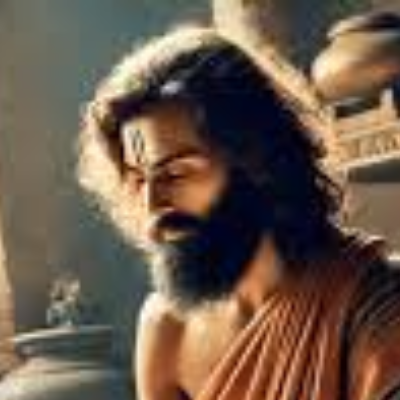
Kautsa — Student of Varatantu, Son-in-Law of Bhagiratha, Origin of the Vijayadashami Tradition, and the Brahmin Whose Devotion to Guru Dakshina Brought Gold from the Sky
Kautsa · Kautsya · Varatantu-shishya · Bhagiratha-jamata · Hamsi-pati · Raghu-dakshina-nimitta · Apata-suvarna-prapaka · Vijayadashami-sampradaya-kartri · Kutsa-anvayaja
Kautsa is a brahmin scholar of the Solar dynasty period — specifically of the generation of King Raghu, the great-grandfather of Rama — who is celebrated in the tradition for two distinct biographical facts that come from different primary source traditions. The first is his relationship with his guru Varatantu: having mastered all fourteen shastras from the great sage who established the Varatantaviya school of thought, Kautsa insisted on paying guru dakshina over his teacher's protests, was asked for fourteen crore gold coins — one crore for each shastra — and went to King Raghu to obtain the wealth. This episode is narrated in Kalidasa's Raghuvamsha at chapter 5 as the primary literary source and forms the mythohistorical basis of the Vijayadashami festival's tradition of distributing apta leaves as symbolic gold. The second biographical fact comes from the Mahabharata's Anushasana Parva chapter 131 verse 25 and chapter 137 verse 26: Kautsa married Hamsi — the famous daughter of the great Solar dynasty king Bhagiratha who brought the Ganga down from heaven — and through this marriage became the son-in-law of one of the tradition's most celebrated ascetic-kings. The Wisdomlib Kautsa entry specifically confirms both identities as the same individual: a student of Varatantu at Raghuvamsha 5.1 and the son-in-law of Bhagiratha at Mahabharata 13.6270. He appears in Kalidasa's Raghuvamsha, the Mahabharata's Anushasana Parva, the Wisdomlib and Vettam Mani compilations, and in the regional Vijayadashami tradition of Maharashtra and Karnataka.
✦ The Names
The name Kautsa is a patronymic derived from Kutsa — meaning "he of the Kutsa lineage" or "descendant of Kutsa." The Wisdomlib Kautsa entry confirms the derivation: the primary meaning of Kautsa is "relating to Kutsa" or "of the Kutsa lineage." Kutsa was a celebrated Rigvedic sage and hymn-composer — making Kautsa the descendant of a specifically named Vedic figure whose lineage gave him his brahminical standing and his gotra identity. The alternative form Kautsya is the same name in its extended suffix form. The epithet Varatantu-shishya means "student of Varatantu." Bhagiratha-jamata means "son-in-law of Bhagiratha." Hamsi-pati means "husband of Hamsi." Raghu-dakshina-nimitta means "the occasion for Raghu's guru dakshina." Apata-suvarna-prapaka means "the one who brought about the golden apta leaves." Vijayadashami-sampradaya-kartri means "the one who initiated the Vijayadashami tradition."
✦ Lineage and Family
- Ancestry: The name Kautsa as a patronymic from Kutsa places him in the lineage of the Rigvedic sage Kutsa — a hymn composer of the tradition associated with Indra's battles against the demon Shushna. Kutsa appears in the Rigveda as one of the sages for whom Indra performed miraculous rescues. As a brahmin of the Kutsa lineage Kautsa belongs to the Vedic scholarly tradition of the early Solar dynasty period — contemporary to King Raghu who was the great-grandfather of Rama, placing him in the tradition approximately four generations before the Ramayana's own narrative period.
- Teacher: Varatantu — a sage who established the school of thought called the Varatantaviya and who was a master of all fourteen shastras — the complete sciences of the Vedic scholarly tradition encompassing dharma, logic, linguistics, grammar, astronomy, mathematics, medicine, and the other branches of sacred knowledge. The Varatantu Wikipedia article confirms his role: "The disciple of Varatantu, Kautsa, seeks money from the Raghu in the Raghuvamsha." Varatantu is also mentioned in the Skanda Purana in a dialogue with Nandi. His ashrama — in regional tradition specifically associated with Bharuch on the western coast — was the centre of a significant pedagogical institution in the Solar dynasty's kingdom.
- Father-in-law: Bhagiratha — the most celebrated king of the Solar dynasty's intermediate generations, the great-great-great-grandson of Sagara, who performed extraordinary austerities across multiple generations' accumulation of unfulfilled duty and finally succeeded in bringing the Ganga down from Svarga to the earth to liberate the sixty thousand sons of Sagara. Bhagiratha's name became synonymous with monumental persevering effort in the face of apparently impossible obstacles — the phrase Bhagirath prayatna (Bhagiratha's effort) is a living Sanskrit idiom for extraordinary sustained achievement. The Mahabharata's Anushasana Parva chapter 131 verse 25 records: "He married his daughter to Kautsa." The Bhagiratha significance entry in the Wisdomlib source records the same fact: "This royal sage, by giving his famous daughter Hansi in marriage to Kautsa, went to the eternal regions." The framing is significant — Bhagiratha's giving of Hamsi to Kautsa is listed as one of his dharmic meritorious acts alongside his faith in cow-gift and his bringing down of the Ganga, suggesting it was considered a particularly auspicious act of kanya-daan.
- Wife: Hamsi — the daughter of Bhagiratha, named in the Glorious Hinduism source, the Wikipedia Bhagiratha article, and the Vettam Mani compilation (as cited in the Scribd source) as the famous daughter given to Kautsa. The name Hamsi means "she who is a swan" or "the swan-woman" — from hamsa, the sacred swan or goose of the Indian tradition, which is simultaneously the vehicle of Sarasvati, the metaphor for the liberated soul, and the symbol of divine discernment (the hamsa's legendary ability to separate milk from water). The name gives Bhagiratha's daughter a quality of divine discernment and sacred beauty. The same name appears in the Mahabharata's Anushasana Parva chapter 137 verse 26 in the Vettam Mani citation as "Bhagiratha, whom sage Kautsa married" — confirming the marriage from the Kautsa side as well as the Bhagiratha side.
- Brother-in-law — Shruta: The Glorious Hinduism source specifically names Bhagiratha's son as Shruta — making Hamsi's brother Shruta, and therefore Shruta Kautsa's brother-in-law.
- The primary sources do not name Kautsa's children.
✦ Education Under Varatantu — Mastery of Fourteen Shastras
Kautsa's education under Varatantu is described in the tradition as exceptionally complete — he studied all fourteen shastras under the sage with complete devotion over many years. The fourteen shastras in the tradition's enumeration represent the full scope of Vedic sacred knowledge: the four Vedas (Rigveda, Samaveda, Yajurveda, Atharvaveda), the six Vedangas (Shiksha, Kalpa, Vyakarana, Nirukta, Chhandas, Jyotisha), the four Upavedas (Ayurveda, Dhanurveda, Gandharvaveda, Arthashastra) — or in different enumeration systems, the Itihasa, Purana, Nyaya, Mimamsa, Dharmashastra, and Arthashastra as additional texts. Whatever the specific fourteen, the tradition is clear that Kautsa received the most comprehensive possible education from Varatantu and completed it with distinction. The Vijayadashami source gives the most narrative account: Kautsa was a young brahmin of Ayodhya described as devoted, humble, and exceptionally serious in his studies. He mastered each science as it was taught and completed the full curriculum. His insistence on paying guru dakshina against Varatantu's explicit protests demonstrated the specific quality of brahminical conscientiousness that the tradition regards as the highest mark of a true student — not merely absorbing knowledge but insisting on fulfilling every obligation that the receipt of knowledge incurred.
✦ The Guru Dakshina Episode — Varatantu's Demand and the Appeal to Raghu
Kalidasa's Raghuvamsha chapter 5 — the primary literary source for the guru dakshina episode — narrates the sequence with characteristic compression and beauty. When Kautsa's studies were complete he approached Varatantu and asked to give guru dakshina. Varatantu refused — telling him that a student's devoted learning was itself the teacher's sufficient reward and that no material gift was expected. Kautsa pressed. He told his teacher that returning home without giving any guru dakshina would be a lifelong source of shame — the obligation of krita-dakshinatva, of having properly fulfilled the student's duty, required the formal completion of the gift. Varatantu, moved by his persistence and understanding that the insistence itself demonstrated the quality of the student, agreed to name a fee. He asked for fourteen crore gold coins — one crore for each of the fourteen shastras. The demand was simultaneously impossible and exactly right in its symbolic logic. One crore gold coins per shastra — the material value of each science expressed in the tradition's largest numerical unit — was a figure no private individual could gather, but its symbolic precision was irreproachable. Kautsa accepted the demand without argument and set out to find the money. He went first to King Raghu of Ayodhya — Rama's great-grandfather — who was the tradition's exemplar of royal generosity and the most celebrated Chakravarti of the Solar dynasty at that period. Raghu had recently completed a Vishvajit sacrifice in which he had given away everything he possessed — every material good in his treasury and his kingdom had been donated as the sacrifice's fee, leaving the king with only his weapons and his bare necessities. Kautsa arrived to find a king of absolute generosity who had nothing left to give. Raghu's response was characteristic: he told Kautsa to wait three days and went immediately to prepare a military campaign against Kubera the lord of wealth — planning to fight the god of riches himself if necessary to obtain the gold his guest required. When Indra learned of Raghu's intention he went to Kubera. Kubera, recognising the absurdity and the inevitability of the situation, rained gold coins down upon the apta and shanu trees surrounding Raghu's palace. The trees were laden with golden coins. Raghu summoned Kautsa, gave him fourteen crore coins — one crore for each shastra — and told him to take them to Varatantu. Varatantu accepted exactly fourteen crore — the agreed fee — and refused the remainder. Kautsa returned to Raghu with the surplus. Raghu refused that too — telling Kautsa to distribute the remaining gold among the people of Ayodhya. The distribution occurred on the day of Vijayadashami. The people of Ayodhya, receiving gold from the golden trees, gathered branches of the apta tree as tokens of the blessing — establishing the tradition of distributing apta leaves on Vijayadashami as symbolic gold, a practice that continues in Maharashtra and Karnataka to the present day.
✦ The Marriage to Hamsi and the Connection to Bhagiratha
The Mahabharata's Anushasana Parva chapter 131 verse 25 and chapter 137 verse 26 provide the two canonical statements of Kautsa's marriage to Hamsi. The framing in both passages is consistent: Bhagiratha "married his famous daughter Hamsi to Kautsa" — the word famous (prasiddha in Sanskrit) indicating that Hamsi was a known figure in her own right, not merely the unnamed daughter of a celebrated father. The Glorious Hinduism source gives the broader biographical context of Bhagiratha's domestic life: "He married and had two children: a son named Shruta and a daughter named Hamsi. He gave his daughter Hamsi in marriage to Kautsa." The Wisdomlib Bhagiratha significance entry makes the framing even clearer: "This royal sage, by giving his famous daughter Hansi in marriage to Kautsa, went to the eternal regions." The placement — "by giving his famous daughter Hansi in marriage to Kautsa, went to the eternal regions" — follows the same grammatical pattern as the other acts of merit listed in the same passage (giving cattle to Kohala, his faith in cow-gift). The giving of Hamsi to Kautsa is thus explicitly listed as one of Bhagiratha's dharmic meritorious acts that contributed to his attainment of the highest spiritual goal. This gives the marriage a theological weight beyond the merely genealogical — it was an act that the tradition regards as specifically blessed. The connection between Kautsa's two most celebrated biographical facts — the guru dakshina episode with Varatantu and Raghu, and the marriage to Bhagiratha's daughter — gives him a biographical position that spans two of the Solar dynasty's most celebrated generation-markers. The guru dakshina episode belongs to the period of Raghu — Rama's great-grandfather. Bhagiratha belongs to the generation of Raghu's grandfather. The tradition's association of Kautsa with both suggests he was a figure of the period bridging these two celebrated reigns — a brahmin student and scholar whose fame was sufficient that the great Bhagiratha gave his famous daughter to him.
✦ Kautsa's Presence in Other Traditions
The Wisdomlib Kautsa entry gives two additional biographical references. First, Kautsa was present at the Sarpa Satra — the great snake sacrifice of Janamejaya — as recorded in the Mahabharata's Adi Parva chapter 53 verse 6. His presence at this assembly — which was the occasion for the Mahabharata's original recitation by Vaishampayana — places him in the tradition's most consequential narrative frame. Second, a Kautsa appears in the Shiva Purana 2.3.39 among the sages who came to Kailasha for Shiva's wedding — assisting in the auspicious rites and tying the sacred thread around Shiva's wrist. Whether this Shiva Purana Kautsa is the same as the Varatantu-student Kautsa cannot be established with certainty given the chronological distance involved, but the name's continuity in the tradition as a distinguished brahmin sage is confirmed by this additional appearance. The Natyashastra also gives a Kautsa as one of the sons of Bharata to whom Brahma transmitted the knowledge of drama — a different figure but reflecting the name's broad distribution across the tradition.
✦ The Vijayadashami Tradition — Living Legacy
The specific connection between Kautsa's guru dakshina episode and the Vijayadashami festival is one of the most regionally specific and most richly documented of all the traditions in this genealogical series. In Maharashtra and Karnataka the festival of Dussehra-Vijayadashami includes the practice of exchanging apta leaves — called sona (gold) in Marathi — as symbolic gifts, replicating the distribution of the golden apta tree leaves that occurred when Kubera rained gold on Raghu's palace trees and Raghu distributed the surplus to the people of Ayodhya on Kautsa's behalf. The Vijayadashami.in source gives the narrative in full and explicitly identifies Kautsa's story as the foundational narrative for this specific practice. The practice of distributing apta leaves on Vijayadashami — which continues to the present day — means that Kautsa's guru dakshina episode is ritually re-enacted every year across Maharashtra and Karnataka, making his biography one of the very few figures in this genealogical series whose story has a directly traceable living ritual expression.
✦ Textual Variants and Inconsistencies
The most significant textual question about Kautsa is the relationship between the Raghuvamsha's presentation and the Mahabharata's genealogical references. In the Raghuvamsha Kautsa goes to Raghu — not to the later Dasharatha or Rama — placing him in the period of Raghu the great-grandfather of Rama. The Mahabharata references him as Bhagiratha's son-in-law — and Bhagiratha was Raghu's grandfather in the Solar dynasty chain. These two placements are consistent with a figure who was a student in Raghu's period and whose father-in-law belonged to an earlier generation — perfectly possible for a brahmin student-sage who may have married Hamsi when Bhagiratha was already old and the marriage represented a connection between a younger scholar and an elder king's family. The tradition does not note any tension between these two biographical facts. The name variation between Kautsa and Kautsya reflects the same individual in different grammatical forms — Kautsa the patronymic noun, Kautsya the adjectival or derivative form. Both designate the same figure in the same tradition. The user's original query referred to "sage Kautsya husband of Hamsi" — the Kautsya form — which is confirmed by the Wisdomlib Kautsa entry as an alternate form.
✦ Theological and Narrative Significance
Kautsa's theological significance operates at two distinct levels corresponding to his two primary biographical episodes. The first — the guru dakshina episode — is the tradition's most vivid portrait of brahminical conscientiousness: the student who refused to accept knowledge as a free gift, who insisted on the formal completion of the obligation that knowledge incurred, and whose insistence — though it created an apparently impossible demand — set in motion the chain of events that brought divine wealth from Kubera's stores to the people of Ayodhya. The theological principle encoded in this episode is that genuine knowledge creates genuine obligation and that the refusal to acknowledge this obligation diminishes the student and the knowledge simultaneously. Kautsa's insistence on paying despite Varatantu's refusal is the tradition's statement that the guru dakshina obligation cannot be waived by the teacher — it belongs to the student's own dharmic integrity, not to the teacher's desire for material reward. The second level — his marriage to Hamsi daughter of Bhagiratha — connects him to the most celebrated act of ancestral devotion in the entire Solar dynasty's history. Bhagiratha spent lifetimes in austerity to perform the funeral rites of sixty thousand ancestors he had never known. His gift of his daughter to Kautsa as an act of dharmic merit — listed alongside the Ganga's descent as one of his life's great accomplishments — suggests that the tradition regarded this marriage as a specifically sacred connection between the brahmin scholar and the ascetic king, a union that completed the pattern of Bhagiratha's dharmic life.
✦ Connection to the Wider Genealogy
Through his teacher Varatantu and the Varatantaviya scholarly tradition, Kautsa is connected to the brahminical intellectual tradition of the Solar dynasty's classical period. Through his father-in-law Bhagiratha he is connected to the most celebrated king of the Solar dynasty's intermediate generations — the king whose Bhagirath prayatna brought the Ganga to the earth, who is the ancestor of Dilipa and Raghu and through them the ancestor of Rama. Through his wife Hamsi he carries Bhagiratha's lineage into the brahminical tradition — the Solar dynasty's royal blood entering the Kutsa-gotra scholarly family. Through the Vijayadashami apta leaf tradition his biography has a living ritual presence that makes him one of the most practically influential figures in this genealogical series despite his relatively compact canonical narrative. Through the Sarpa Satra attendance he is connected to Janamejaya's court where the Mahabharata's original recitation occurred — placing him in the most consequential single narrative event of the post-Ramayana tradition.
✦ References
Primary Sources
- Kalidasa, Raghuvamsha, chapter 5, verse 1 and surrounding: The primary literary source for the guru dakshina episode — Kautsa identified as Varatantu's student, the demand for fourteen crore gold coins, the appeal to King Raghu, Raghu's complete generosity after the Vishvajit sacrifice, the rain of gold from Kubera on the apta trees, the distribution to the people of Ayodhya on Vijayadashami. The most celebrated literary account of any event in Kautsa's biography.
- Mahabharata, Anushasana Parva, chapter 131, verse 25: "He married his daughter to Kautsa" — the primary canonical statement of Bhagiratha's giving of Hamsi to Kautsa in marriage. One of the two Mahabharata Anushasana Parva verses constituting the primary canonical basis for this relationship.
- Mahabharata, Anushasana Parva, chapter 137, verse 26: "Bhagiratha, whom sage Kautsa married" — the companion canonical statement confirming the marriage from the perspective of Kautsa's identity as Bhagiratha's son-in-law. The Vettam Mani Puranic Encyclopaedia Scribd citation gives this verse as the primary Kautsa reference in the Mahabharata.
- Mahabharata, Adi Parva, chapter 53, verse 6: Kautsa's presence at Janamejaya's Sarpa Satra as one of the noble brahmin scholars assembled for the occasion.
- Shiva Purana, 2.3.39: Kautsa among the sages who came to Kailasha for Shiva's wedding and performed the auspicious rites — confirming the name's continued use in the tradition as a distinguished brahmin figure.
Modern Reference Works
- Vettam Mani, Puranic Encyclopaedia (1975): The entry on Kautsa — identifying him as "a noble Brahmin scholar" present at the Sarpa Satra (Adi Parva 53.6), and as the son-in-law of Bhagiratha (Anushasana Parva 137.26); the entry on Hamsi — identified as the famous daughter of Bhagiratha whom sage Kautsa married.
- Monier-Williams Sanskrit-English Dictionary: Entry on Kautsa confirming the patronymic derivation from Kutsa, its use as the name of a teacher in the Shatapatha Brahmana and Asvalayana Srauta Sutra, and specifically "eines Schülers von Varatantu [Raghuvamsha 5.1]. Schwiegersohns von Bhagiratha [Mahabharata 13.6270]" — confirming both the Varatantu-student identity and the Bhagiratha son-in-law identity with precise primary source citations.
- Kalidasa, Raghuvamsha — critical editions and translations by M. R. Kale (1922) and C. R. Devadhar (1997): The scholarly commentarial and translation apparatus for chapter 5's guru dakshina narrative; the most authoritative modern treatments of the primary literary source.