
About
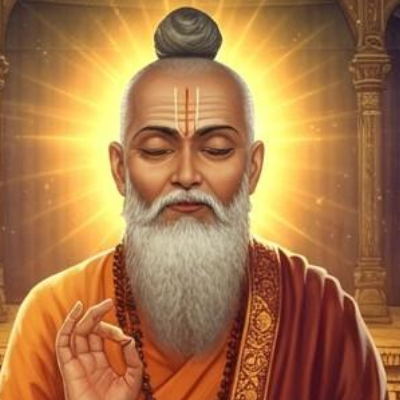
Dattila — Son of Bharata Muni, Musicologist and Author of the Dattilam
Dattila · Dhurtila · Dattila Muni · Acharya Dattila
Dattila is an early Indian musicologist named in the first chapter of the Natyashastra among the hundred sons of Bharata Muni — the sage to whom the Natyashastra is attributed — and is the author or the attributed authority behind the Dattilam, a Sanskrit treatise on the sacred music of ancient India. The Dattilam, comprising approximately two hundred and forty-four verses, is one of the earliest surviving systematic texts on Indian music and treats the subject of gandharva — the ancient, ritually significant form of music — with considerable technical precision, covering the topics of svara or musical note, tala or rhythmic measure, jati or melodic type, alankara or ornament, and various forms of song. Dattila is quoted as an authority on both music and dramaturgy by a range of later writers including the Brihaddeshi of Matanga, the commentator Ksirasvamin, and Abhinavagupta in his Abhinavabharati. His relationship to Bharata and to the Natyashastra tradition presents a complex textual problem, as the Dattilam shows less developed classifications in certain areas than the Natyashastra does, leading some scholars to conclude that Dattila may be contemporaneous with or even earlier than the Natyashastra's compiler rather than a student of his.
✦ The Name
The name Dattila is recorded in later sources also as Dhurtila, reflecting a textual variant in which one manuscript tradition reads Dhurtila where another reads Dattila. Scholarly consensus treats these as variant spellings of the same figure rather than two distinct individuals. The honorific Muni — sage — and the title Acharya — teacher or master — are both applied to Dattila in later sources, reflecting his status as a foundational authority. The name does not receive etymological commentary in the primary texts.
✦ Lineage and Relationship to Bharata
- Father (in the Natyashastra's account): Bharata Muni — the sage to whom the Natyashastra is attributed, who received the Natyaveda from Brahma and transmitted it to his hundred sons. As with all of Bharata's named sons in the tradition, scholarly commentary notes that this relationship may represent lineage within a school of teaching rather than biological descent.
- Association with Kohala: The two figures are closely associated in the musical tradition. Dattila cites Kohala's views on tala in the Dattilam — making this the earliest surviving external reference to Kohala — and the two are treated as contemporaneous foundational authorities across the subsequent tradition of Indian musicology.
✦ The Dattilam
The Dattilam is a treatise on gandharva — the ancient category of sacred music associated with the Vedic tradition, distinct from the later category of desi or regional music. The text presents itself as a synthesis of earlier works on the subject and opens with a statement of brevity as a compositional principle, indicating that Dattila drew upon a longer tradition of musical scholarship and condensed its most essential content. The Dattilam treats the seven svaras or musical notes — designated as shadja, rishabha, gandhara, madhyama, panchama, dhaivata, and nishada — and their classification into four functional types: vadi or sonant, samvadi or consonant, anuvadi or assonant, and vivadi or dissonant. It discusses the two gramas or tonal frameworks — the shadja-grama and the madhyama-grama — and the murchhanas or modal sequences derived from them. The text addresses tala, laya, and various technical aspects of rhythmic organisation, and concludes with four song forms in different regional dialects including Magadhi and Ardhamagadhi.
A comparison of the Dattilam with the corresponding sections of the Natyashastra reveals that Dattila's classifications are in certain respects less developed. For example, the Dattilam enumerates thirteen alamkaras or musical ornaments, while the Natyashastra gives thirty-three. Scholars including Mukund Lath and Manomohan Ghosh have argued that this disparity indicates that Dattila was writing within the same broad period as the Natyashastra's compilation or even before it, rather than after it as a student of Bharata would be expected to do. Some scholars have also argued that the extant Dattilam is a condensed later version of a larger original work that treated drama and dance as well as music, on the grounds that later writers cite Dattila on dramaturgical topics that are absent from the surviving text.
✦ Citations in Later Literature
Dattila is cited by a substantial number of later Sanskrit authors across several centuries, confirming his standing as a recognised foundational authority. The Brihaddeshi of Matanga quotes Dattila twice. Ksirasvamin, the eleventh-century commentator on the Amara-kosha, quotes him twice. Abhinavagupta in his Abhinavabharati quotes passages from Dattila no fewer than ten times in his commentary on Chapter XXVIII of the Natyashastra. The commentator Vandyaghatiya Sarvananda on the Amara-kosha also quotes him on a passage concerning dramatic structure. These citations span both musical and dramaturgical topics, supporting the scholarly inference that Dattila's original body of work was broader than the surviving Dattilam text.
✦ Questions of Date and Identity
Nothing is known of Dattila's biography beyond the work attributed to him. His dates are estimated by scholars as falling between the fourth century BCE and the second century CE, a range identical to the broad dating of the Natyashastra itself. The Dattilam was first published in the Trivandrum Sanskrit Series in 1930 and has since received detailed scholarly study, most notably in Mukund Lath's monograph A Study of Dattilam published in 1978, which remains the standard modern treatment of the text and its author.
✦ References
- Natyashastra of Bharata Muni, Chapter I, verses 26–33: Names Dattila among the hundred sons of Bharata Muni assigned to propagate the Natyaveda; the primary source establishing Dattila's relationship to the Natyashastra tradition.
- Dattilam (primary source): The surviving text attributed to Dattila, comprising approximately 244 verses on gandharva music; the principal source for his doctrines on svara, tala, jati, alankara, and song forms.
- Matanga, Brihaddeshi (c. 6th–7th century CE): Quotes Dattila twice; an important secondary source for Dattila's teaching and one of the earliest external testimonies to his text.
- Abhinavagupta, Abhinavabharati (c. 10th–11th century CE): Quotes passages from Dattila ten times in the commentary on Chapter XXVIII of the Natyashastra, on both musical and dramaturgical matters; the most extensive source of Dattila citations in the tradition.
- Ksirasvamin, Commentary on the Amara-kosha (11th century CE): Quotes Dattila twice; contributes to establishing the range of topics on which Dattila was regarded as an authority.
- Mukund Lath, A Study of Dattilam (Motilal Banarsidass, 1978): The standard modern scholarly treatment of the Dattilam, its textual authenticity, its relationship to the Natyashastra, and the musical doctrine it contains; used throughout this profile for contextual and analytical information.
- Wikipedia, Dattilam article: Used for cross-referencing the range of scholarly opinion on Dattila's date and relationship to Bharata.
- Wisdomlib, Dattila entry: Used for identifying citations of Dattila in later texts and the name variant Dhurtila.