
About
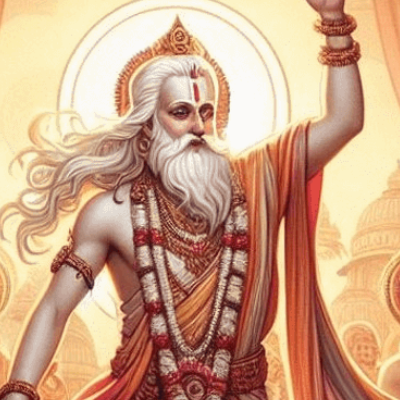
Tandu — Devotee of Shiva, Instructor of Bharata Muni in the Tandava
Tandu · Tanda · Tandu Muni · Nandikeshvara (in some traditions)
Tandu is described in the Natyashastra and in associated performing arts literature as a devotee and attendant of the god Shiva who, acting on Shiva's command, instructed Bharata Muni — the sage traditionally credited with the Natyashastra — in the Angaharas and Karanas that constitute the vigorous dance known as the Tandava. The name Tandava is itself derived from Tandu's name in the tradition: the dance is so called because it was taught by Tandu. Tandu is not one of Bharata's hundred sons; he stands in a different relationship to Bharata as a teacher rather than a student or descendant, transmitting to him the knowledge of Shiva's divine dance form for integration into the performing arts system being assembled in the Natyashastra. Some scholars have suggested that Tandu may have been the author of an earlier independent work on the dramatic arts whose content was incorporated into the Natyashastra, though no such text survives. In certain traditions, particularly those associated with the Shaiva lineage, Tandu is identified with or closely associated with Nandikeshvara — Shiva's bull-mount and chief attendant — though this identification is not universally maintained across the primary sources.
✦ The Name and Its Etymological Significance
The name Tandu is of particular significance in the Indian performing arts tradition because it is the source of the word Tandava — the name of the vigorous dance form associated with Shiva and systematised in the fourth chapter of the Natyashastra. The derivation Tando rayam Tandavah — meaning this dance of Tandu is the Tandava — is given in the commentarial tradition and cited in discussions of the Natyashastra's fourth chapter. Abhinavagupta, in his Abhinavabharati, offers an alternative derivation of the term Tandava from the sound of the accompanying drums, but acknowledges the Tandu-derived explanation as the traditional account. The eponymous connection between a teacher's name and the dance form he transmitted gives Tandu a unique position in the etymological history of classical Indian dance.
✦ Role in the Natyashastra
The fourth chapter of the Natyashastra — titled Tandavalakshanam, the definition of the vigorous dance — is the primary locus of Tandu's significance in the text. The chapter narrates that Shiva, having witnessed a dramatic performance presented by Bharata and his sons before him at Kailasa, was moved to suggest that the art of pure dance, or Nritta, be incorporated into the dramatic form. Shiva then ordered Tandu to instruct Bharata in the Angaharas and Karanas — the composite body-movements and postures that form the vocabulary of the Tandava dance. Tandu transmitted this knowledge to Bharata, and it is recorded that the resulting system of movement, taught by Tandu, came to be called Tandava in his honour.
The Natyashastra's fourth chapter goes on to enumerate thirty-two Angaharas — sequences of dance movements each composed of seven or more Karanas — and one hundred and eight Karanas — individual units of combined hand gesture and foot position. These are described as having been created by Shiva himself and transmitted through Tandu to Bharata, establishing a divine lineage of authority for the system of bodily movement systematised in the text. The one hundred and eight Karanas described in this chapter have had a sustained influence on Indian temple sculpture, most notably at the Nataraja temple at Chidambaram, where the postures are depicted on the outer walls.
✦ Tandu's Identity and Relationship to Nandikeshvara
The identity of Tandu in the broader Shaiva tradition presents a textual complexity. In some sources within the Shaiva performing arts tradition, Tandu is identified with or treated as equivalent to Nandikeshvara — the divine figure who is Shiva's chief attendant, door-keeper, and vehicle, and who is himself the attributed author of the Abhinaya Darpana, a separate treatise on gesture and expression. Other sources treat Tandu and Nandikeshvara as distinct figures who occupy similar roles in the transmission of dance knowledge from Shiva to human practitioners. Some accounts name Nandikeshvara as the figure who taught dance to Bharata, while others specify Tandu. The Natyashastra's own text is the primary source for Tandu specifically in the role of instructor of the Tandava system, and that text does not identify him with Nandikeshvara. This profile treats Tandu as the figure named in the Natyashastra and notes the identification with Nandikeshvara as a variant tradition without affirming the equation as established.
✦ The Question of an Earlier Work by Tandu
Some scholars of the performing arts tradition have suggested that Tandu may have been the author of an earlier independent treatise on the dramatic arts whose content was absorbed into the body of the Natyashastra. This hypothesis rests on the pattern — common in the formation of the Sanskrit shastra literature — of earlier independent works being incorporated into larger compilations attributed to a single organising authority. No such independent work attributed to Tandu survives, and the hypothesis remains speculative. It is noted here as a scholarly position rather than an established textual fact.
✦ Significance
Tandu's significance in the tradition of Indian performing arts is twofold. As the figure through whom Shiva's system of divine dance was transmitted to Bharata, he occupies a pivotal position in the chain of authority that legitimises the Natyashastra's treatment of pure dance. And as the eponym of the Tandava itself — the vigorous masculine dance form that stands as the counterpart to the graceful Lasya attributed to Parvati — Tandu's name is embedded in one of the most enduring and widely recognised concepts in the entire tradition of classical Indian dance. The Tandava in its various forms — Ananda Tandava, Rudra Tandava, Samhara Tandava, and others — represents in the Shaiva theological understanding the cosmic activities of creation, preservation, destruction, concealment, and liberation, making Tandu's role in its transmission a connection between the performing arts tradition and Shaiva cosmological thought.
✦ References
- Natyashastra of Bharata Muni, Chapter IV, verses 259–261: The primary source for Tandu's role; states that Shiva created the Recakas, Angaharas, and Pindibandhas and gave them to the sage Tandu, and that the system of dance performance thus created is known as the Tandava.
- Abhinavagupta, Abhinavabharati (c. 10th–11th century CE): Commentary on the Natyashastra's fourth chapter; discusses the derivation of the term Tandava, noting both the Tandu-derived traditional account and his own alternative derivation from drum sounds.
- Wikipedia, Tandava article: Used for establishing the range of traditions concerning Tandu's identity and his instruction of Bharata, and for noting the scholarly suggestion of an earlier independent work attributed to Tandu.
- Sreenivasarao's Blogs, The Texts of the Indian Dance Traditions, Part Three: Used for the Sanskrit verse references in the fourth chapter of the Natyashastra relating to Tandu's instruction of Bharata, and for the discussion of the relationship between Nritta and Natya in the text.
- Manomohan Ghosh (trans.), The Natyashastra of Bharatamuni (Asiatic Society of Bengal, 1951): English translation; used for establishing the chapter and verse location of the Tandu passage within the Natyashastra.
- Kapila Vatsyayan, Bharata: The Natyashastra (Sahitya Akademi, 1996): Used for the broader context of the Natyashastra's treatment of pure dance and the significance of the Tandava system within it.