
About
Raka — Goddess of the Full Moon, Daughter of Angiras and Shraddha
Raka · Raaka · Angirasi Raka · Purnima Devi
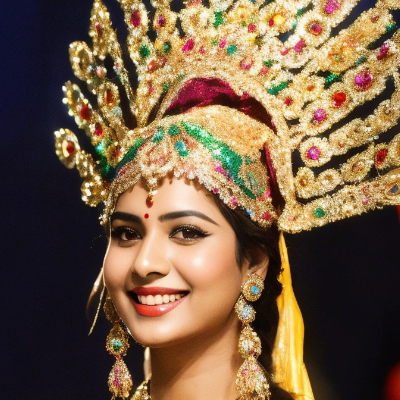
Raka is a Vedic goddess and the personification of the full moon — the Purnima, the lunar tithi on which the moon reaches the fullness of its light and stands completely visible in the night sky. She is one of four daughters born of the union of the primordial rishi Angiras and Shraddha, a daughter of the Prajapati Kardama Muni and his wife Devahuti. As a daughter of Angiras, Raka belongs to the Angirasa lineage, and as a personified lunar tithi she is simultaneously a genealogical figure and the presiding deity of the most luminous and abundant moment in the sacred calendar. In the Atharva Veda she is invoked as a giver of prosperity and is described in the striking image of one who sews the work of procreation with a needle that does not break. In the Puranic tradition, she is recorded as one of four wives of Dhata, the seventh son of Aditi, by whom she bore the son Pratar — the personification of the morning or dawn, the sacrificial moment at the opening of the day. She appears in the Atharva Veda, the Nirukta of Yaska, and the Bhagavata Purana.
✦ The Name
The name Raka is interpreted in the Nirukta and related exegetical literature as directly denoting the full moon day — the Purnima tithi — and carrying the connotation of fullness, radiance, and the act of giving or bestowing. The root is associated in some analyses with the concept of shining forth completely, a meaning entirely consistent with the quality of the full moon as the phase of maximum luminosity. The name also carries associations with the act of granting or conferring, establishing Raka from her very name as a giver — a quality that distinguishes her from her sister Kuhu, the goddess of concealment, and aligns her with the outward and generous aspects of the lunar cycle.
✦ Lineage
- Maternal grandfather: Kardama Muni — one of the Prajapatis appointed by Brahma to populate the world; father of nine daughters given in marriage to nine great sages as recorded in the Bhagavata Purana (Canto 4, Chapter 1); his wife was Devahuti, daughter of Manu Svayambhuva.
- Mother: Shraddha — one of the nine daughters of Kardama Muni and Devahuti; her name means faith or reverential trust; given in marriage to Angiras by Brahma's instruction as recorded in the Bhagavata Purana (Canto 4, Chapter 1); distinct from other figures named Shraddha in the tradition.
- Father: Angiras — one of the primordial saptarshis, regarded as a mind-born son of Brahma; founding ancestor of the Angirasa clan; closely associated with fire ritual, the priestly office, and the Atharvaveda.
- Sisters: Sinivali — goddess of the fourteenth day before the new moon; Kuhu — goddess of the new moon day; Anumati — goddess of the fourteenth day before the full moon; all daughters of Angiras and Shraddha.
- Brothers (principal): Brihaspati — the preceptor of the gods and one of the most prominent sons of Angiras, identified in Vedic and Puranic tradition as the divine teacher of the devas and lord of sacred speech and wisdom; Utathya — a renowned sage and son of Angiras; Ghora — a sage of the Angirasa lineage identified in the Rigveda Anukramanis as the father of Kanva the Rigvedic seer and recorded in the Chandogya Upanishad as the teacher of Krishna Devakiputra.
- Husband: Dhata — the seventh son of Aditi, the mother of the gods, and one of the twelve Adityas; a solar deity of the Vedic and Puranic tradition. The Bhagavata Purana (Canto 6, Chapter 18) records that Dhata had four wives — Kuhu, Sinivali, Raka, and Anumati — each of whom bore him one son.
- Son: Pratar — the personification of the morning or dawn, the sacred moment at the opening of the day at which the morning Agnihotra oblation is offered and the daily cycle of Vedic ritual begins; as the son of the goddess of the full moon's outpouring of light, Pratar embodies the daily counterpart of his mother's monthly domain — the daily moment of maximum emergence of light from darkness.
✦ Cosmological Identity and Lunar Role
Raka presides over the Purnima — the full moon day — which is the fifteenth tithi of the waxing fortnight, the shukla paksha, on which the moon stands in its greatest visible completeness. In the Vedic ritual calendar, the full moon is one of the two primary lunar turning points of the month, and it is a day associated with abundance, auspiciousness, and the culmination of the lunar cycle's outward movement. Raka as the presiding goddess of this day embodies the quality of complete manifestation — the full outpouring of lunar energy that stands in direct contrast to the hidden darkness of her sister Kuhu's domain. The cosmological correspondence between Raka and her son Pratar is one of consistent luminous logic: as Raka governs the monthly moment of maximum light, so Pratar governs the daily moment of light's arrival — the dawn — establishing through the mother-son relationship a structural parallel between the monthly and daily sacred cycles.
✦ Ritual Significance and Invocation
In the Atharva Veda, Raka is invoked as a goddess who bestows prosperity and is described in the vivid image of one who sews the work of procreation with a needle that never breaks — an image of creative power operating with absolute precision and unfailing completeness. This image presents her generative role not merely as an act of granting but as a skilled and intentional craft: the sewing metaphor implies both the joining of separate elements into a coherent whole and the durability of what is created under her auspices. She is thus the goddess of generative completion — the deity who ensures that what was initiated under Sinivali's governance of conception reaches its full and unbroken realisation. Her invocation in the Atharva Veda pairs her frequently with Sinivali as the two poles of the generative lunar cycle — the hidden threshold of beginning and the fully manifest culmination.
✦ Theological Significance
Raka's position as the goddess of the full moon within the family of Angiras and Shraddha gives her the role of the most outwardly radiant and generous of the four sisters. Where Kuhu embodies the hidden and inward aspect of divine power and Sinivali the liminal threshold, Raka embodies the principle of complete and visible manifestation. Her union with Dhata — a solar Aditya — and the birth of Pratar from this union reinforces this theological character: the goddess of the moon's fullest light, joined to a deity of the solar order, produces the daily dawn — the moment of light's complete triumph over the night, which is both the counterpart and the complement of the full moon's monthly triumph of luminosity.
✦ Connection to the Wider Genealogy
Raka belongs to the Angirasa-Kardami branch of the Angirasa lineage. Through her father Angiras she is connected to the entire Angirasa genealogical tradition. Through her mother Shraddha she is connected to the family of Kardama Muni and the network of Prajapati lineages. Through her marriage to Dhata and the birth of Pratar, she is connected to the Aditya lineage and to the structure of the daily Vedic sacrificial calendar. Among the four sisters, Raka and Sinivali are most frequently paired in the Atharva Veda as the complementary governing goddesses of the generative lunar cycle, while Raka and Kuhu stand as the two poles of maximum light and maximum darkness within the monthly sacred order.
✦ References
- Primary Sources:
- Atharva Veda: The principal Vedic source for Raka's ritual identity; records her invocation for prosperity and the image of her sewing the work of procreation with an unbreakable needle; establishes her as the presiding goddess of the Purnima tithi.
- Bhagavata Purana, Canto 4, Chapter 1: Records the genealogical identity of Shraddha as a daughter of Kardama Muni and her marriage to Angiras; anchors the parentage of Raka and her sisters within the Puranic tradition.
- Bhagavata Purana, Canto 6, Chapter 18: Records that Dhata, the seventh son of Aditi, had four wives including Raka, and that Raka bore him the son Pratar, the personification of the morning sacrificial moment.
- Nirukta of Yaska: Provides etymological and exegetical discussion of Raka among the lunar deity figures and the ritual significance of the tithi designations.
- Secondary Sources:
- Vettam Mani, Puranic Encyclopaedia (1975): Entry on Raka noting her identity as a daughter of Angiras, her marriage to Dhata, and her lunar and ritual associations.
- A. A. Macdonell and A. B. Keith, Vedic Index of Names and Subjects (1912): Contains entries on Raka, the lunar goddesses, and the Angirasa lineage.
- Wisdom Library, Raka: Aggregates Vedic and Puranic references to Raka within the Angirasa family tradition, including the Bhagavata Purana account of her marriage to Dhata and the birth of Pratar.