
About
Kirti — Daughter of the Sage Shuka, Mother of King Brahmadatta of Kampilya
Kritvi · Kirtimati · Krtvi · Shukakanya · Gau
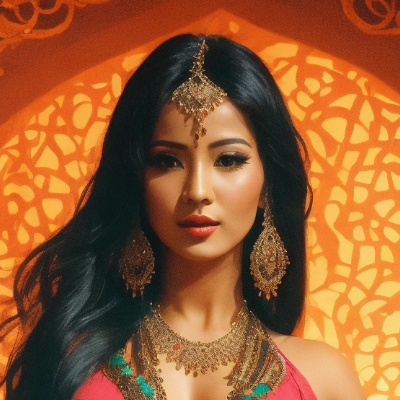
Kirti, also named Kritvi and Kirtimati in the primary sources, is the daughter of the sage Shuka — the celebrated son of Vyasa and the principal narrator of the Bhagavata Purana — and his wife Peevari, who is identified in the Vayu Purana, Brahmanda Purana, Matsya Purana, and Harivamsha as a mind-born daughter of the Barhishada class of divine Pitrs. Kirti appears in the Devi Bhagavata Purana, the Harivamsha, the Bhagavata Purana, and the Matsya Purana as the wife of King Anuha of Kampilya and the mother of the celebrated royal sage Brahmadatta. Her significance within the Puranic genealogical tradition rests primarily on this son, whose lineage the Harivamsha traces in considerable detail and who is remembered as a king of great spiritual attainment, a contemporary of the Kuru king Pratipa, and an ancestor of the Panchala dynasty that produced King Drupada, the father of Draupadi.
✦ The Name
The name Kirti derives from the Sanskrit root meaning fame, glory, or renown, and belongs to a class of auspicious feminine names denoting honour and good repute. The form Kirtimati, attested in the Harivamsha transliteration of the Sanskrit text, is an extended form of the same root meaning one who possesses fame or one endowed with glory. The name Kritvi, by which she is identified in the Harivamsha, the Bhagavata Purana, and the Matsya Purana, is a distinct Sanskrit feminine form; the precise etymology of Kritvi is less transparent, but it appears as a personal name rather than a descriptive epithet in these texts. The Harivamsha verse rendered in transliteration explicitly equates the two — referring to the daughter of Shuka as Kritvi, also known as Kirtimati — confirming that both names designate the same person. A further name, Gau, is noted in the Purana Index compiled from the Bhagavata Purana and Matsya Purana, though it is not explained or elaborated in the sources consulted. The epithet Shukakanya, meaning daughter of Shuka, functions as a patronymic rather than a personal name.
✦ Lineage
- Father: Shuka — son of the sage Vyasa and, according to the Devi Bhagavata Purana, born of the Apsara Ghritachi; alternatively, according to the Mahabharata, born miraculously from a fire-stick after a hundred years of Vyasa's austerities. Shuka is the celebrated narrator of the Bhagavata Purana to the dying Kuru king Parikshit, and is regarded across the tradition as a perfected knower who attained liberation. He is the grandson of the sage Parashara and of the fisherman's daughter Satyavati, who later became queen of Hastinapura.
- Mother: Peevari — identified in the Vayu Purana, Brahmanda Purana, Matsya Purana, and Harivamsha as the mind-born daughter of the Barhishada class of divine Pitrs; described in the Devi Bhagavata Purana simply as the daughter of a rishi. A secondary tradition names her as the daughter of the sage Pulaha, one of the Saptarshi, by his wife Kshama.
- Brothers: Krishna, Gauraprabha, Bhuri, and Devasruta — four sons of Shuka and Peevari, named in the Devi Bhagavata Purana, first skandha. No further details about these figures are recorded in the primary sources.
- Husband: Anuha — a king of the Panchala lineage, descended from the ancient Ajamidha line. The Harivamsha traces his ancestry through Samara, Para, Prithu, Sukrita, and Vibhraja. Anuha is described in the Harivamsha as a king of the city of Kampilya and as a worthy son-in-law of the sage Shuka. The Bhagavata Purana refers to him as a son of Nipa, which the Purana Index reconciles with the Harivamsha account by identifying Nipa as a name or title within the same lineage.
- Son: Brahmadatta — royal sage and king of Kampilya, described in the Harivamsha as a man of great spiritual knowledge, mastery of the Vedas, understanding of the speech of all animals, and yogic attainment. He is also referred to as Pitridatta in the Harivamsha on account of his devotion to his forebears.
✦ The Marriage to Anuha
The Devi Bhagavata Purana, in its first skandha, records that Kirti was given in marriage to the prince Anu, son of King Vibhrama, and that from this union was born Brahmadatta. The Harivamsha account — which is more detailed and is corroborated in its genealogical particulars by the Bhagavata Purana and the Matsya Purana — names the husband as Anuha, son of Vibhraja, and situates the marriage within the royal lineage of Kampilya. The Harivamsha notes that Shuka's conferral of his daughter Kritvi upon the king Anuha was considered remarkable, given the vast spiritual stature of the father and the comparatively lesser worldly standing of the bridegroom; this observation is raised in the text as a question by Yudhishthira before Bhishma narrates the lineage in full. The marriage is presented in the Harivamsha as part of Bhishma's recounting to Yudhishthira of the lineage of the Brahmadatta kings of Kampilya, as related to Bhishma by the sage Markandeya.
✦ Her Son Brahmadatta and His Lineage
The principal reason Kirti retains a place in the Puranic and Itihasa genealogical record is the importance of her son Brahmadatta within that tradition. The Harivamsha narrates that Brahmadatta was born in Kampilya, was endowed from birth with the recollection of a prior existence as one of a group of seven Brahmin ascetics who had been reborn successively through the merit and karma of their yoga practices, and was distinguished by his knowledge of all four Vedas and their auxiliaries, his mastery of the speech of all living creatures, and his close friendship with the yoga-master Galava and the minister Kandarika — all of whom were fellow-reincarnates from the same group of seven souls. The Harivamsha further records that Brahmadatta had multiple sons, including Visvaksena, and that the lineage descended from him eventually produced the dynasty that governed Kampilya down to the time of King Drupada, making Brahmadatta an ancestor of Drupada's family and thus an ancestor of Draupadi.
The Devi Bhagavata Purana adds that Brahmadatta became a great scholar and ascetic and that, on the advice of the divine sage Narada, he ultimately abdicated his throne in favour of his son, performed penance at Badaryashrama in the Himalayas, and attained liberation. The Harivamsha does not record this particular episode of abdication and Narada's counsel, presenting instead a more extended dynastic account of Brahmadatta's successors.
✦ Textual Variants and Inconsistencies
The name of Kirti's husband differs slightly between sources. The Devi Bhagavata Purana names him Anu, son of King Vibhrama, while the Harivamsha names him Anuha, son of Vibhraja. The Bhagavata Purana at 9.21.25 refers to him as a son of Nipa. These variations likely represent either scribal or regional variants of the same name and lineage, or a conflation of overlapping genealogical strands in the Panchala royal line; the sources do not themselves reconcile these differences.
There is a separate and wholly distinct figure named Brahmadatta in the Bala Kanda of the Ramayana, who is described as a king of Kampilya born of the Apsara Somada and a Brahmin sage named Chuli. This Ramayana Brahmadatta is an entirely different person from Kirti's son Brahmadatta in the Harivamsha and Puranic tradition, and the two should not be conflated. The coincidence of the name and the city is a source of potential confusion in secondary literature but is not harmonised in the primary texts.
It should also be noted, as in the profile of her mother Peevari, that the entire family of Shuka including Kirti herself belongs only to the strand of the tradition represented by the Devi Bhagavata Purana, the Harivamsha, and the Bhagavata and Matsya Puranas. The Mahabharata's own account of Shuka, as well as the mainstream Bhagavata Purana's treatment of him as a narrator, presents him as a lifelong renunciant who never married. In those texts, Kirti has no existence.
✦ Connection to the Wider Genealogy
Through her father Shuka, Kirti is the granddaughter of Vyasa — the sage credited with compiling the Vedas, composing the Mahabharata, and organising the eighteen Puranas — and through Vyasa, a great-granddaughter of the sage Parashara. Through her mother Peevari, she is connected to the Barhishada class of divine Pitrs in the primary account, or to the Saptarshi Pulaha and through him to Brahma, in the secondary account. Through her marriage to Anuha, Kirti became part of the Panchala royal lineage of Kampilya. Her son Brahmadatta stands at the head of a dynasty whose later descendants ruled Kampilya through several generations; the Harivamsha traces the line from Brahmadatta through Visvaksena, Dandasena, Bhallata, and onwards into the Nipa kings of Kampilya, who were eventually overthrown by Ugrayudha, after which Arjuna conquered Ugrayudha's kingdom and bestowed it upon the preceptor Drona, who in turn gave Kampilya back to Drupada. In this way Kirti stands as a genealogical link between the lineage of the sages and the royal house from which the Mahabharata war's Panchala faction descended.
✦ References
Primary Sources
- Devi Bhagavata Purana, First Skandha — Names Kirti as the daughter of Shuka and Peevari, records her marriage to Anu son of King Vibhrama, the birth of Brahmadatta, and Brahmadatta's eventual abdication and liberation at Badaryashrama on Narada's counsel.
- Harivamsha, Harivamsha Parva, Chapters 20 and 23 — The most detailed primary source for Kirti's genealogical role; names her as Kritvi and Kirtimati, daughter of Shuka; records her marriage to Anuha son of Vibhraja; narrates the birth of Brahmadatta in Kampilya; and traces the dynasty descended from Brahmadatta through multiple generations down to King Drupada's ancestral line. The account is framed as Bhishma's narration to Yudhishthira of what the sage Markandeya told him.
- Bhagavata Purana, Canto 9, Chapter 21, Verse 25 — Attests Kritvi as a daughter of Shuka and wife of Anuha, and names Brahmadatta as their son; situates Anuha in the Panchala lineage.
- Matsya Purana, Chapters 15 and 49 — Confirms the identification of Kritvi as daughter of Shuka and mother of Brahmadatta; provides corroborating genealogical data consistent with the Harivamsha and Bhagavata Purana accounts.
- Ramayana, Bala Kanda — Contains a reference to a distinct Brahmadatta, king of Kampilya, born of the Apsara Somada; included here only to establish that this figure is a separate person from Kirti's son Brahmadatta and should not be confused with him.
Secondary and Reference Works
- Wisdomlib.org, definition of Kritvi — Compiles references from the Harivamsha, Bhagavata Purana, and Matsya Purana; notes the alternate name Gau; identifies Anuha variously as son of Nipa and son of the Ajamidha lineage.
- Wisdomlib.org, definition of Kirti — Puranic Encyclopaedia entry recording Kirti as daughter of Shuka and Peevari, wife of Prince Anu son of King Vibhrama, and mother of Brahmadatta; notes Brahmadatta's scholarly, ascetic, and royal career and his eventual liberation.
- Puranic Encyclopaedia (Vettam Mani) — Entry on Kirti drawing on the Devi Bhagavata Purana first skandha; provides the account of Brahmadatta's abdication and penance at Badaryashrama.
- Glorious Hinduism, The Ultimate Mahabharata Family Tree — Secondary genealogical compilation; names the husband as Anuha son of Vibhraja, consistent with the Harivamsha; notes that the family line through Kirti is continued through the male side via Brahmadatta.