
About
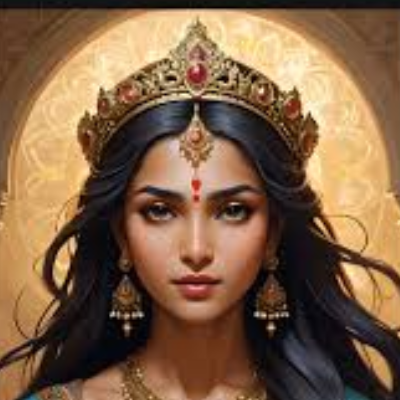
Kalavati — Youngest Daughter of Svadha, Wife of Vrishabhanu, Mother of Radha
Kalavati · Kirtida (rebirth name) · Kirti · Kirtikumari
Kalavati is the youngest of the three mind-born daughters of the Pitrs who are conventionally described as daughters of Svadha — a daughter of Daksha and Prasuti — in the Shiva Purana. She is the third sister after Mena (the eldest, wife of Himavat and mother of Parvati) and Dhanya (the middle sister, wife of King Janaka and mother of Sita). Her primary significance in the Puranic tradition rests on two intersecting accounts: first, the Shiva Purana's declaration, made by Sanatkumara at Shvetadvipa, that Kalavati would be born as the wife of the cowherd chief Vrishabhanu and that the goddess in the form of Radha would be born as her daughter; and second, the account preserved in the Padma Purana, the Garga Samhita, and the Brahma Vaivarta Purana, which identifies Kalavati as the previous-life identity of Kirtida, the woman known in the Braj devotional tradition as the mother of Radha. Through the unification of these two streams, Kalavati becomes the figure whose prior birth and austerities are presented as the direct cause of the most celebrated divine birth of the Dvapara Yuga.
✦ The Name
The name Kalavati is a Sanskrit compound built from kala, meaning "art," "skill," "a fraction of time," or "the fine parts of beauty and music," and the suffix vati, meaning "one who possesses." The name therefore signifies a woman endowed with artistic grace, musical or aesthetic skill, or the refined qualities denoted by the many meanings of kala. This makes Kalavati a name suggestive of creative and aesthetic accomplishment, appropriate in the tradition to the mother of Radha, who is herself the supreme embodiment of the arts of devotion and love. The name's connection to kala in the musical sense may also anticipate the devotional aesthetic (rasa) tradition in which Radha's realm — Vrindavana — is understood as the sphere of the highest aesthetic-spiritual experience.
In her earthly rebirth, Kalavati bears the name Kirtida, a Sanskrit word meaning "she who bestows or confers fame and glory." The names Kirti and Kirtikumari are contracted and informal variants of Kirtida found in later devotional literature and popular tradition. The Garga Samhita, in its account of the Tulasi-worship episode, directly addresses Radha as "daughter of Kalavati" — demonstrating that the earlier identity Kalavati was understood by the Garga Samhita's author as theologically synonymous with the figure better known as Kirtida.
✦ Lineage
- Maternal grandmother: Prasuti — daughter of Svayambhuva Manu and Shatarupa, the primordial human couple; mother of the twenty-four daughters of Daksha in the Shiva Purana account
- Maternal grandfather: Daksha — the Prajapati, son of Brahma, lord of created beings; father of Svadha among his sixty or twenty-four daughters depending on the source consulted
- Mother (conventional): Svadha — daughter of Daksha and Prasuti, consort of the Pitrs; the sacred syllable of ancestral offering in Vedic ritual bears her name
- Father (generative): The Pitrs collectively — the ancestral forefathers; Kalavati is described as mind-born of the Pitrs and not born from Svadha's womb, yet she is conventionally counted as Svadha's daughter
- Elder sister: Mena — the eldest of the three sisters; wife of Himavat, the divine king of the Himalaya mountains; mother of the goddess Parvati (consort of Shiva) and of the river goddess Ganga
- Middle sister: Dhanya — the middle sister; described as a Yogini; wife of Janaka, the philosopher-king of Videha and Mithila; mother of Sita (wife of Rama) according to the Shiva Purana
- Husband (previous birth as Kalavati): Suchandra — described in the Padma Purana as a king; he and Kalavati performed austerities and received a divine boon; after separating from Kalavati and retiring to the ashrama of sage Agastya, Suchandra was reborn in the Dvapara Yuga as Vrishabhanu
- Husband (rebirth as Kirtida): Vrishabhanu — described in the Padma Purana and Garga Samhita as a Yadava chieftain and lord of the cowherd community in the region of Braj; the reborn form of Suchandra; devoted follower of Vishnu and father of Radha
- Daughter: Radha — described as an incarnation of Mahalakshmi, the supreme consort of Vishnu; in the Dvapara Yuga she is born in the household of Vrishabhanu and Kirtida in the Braj region; she is the eternal companion of Krishna and central to the devotional traditions of Vaishnavism
✦ The Episode at Shvetadvipa and the Declaration of Sanatkumara
Kalavati's foundational narrative episode is the same shared by all three sisters and is told in the Shiva Purana's Rudra Samhita, Parvati Khanda. Kalavati, together with Mena and Dhanya, travelled to Shvetadvipa — the divine island of Vishnu in the Ocean of Milk. The sisters, endowed with freedom of movement through the three worlds by virtue of their being mind-born celestial beings with yogic power, bowed before Vishnu on arriving. When the four Kumaras — the perpetually youthful and celibate sages Sanaka, Sanandana, Sanatana, and Sanatkumara, all mind-born sons of Brahma — arrived at the same assembly, every person present rose in respect except the three sisters. The Shiva Purana attributes this lapse not to arrogance or indifference but to the operation of Shiva's maya, a divine illusory power that obscured their perception in that moment. Sanatkumara, nevertheless displeased, pronounced that they would take birth on earth.
When the three sisters appealed for relief, Sanatkumara transformed the force of the pronouncement into a series of divine destinies. For Kalavati, the youngest, he declared that she would become the wife of Vrishabhanu the cowherd chief, and that Radha — described by the Shiva Purana as a companion of Krishna — would be born as her daughter. The text adds that Radha's relationship with Krishna was of a consecrated and private nature. The Shiva Purana thus frames Kalavati's entire earthly career as the vehicle through which the supreme divine feminine of the Dvapara Yuga takes birth.
✦ The Previous Birth of Kalavati and the Boon of Brahma
The Padma Purana, the Garga Samhita, and the Brahma Vaivarta Purana preserve a separate but complementary account of Kalavati's previous life that fills in the terrestrial dimension of her story. In this account, Kalavati was the wife of a king named Suchandra. The Padma Purana describes Kalavati as a granddaughter of Daksha Prajapati in this account — a detail that, if taken as an independent tradition, would give her an alternative genealogical origin separate from the Shiva Purana's account of her as a mind-born daughter of the Pitrs from Svadha. However, since Svadha is herself a daughter of Daksha, the description "granddaughter of Daksha" could alternatively be read as consistent with the Shiva Purana's own lineage.
In the Garga Samhita version, Suchandra and Kalavati undertook prolonged austerities on the banks of the Gomati River, appealing to Brahma. The account in the Vedadhara source describes penance lasting twelve years. Brahma appeared and offered them a boon. Suchandra desired to ascend to Svarga. Kalavati, unwilling to be separated from her husband, implored that she receive the same boon. Brahma assured both that they would go to Svarga together and that they would subsequently be reborn on earth, at which time the consort of Vishnu — Lakshmi in the form of Radha — would be born as their daughter. Both would then attain final liberation.
A somewhat different account in the Padma Purana tradition records that after a period of conjugal life, Suchandra grew detached from household existence and departed for the ashrama of the sage Agastya. When Kalavati, left behind, lamented his departure, Brahma appeared and consoled her with the same promise: that she would be reborn with her husband, and that the goddess Lakshmi would be their daughter. This version emphasises Kalavati's distress at abandonment as the emotional occasion for the divine boon, giving her character a dimension of steadfast marital devotion.
In fulfilment of Brahma's boon, Suchandra was reborn as Vrishabhanu in the Dvapara Yuga in the land of Vraja. Kalavati was reborn as Kirtida. The Garga Samhita states that Kirtida emerged from the sacrificial fire-pit (yajnakunda) of a king named Bhalandan. Both Vrishabhanu and Kirtida are described as remembering their previous lives. They were united in marriage, and in due course Radha was born to them.
✦ Kalavati as Kirtida — Mother of Radha in the Devotional Tradition
In her reborn form as Kirtida, Kalavati's role is that of the devoted mother of Radha. The Padma Purana, Garga Samhita, and Brahma Vaivarta Purana all describe the circumstances of Radha's birth. According to these texts, Vrishabhanu and Kirtida had no child and longed deeply for a daughter. One day Vrishabhanu, going to bathe at the Yamuna, encountered a blazing golden lotus upon the water containing a radiant infant. He carried the child home. Brahma appeared and revealed to him the identity of the child as an incarnation of Lakshmi and recalled for him the story of their previous births as Suchandra and Kalavati, and the boon granted then. Kirtida received the child with great joy. The infant, however, did not open her eyes and made no sound, causing her parents and the village community concern. The narrative then describes the first birthday celebration of Radha, to which the infant Krishna was brought. When the crawling Krishna reached the cradle and looked at the baby, Radha opened her eyes for the first time, with Krishna as the first sight she beheld.
The Garga Samhita preserves a verse in which the goddess Tulasi, addressing Radha directly, calls her "daughter of Kalavati," explicitly linking Radha's divine mother-identity in the celestial lineage with the terrestrial name of her earthly mother. This is one of the clearest textual moments where the Shiva Purana's identification of Kalavati as the pre-ordained mother and the Garga Samhita's account of Kirtida as the actual mother are explicitly fused.
✦ Textual Variants and Inconsistencies
Several important inconsistencies and variant traditions require honest acknowledgement.
Absence from older Puranas: As noted for her sisters, the tradition of three daughters of Svadha — including Kalavati — is specific to the Shiva Purana and is not attested in the Bhagavata Purana, the Vishnu Purana, the Vayu Purana, the Brahmanda Purana, or the Saurapurana. These older texts record only two daughters from Svadha's union with the Pitrs, named Mena (or Vayuna) and Dharini. Kalavati does not appear in any of them. Her figure is therefore a theological construction found in the Shiva Purana tradition and in the later Vaishnava devotional texts such as the Padma Purana, Garga Samhita, and Brahma Vaivarta Purana.
Radha's birth in different traditions: The tradition that makes Kalavati the pre-ordained celestial mother of Radha must be set against the fact that Radha herself is absent from the oldest strata of the Puranas and the epics. Radha is not mentioned in the Vishnu Purana's Krishna narratives, nor in the Harivamsha in any substantial sense, and the full theological elaboration of Radha as the supreme consort of Krishna belongs primarily to the Brahma Vaivarta Purana, the Padma Purana, the Garga Samhita, and the Bhagavata Purana's later commentarial tradition. As Radha's theological importance expanded across the later centuries of Puranic composition, so did the genealogical apparatus supporting her birth — of which Kalavati is a part. The connection between Kalavati (as a daughter of Svadha) and Kirtida (as mother of Radha) appears to be a synthesis achieved by the Garga Samhita rather than a point attested in any single primary text of the older stratum.
Descent of Kalavati: The Padma Purana account, as reported through secondary sources, describes Kalavati in her previous-life story as a granddaughter of Daksha, which would place her identity in that account as a figure with an independent genealogy from Daksha rather than as a daughter of Svadha. Whether this represents a genuinely different tradition about Kalavati's origin, or a compressed summary of the Shiva Purana's lineage (in which being a daughter of Svadha who is a daughter of Daksha makes Kalavati his granddaughter), cannot be resolved on the basis of the available evidence.
Names of Radha's mother: The standard name used in the Braj devotional tradition for Radha's mother is Kirtida, also rendered Kirti or Kirtikumari. The Shiva Purana names the pre-ordained mother as Kalavati. The Garga Samhita bridges these by calling Radha "daughter of Kalavati" in a verse that contextually identifies Kalavati with Kirtida. The three names thus refer to the same figure across different textual traditions and at different moments of her life-narrative, but no single primary text presents all three names as explicitly synonymous.
Radha's birth mode: The Padma Purana also preserves a tradition in which Vrishabhanu found Radha not as a womb-born child but as a divine infant found on a lotus on the Yamuna River — making Radha ayonija (not born from the womb), parallel to the Ramayana tradition regarding Sita. This account does not require Kirtida/Kalavati to be a biological mother in the ordinary sense; she becomes the foster and nurturing mother of a divinely manifested child. This variant coexists unresolved with the account in which Radha is simply described as born to Kirtida. The Brahma Vaivarta Purana accounts differ among themselves on this point.
✦ Theological Significance
Within the Shiva Purana's theological architecture, Kalavati completes the triad of divine mothers that the text constructs through the three daughters of Svadha. The triad aligns the three great goddess-forms of successive yugas — Parvati as the great goddess of the Shaiva tradition, Sita as the consort of Rama in the Treta Yuga, and Radha as the supreme beloved of Krishna in the Dvapara Yuga — by giving each a mother who is a sister to the others. This construction makes the birth of each goddess a co-ordained event, not an isolated occurrence, and frames the three sisters as the pre-destined vessels for three successive divine incarnations.
For the Vaishnava traditions centred on Radha and Krishna, the figure of Kalavati-as-Kirtida carries a specific devotional significance: her austerities and her steadfast love for her husband in the face of abandonment are the karmic and devotional acts that earned her the privilege of being the earthly mother through whom Lakshmi herself descended. In this reading, Kalavati is not merely a genealogical link but a paradigm of the devoted wife whose piety opens the door to divine birth. The Padma Purana's account of her weeping when Suchandra departed, and receiving Brahma's consoling boon in that moment of grief, gives her emotional suffering a specifically redemptive function in the cosmological narrative.
✦ Connection to the Wider Genealogy
Kalavati's place in the wider genealogical structure runs as follows. Through her mother Svadha she descends from Daksha and Prasuti, and through them from Svayambhuva Manu and Shatarupa, the primordial progenitors. She and her sister Mena share ancestry with Sati, another daughter of Daksha (by a different mother), who was the first wife of Shiva before her death and Parvati's birth. Through her daughter Radha — born in the Dvapara Yuga as Kirtida's child — Kalavati becomes the maternal ancestor of the figure who is, in the traditions of the Brahma Vaivarta Purana and the Garga Samhita, the supreme goddess of love and devotion and the eternal consort of Krishna. Through her husband Vrishabhanu and his household in Vraja, Kalavati-as-Kirtida is genealogically situated in the cowherd world of Braj — the region of present-day Mathura and Vrindavana — that is the sacred setting of Krishna's earthly pastimes. Her sisters Mena and Dhanya, as pre-ordained mothers of Parvati and Sita respectively, make the three sisters together the maternal genealogical axis of the three great divine births celebrated across the Treta and Dvapara Yugas in the Puranic and devotional tradition.
✦ References
Primary Sources
- Shiva Purana, Rudra Samhita, Parvati Khanda, Chapter 2 and surrounding chapters (Section 2.3.2): The primary source for Kalavati as the youngest of the three mind-born daughters of the Pitrs from Svadha; narrates the shared episode of the three sisters at Shvetadvipa, Sanatkumara's pronouncement, and the declaration that Kalavati would become the wife of Vrishabhanu and mother of Radha.
- Padma Purana: Preserves the previous-birth narrative of Kalavati and her husband Suchandra; records Brahma's boon that they would be reborn and receive the goddess Lakshmi as their daughter; also gives the account of Radha's appearance as a divine infant on the Yamuna.
- Garga Samhita, Chapter 16 (Sri Radhika vivaha varnana), and Tulasi-worship episode: Explicitly identifies Radha as "daughter of Kalavati"; confirms that Vrishabhanu (as Suchandra in his previous life) was married to Kalavati the granddaughter of Daksha; and records the circumstances of Radha's birth and first encounter with Krishna in the household of Vrishabhanu and Kirtida.
- Brahma Vaivarta Purana: One of the principal texts elaborating the theology of Radha and Krishna; situates Vrishabhanu and Kirtida as Radha's parents in the Dvapara Yuga; contains material on Kalavati's previous-life identity within the genealogical apparatus of Radha's birth.
Secondary and Reference Works
- Wikipedia — Vrishabhanu article: Summarises the Padma Purana and Garga Samhita accounts of Vrishabhanu's previous birth as Suchandra and his marriage to Kalavati; identifies Kirtida as the rebirth of Kalavati; cites Garga Samhita Chapter 16 for Radha as daughter of Vrishabhanu.
- Wisdomlib.org — definition of Dhanya: Provides the Shiva Purana citation (Shiva Purana 2.3.2) for Sanatkumara's declaration regarding all three sisters including Kalavati.
- Vedadhara.com (Garga Samhita narrative summary): Provides a narrative summary of the previous-birth story of Kalavati and Suchandra, including the penance at the Gomati River and the boon of Brahma.
- Vedicstory.com (Radhashtami narrative summary): Provides a summary of the Padma Purana and Brahma Vaivarta Purana accounts of Radha's birth and Brahma's revelation to Vrishabhanu of his previous-birth identity as Suchandra and his wife's identity as Kalavati.
- Tulasiseva.com (Garga Samhita, Tulasi worship chapter): Preserves the Garga Samhita verse in which Tulasi addresses Radha as "daughter of Kalavati," demonstrating the direct equation of the two names in that text.
- Greenmesg.org (Shiva Purana, Parvati Khanda summary): Provides a continuous narrative summary of the incarnation of Devi Parvati, including the shared episode of the three sisters and Sanatkumara's declaration regarding Kalavati.
- Glorious Hinduism website (summary of Shiva Purana, Parvati Khanda): Provides a narrative summary of the Shvetadvipa episode and Sanatkumara's full declaration regarding all three sisters, including the description of Radha as a companion of Krishna.