
About
Suchandra — King, Husband of Kalavati, Previous Birth of Vrishabhanu
Suchandra · Suchandra Raja
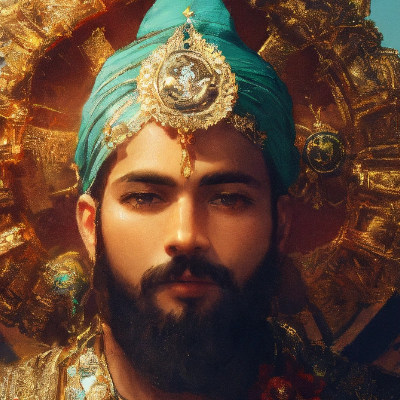
Suchandra is a king described in the Padma Purana and the Garga Samhita as the previous-life identity of Vrishabhanu, the Yadava cowherd chief of Braj who in the Dvapara Yuga became the earthly father of Radha. Suchandra's narrative significance is entirely bound up with this past-birth framework: his conduct in that earlier life — an extended domestic career with his wife Kalavati, followed by withdrawal to spiritual austerities, the couple's penance before Brahma, and the receiving of a divine boon — is presented as the karma and devotional merit that positioned him and his wife to receive the goddess Lakshmi as their daughter in their subsequent birth. His textual base is narrow, confined to the passages in the Padma Purana and Garga Samhita that narrate the prior lives of Vrishabhanu and Kirtida.
✦ The Name
The name Suchandra is a Sanskrit compound of su ("good," "beautiful," "auspicious") and chandra ("moon"). The name therefore means "auspicious moon" or "one who shines beautifully like the moon." It is a royal epithet consistent with the names of kings in the Puranic tradition and carries no further specific etymology in the texts concerned with this figure.
✦ Lineage
- Father: Nriga — named as Suchandra's father in the Garga Samhita account; Nriga is elsewhere known in the Puranic tradition as a king of the solar dynasty (Ikshvaku line) famous for a story of mistaken gift-giving that led to his transformation into a lizard, but the Nriga named as Suchandra's father may simply be a separate figure who shares the name
- Wife: Kalavati — described in the Padma Purana as a granddaughter of Daksha Prajapati; identified in the Shiva Purana as the youngest of the three mind-born daughters of the Pitrs from Svadha (herself a daughter of Daksha), making her Suchandra's wife in her celestial-lineage identity; reborn in the Dvapara Yuga as Kirtida, wife of Vrishabhanu and mother of Radha
- Rebirth: Vrishabhanu — the Yadava chieftain of Barsana in Braj, described in the Padma Purana as the owner of ten lakh cows and a devoted follower of Vishnu; the earthly father of Radha; his father in the Dvapara Yuga birth is given as Surabhanu in the Garga Samhita account
✦ The Austerities and the Boon of Brahma
The Garga Samhita preserves the fullest available account of Suchandra's prior-life narrative. Suchandra, described as a king and son of Nriga, is said to have been a partial manifestation of the divine. He married Kalavati, and the two undertook prolonged penance on the banks of the Gomati River. The duration of this austerity is given as twelve years in the Vedadhara summary of the Garga Samhita. At the conclusion of their penance, Brahma appeared before the couple. Suchandra requested to ascend to Svarga. Kalavati, unwilling to be separated from her husband, appealed for the same boon. Brahma assured both that they would depart together to Svarga and that, following their sojourn there, they would be reborn on earth at the close of the Dvapara Yuga and that the beloved of Krishna — the goddess Lakshmi herself in the form of Radha — would be born as their daughter. Both would thereafter attain final liberation together.
The Padma Purana preserves a somewhat different version of these events. In that account, Suchandra eventually grew detached from domestic life after a long period of marriage and departed alone to the ashrama of the sage Agastya, leaving Kalavati behind. When Kalavati lamented his departure, Brahma appeared and consoled her, granting the same boon: that she would be reunited with her husband in their next birth, and that the goddess Lakshmi would be their daughter in the Dvapara Yuga. In this version the emotional occasion for the boon is Kalavati's grief at Suchandra's abandonment rather than a shared act of penance, and Suchandra's role is passive — it is Kalavati's distress, not Suchandra's intention, that draws Brahma's intervention.
In fulfilment of Brahma's promise, Suchandra was reborn in the Dvapara Yuga in the house of a man named Surabhanu and received the name Vrishabhanu. Kalavati was reborn as Kirtida, emerging from the sacrificial fire-pit of a king named Bhalandan according to the Garga Samhita. Both Vrishabhanu and Kirtida are described in that text as retaining memory of their previous lives as Suchandra and Kalavati.
✦ Textual Variants and Inconsistencies
The two primary accounts of Suchandra's story — the Garga Samhita version (joint penance with Kalavati, shared requesting of the boon) and the Padma Purana version (Suchandra departs alone, Kalavati receives the boon in her grief) — differ in their characterisation of Suchandra's conduct. In the Garga Samhita account he is a devoted husband who pursues liberation jointly with his wife. In the Padma Purana account he is a figure who abandons domestic life unilaterally, and the boon is obtained not through his initiative but through his wife's grief. Neither text explicitly acknowledges the other's version.
The identification of Suchandra's father as Nriga raises a separate issue. A king named Nriga appears in the Vishnu Purana and the Bhagavata Purana (Tenth Skandha) as a solar dynasty ruler associated with a famous tale of misidentified charity and subsequent curse; that Nriga is a well-developed Puranic figure. Whether the Nriga named as Suchandra's father in the Garga Samhita is the same individual, a different Nriga of the same name, or simply a coincidence of naming, cannot be determined on the available evidence, and no source makes the identification explicit.
✦ Connection to the Wider Genealogy
Suchandra's genealogical significance is entirely prospective rather than ancestral: his narrative value lies entirely in what his life set in motion rather than in the lineage from which he descended. Through his marriage to Kalavati — who is identified in the Shiva Purana as the youngest of the three mind-born daughters of the Pitrs and a member of the lineage from Svadha and Daksha — Suchandra is brought into connection with the broader genealogy of the three sisters whose destinies were declared at Shvetadvipa. Kalavati's sisters were Mena (wife of Himavat and mother of Parvati) and Dhanya (wife of Janaka and mother of Sita in the Shiva Purana tradition). Suchandra's rebirth as Vrishabhanu and Kalavati's rebirth as Kirtida complete the final term in this triad by bringing Radha into birth. Through his daughter Radha, Suchandra-as-Vrishabhanu is genealogically connected to the devotional world of Krishna's Braj pastimes as narrated in the Garga Samhita, the Brahma Vaivarta Purana, and the Padma Purana.
✦ References
Primary Sources
- Padma Purana: Names Suchandra as the previous-life identity of Vrishabhanu; records his marriage to Kalavati, his departure to the ashrama of sage Agastya, Kalavati's grief, and Brahma's boon that Lakshmi in the form of Radha would be their daughter in their next birth.
- Garga Samhita (Vrindavana Khanda and related sections): Identifies Suchandra as a king and son of Nriga; records the joint penance of Suchandra and Kalavati on the Gomati River for twelve years, the appearance of Brahma, the boon of Svarga and subsequent rebirth with Radha as daughter; states that Suchandra was reborn as Vrishabhanu in the house of Surabhanu in the Dvapara Yuga.
- Brahma Vaivarta Purana: Contains material on the birth of Radha and the household of Vrishabhanu and Kirtida; situates the previous-birth account within the broader theology of Radha as the supreme consort of Krishna.
Secondary and Reference Works
- Wikipedia — Vrishabhanu article: Summarises the Padma Purana and Garga Samhita accounts of Suchandra's previous-life story and his rebirth as Vrishabhanu; notes Kalavati's identity as granddaughter of Daksha.
- Detailedpedia.com — Vrishabhanu article: Provides a close paraphrase of the Padma Purana account of Suchandra's departure to Agastya's ashrama and Kalavati's receipt of Brahma's boon.
- Vedadhara.com (Garga Samhita summary): Supplies the version of the story in which Suchandra and Kalavati undertook twelve years of joint penance before Brahma on the Gomati; records Brahma's promise of Svarga and subsequent rebirth with Radha as daughter, and their attainment of moksha.
- Bhaktihome.com (Garga Samhita summary): Notes that in the Garga Samhita, Suchandra is identified as a son of Nriga; provides the context for the three mind-born daughters of the Pitrs and their connection to Kalavati's marriage to Suchandra.