
About
Narishyanta — Son of Vaivasvata Manu and Progenitor of the Agniveshyayana Line
Narishyanta · Narishyant · Narishtanta · Suryavanshi
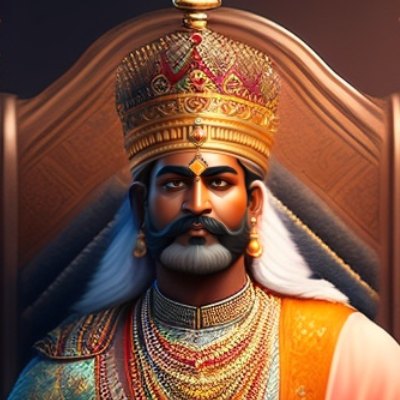
Narishyanta is a king of the solar dynasty, recorded in the Puranic genealogical tradition as one of the ten sons of Vaivasvata Manu, the seventh Manu and progenitor of the current human race. Vaivasvata Manu, also known as Shraddhadeva and Satyavrata, was the son of Vivasvan, the sun-god, and his wife Saranyu. Narishyanta is the progenitor of a distinct branch of the solar lineage that culminated in Agniveshya, a celebrated sage identified in the Bhagavata Purana as an incarnation of the fire-god Agni himself, from whom the brahminical Agniveshyayana dynasty descended. Narishyanta appears in the genealogical lists of the Bhagavata Purana, the Vishnu Purana, the Markandeya Purana, and the Shiva Purana among the sons of Vaivasvata Manu, though the texts differ in the names they assign to some of Manu's sons and in the order in which they are listed.
✦ The Name
The name Narishyanta is of Sanskrit origin. It is generally understood to carry a sense relating to the protection or governance of men, with nara meaning man or human being and the suffix conveying a sense of restraint, guidance, or completion. The name is consistent with the Kshatriya royal naming conventions prevalent among the sons of Manu, several of whom bear names denoting martial or protective qualities. The name is also rendered in some sources as Narishyant or Narishta, reflecting minor orthographic variation across manuscript traditions. The dynastic epithet Suryavanshi, meaning one of the solar race, applies to Narishyanta by virtue of his descent from Vivasvan the sun-god through Vaivasvata Manu.
✦ Lineage
- Paternal grandfather: Vivasvan — the sun-god, also known as Surya and Aditya, son of the sage Kashyapa and his wife Aditi. Vivasvan is the divine progenitor of the entire solar dynasty.
- Father: Vaivasvata Manu — the seventh Manu, also called Shraddhadeva and Satyavrata, son of Vivasvan and his wife Saranyu. He is the progenitor of the current human race and the founding ancestor of both the solar and related dynastic lines of the present age. The Bhagavata Purana records that Manu, having initially obtained a daughter named Ila through a sacrificial rite performed for the gods Mitra and Varuna, subsequently performed a century of austerities on the bank of the Yamuna and then worshipped Vishnu, from which worship ten sons were born to him.
- Brothers: Ikshvaku — eldest son of Manu and founder of the main Ikshvaku solar line from which the kings of Ayodhya descended, including Rama; Nriga — son of Manu from whom the sub-line through Sumati, Bhutajyoti, and Vasu descended; Dhrishta — son of Manu from whom a kshatriya clan arose that subsequently became brahmanas; Sharyati — son of Manu, a king of some narrative significance in his own right; Dishta — son of Manu from whom the line through Nabhaga descended; Karusha — son of Manu from whom the Karusha clan of kshatriyas arose; Prishadhra — son of Manu who, having slain his guru's cow by mistake, was cursed to become a shudra; Nabhaga — son of Manu who took to the vocation of the vaishyas; Kavi — youngest son of Manu, described as a great devotee of Vishnu from childhood.
- Son: Citrasena — the immediate successor of Narishyanta and the next link in the line descending to Agniveshya.
- Descendants in succession: Citrasena → Riksha → Midhvan → Purna → Indrasena → Vitihotra → Satyashrava → Urushrava → Devadatta → Agniveshya. The Bhagavata Purana records no narrative episode, named spouse, or independent achievement for any of the nine kings between Citrasena and Agniveshya; they are attested solely as successive links in this genealogical chain.
✦ The Birth of Manu's Sons and Narishyanta's Place Among Them
The Bhagavata Purana records that Vaivasvata Manu's first ritual effort to obtain progeny, performed as an offering to Mitra and Varuna, went awry through a procedural error by the officiating priest and produced a daughter, Ila, rather than a son. Manu then undertook a hundred years of austerities on the bank of the Yamuna, following which he worshipped Vishnu and was granted ten sons, all described as resembling him in qualities. Narishyanta is consistently named among these ten across the major Puranic sources, though his position in the enumerated list varies from text to text. The Bhagavata Purana places him seventh in one listing, while the Vishnu Purana positions him fifth. The Shiva Purana includes him in a list of nine sons under the name Narishtanta. These positional differences across sources reflect the general variance in Puranic enumeration of Manu's sons rather than any substantive disagreement about Narishyanta's identity or parentage.
✦ Textual Variants and Inconsistencies
A significant textual distinction must be noted concerning the name Narishyanta. The Markandeya Purana records a separate figure of the same name who is described not as a son of Vaivasvata Manu directly but as the eldest of the eighteen sons of King Marutta, a much later king of the solar line. The Markandeya Purana's Narishyanta is a king of considerable narrative prominence: he performs grand sacrifices, abdicates in favour of his son Dama, and is murdered during his retirement by a vengeful king named Vapushman. His wife Indrasena performs sati upon his death, and his son Dama subsequently avenges the killing. The line of this Markandeya Purana Narishyanta descends through Dama, Rajyavardhana, Sudhriti, Nara, Kevala, Bandhumat, Vegavat, Budha, and Trinabindu, the last of whom is the father of Ilavila, through whom the sage Vishrava was born and the lineage of Kubera and Ravana descended. This Markandeya Purana figure and the Vaivasvata Manu's son Narishyanta of the Bhagavata Purana are distinct individuals sharing the same name and belonging to different generations and contexts within the solar tradition. The Bhagavata Purana's account of Narishyanta son of Manu gives him no narrative episode of his own and traces his line exclusively through the succession ending in Agniveshya. The Vishnu Purana names Narishyanta among Manu's sons but does not independently trace his descendants.
✦ Connection to the Wider Genealogy
Narishyanta belongs to the outermost branch of the solar dynasty as established at the opening of the current human age. His descent runs from Brahma through Marichi, Kashyapa, Vivasvan, and Vaivasvata Manu. He is thus a brother of Ikshvaku, the founder of the main Ayodhya solar line, and of Sharyati, Dhrishta, Karusha, and the other sons of Manu who each founded their own dynastic sub-lines. While the Ikshvaku line produced the kings of Ayodhya and ultimately Rama, Narishyanta's own line took a markedly different trajectory, passing through ten further generations of kings before culminating not in a royal house but in a brahminical dynasty. Agniveshya, the tenth in descent from Narishyanta, is identified as an incarnation of the fire-god Agni and is the progenitor of the Agniveshyayana brahminical clan, representing a transition from the kshatriya royal lineage to a sacred priestly one — a pattern also seen in the line of Narishyanta's brother Dhrishta, whose kshatriya descendants likewise became brahmanas.
✦ References
- Bhagavata Purana, Skandha IX, Chapters 1 and 2: The primary source for Narishyanta as a son of Vaivasvata Manu and for the complete genealogical succession from Narishyanta through Citrasena, Riksha, Midhvan, Purna, Indrasena, Vitihotra, Satyashrava, Urushrava, Devadatta, and Agniveshya, with the note that Agniveshya was Agni himself and the founder of the Agniveshyayana brahminical dynasty.
- Vishnu Purana, Book IV, Chapter I: Names Narishyanta among the ten sons of Vaivasvata Manu; does not independently trace his descendant line beyond the initial enumeration.
- Shiva Purana, Vayaviya Samhita, Chapter 36: Includes Narishyanta under the variant form Narishtanta in its list of the nine sons of Vaivasvata Manu.
- Markandeya Purana: Records a distinct figure named Narishyanta as the eldest son of King Marutta; consulted to establish the clear separation between this figure and the son of Vaivasvata Manu of the same name.
- Vettam Mani, Puranic Encyclopaedia: Secondary reference compiling entries on Narishyanta and Vaivasvata Manu across Puranic sources; useful for cross-referencing the two distinct figures bearing the name Narishyanta.
- V. S. Agrawala, Matsya Purana — A Study: Modern secondary work analysing solar dynasty genealogies across Puranic sources; useful for contextualising Narishyanta's position within the broader Manu lineage and the variant son-lists across texts.